• get the steward over here

    Cush-Ride Suspension of Belief

    Back when we lived Oakland work sometimes carried us over the Bay Bridge to Treasure Island to spray umber and ocher colored water about sets. Even though the island was only halfway across the bridge, getting there required paying the full bridge toll! While sitting in traffic the idea of a personal hovercraft was often entertained. The toll money saved could have then been spent on some goggles and foul weather gear, so that on rainy days we could make like the Gorton's Fisherman down Powell street on our way to the water. More »
  • news

    Next Up, Skynet: Siemens Teaches Cars to Read!

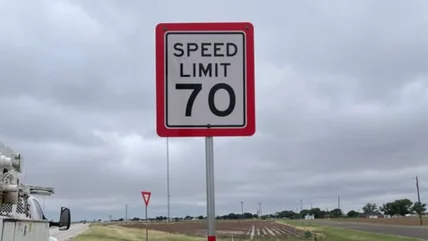
    Never let it be said that the Germans haven't done their part for literacy. Besides providing the world with the works of Goethe, Brecht and Werner von Braun, Deutschland also gave rise to industrial conglomerate Siemens, who've developed a system that reads speed limit signs and can adjust a vehicle's speed downward at the driver's discretion to stay within limits. The all-seeing eye cross checks the electrosensory stimulus it takes in with GPS data to ensure it's not wonky. We imagine this would be a highly-useful invention in a Gatso-riddled society. More »
  • retro

    The Flight of Pegasus: The AVE Mizar

    Allegedly obsessed with flying cars, it seems like our latest obsession happens to be with turbocharged Pinto motors. So what if an ex-Northrop engineer grafted the wings and ass end of a Cessna Skymaster to a Ford Pinto and had the prototype painted by a hot van artist? Not 1973 enough for you yet? What if we told you that Southern California Ford megadealer Galpin was involved as the distributor? And that the project was on track until the wing assembly somehow came apart and sent inventor Henry Smolinski and pilot Harold Blake to their deaths. The Mizar, scheduled to go into production in 1974, never flew again. Needless to say, the incident was a major blow for detachable-wing flying-car technology. More »
  • news

    Stanford Takes the Message to the Streets, DARPA-Style

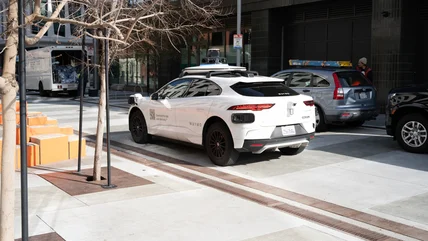
    One may recall Stanley, the robo-Touareg that won the 2nd DARPA Grand Challenge. Well, now the boffins in Paly are working a successor to the SUV, based on a Passat known as Junior. Junior's designed to navigate an urban environment, rather than a desert off-road course. DARPA plans to announce the location of the next race, to be held November 3rd, sometime in October. Meanwhile we're still waiting for information on the atomic-powered Saab 96 entry from Venture Industries. More »
  • retro

    Transport Revolution! The Great Hoverchair of San Pedro!

    Despite what y'all think, we at Jalopnik to do not spend our days tearing around in Torino Talladegas playing the Angry Samoans at high volume, outrunning the Los Angeles Police Department and California Highway Patrol, mowing down sidewalk fruit stands and supping on the finest lobster bisque at sunset on the beach with Jodie Kidd on one arm and Sabine Schmitz on the other as the sun drops behind Catalina. We haven't even illicitly airbrushed a Viking mural on the side of an Isuzu I-Mark in nigh on three months. No, mostly we just sit around and look for things to write about. Now and then, to clear our head and purchase a refreshment and/or snack, we walk the half-block to the bodega. This afternoon, we stumbled upon it: The Great Hoverchair of San Pedro, a previously-thought-mythical device designed to ease Angelenos' commuting woes somewhere in the early 1990s. More »
  • news

    PLATINUM und GOLD! Scientists Blind With Fuel-Cell Catalyst Stabilization Techonolgy

    Given no time to make no apologies, mighty men of science have solved a problem in fuel-cell catalysts that made stop-and-go driving somewhat of a problem. While platinum is the most efficient medium for accelerating electrochemical reactions in a hydrogen power unit, it has the unfortunate tendency to dissolve during use. How'd they solve the problem? Boffins at U.S. Department of Energy's Brookhaven National Laboratory figured out that by adding gold clusters to the platinum, the disslution issue was resolved. Once we find a girlfriend, we're totally buying her a fuel cell for our anniversary. More »
  • futuristic

    Robot Can't Bail: Asimo Doesn't Fall Down, Does a Little Dance, Makes a Little Love

    Our techtastic siblings over at Gizmodo posted this video of the new, improved and non-faceplanting version of Honda's Asimo robot trying out for a spot on the LA Galaxy squad, auditioning for an O-Town backup-dancer position and proving that he really can climb stairs. No word on whether jogging helps him keep his those unsightly robo-love-handles at bay. Meanwhile, we're still holding out hope for the Asimo Type R. More »
  • retro

    Because Overgrown Boys Still Love Drawing Can-Am Cars: Future Chaparral

    The Canadian-American Challenge Cup. Just thinking about those halcyon days of death-defying hypermotorsport makes our bowels begin to rumble and our head a bit light. When men were men and racing cars that did more than go in a straight line were propelled by big block Chevy mills. And while Jim Hall's clandestinely-supported team never dominated the series like Porsche did, there's no question that the Texas racer was the most innovative of the bunch. Plus, those white cars just looked ridiculously cool. GM Design Director Ed Wellburn slipped the Winding Road kids some sketches done by his team of what a modern Chaparral might look like. After all, is one really ever too old to doodle Can-Am racers? More »
  • gadgets

    DaimlerChrysler Tests WLAN Car-to-Car Communication System

    Car-to-car communication has nothing to do with gesturing after a close call on the highway. Futurists foresee a time when cars will use systems of GPS and WiFi tech to let them communicate with each other, relaying information about road conditions and traffic anomalies to prevent smash-ups. DaimlerChrysler is testing such a system — dubbed Willwarn (Wireless Local Danger Warning), with which vehicles are able to "warn" of critical situations picked up by on-board sensors, such as fog, black ice or obstacles such as broken-down car. Such distant early warnings, theoretically, would allow a driver time to take evasive action. As DaimlerChrysler notes in a press release, the system could be enhanced by adding radio beacons at the roadside to give traffic control centers ground reports, as well as transmit information on traffic, construction and other route-related issues. No word on when such a system will be in place, but he who comes out first often sets the standard, a benefit DCX and its suppliers are likely gunning for. More »
  • news

    NASA to Establish Moon Base, Moonage Planned by 2024

    The National Aeronautics and Space administration announced plans today for a permanent base on the moon in the future. In order that the scientists and astronauts can haul building materials and gear about the surface NASA will employ moon rovers, most likely constructed of space-age polymers. At last our tax dollars will be put to good use for moon donuts, moon burnouts, moon drifting, and high banks crater carving maximum moonage. NASA eventually plans on a fleet of pressurized rovers in order folks can drive about sans bulky space suits. More »
  • commentary

    A Wistful Thought

    Besides Starions and Starlets, conversations amongst ourselves (read: Davey G. and Uncle Bumbeck) often lead to the sheer ridiculous awesomeness of 1950s and '60s technology, before it was Health-and-Safetey'd out of existence. We're huge fans of NACA (which gave us the coolest air scoop of all time) and early NASA. And we think, just maybe it's time for the Jet Propulsion Laboratory to buiild a car. Not a Mars rover, but an honest-to-Uranus earthbound vehicle that can accomplish completely ridiculous things. More »
  • concept cars

    50 More Years: Volkswagen Beetle 2054

    What's life going to be like in 50 years? We're figuring on a Sino-centric version of "Blade Runner," with Replicants built by the People's Republic of Toyota. For transportation, however, let's turn to Venezuelan designer Carlos Agell, who dreams of electric VW Beetles. Agell mocked up what a Volkswagen Beetle from 2054 might look like, complete with liquid-metal body for shape shifting and laser gyrostabilization system for accident avoidance. No word on whether it'll be built domestically or outsourced to an off-colony to cut costs. More »
  • news

    German MagLev Train Kills People

    We've debated on posting on this, as it isn't strictly a car. In fact, it doesn't even roll. It's Germany's experimental-yet-open-to-the-public Transrapid magnetic-levitation train, and it was involved in a fatal accident on a test track in the northwestern part of Deutschland. Apparently a result of human error, the high-speed conveyance smacked into a maintainence vehicle at around 120mph, sending passengers hurtling through the front panoramic window of the train and catching fire as it ground to a halt. 21 are confirmed dead. Du unsere G te... More »
  • retro

    Know Future: Yesterday's Car of Tomorrow

    We love predictions from the past that have failed to come true. The League of Nations, the demise of Apple Computer, the Thousand-Year Reich, the success of the Edsel, etc. It makes us want to grab our nose, point with right arm fully extended and exclaim in our finest Nelson Muntz voice, "HA-HA!" 2000-lb cars with air cushions, 100hp and theoretically-infinite wheelbases? In 1933, this was the the theoretic cutting edge, friends. Click over and ride a blade dulled with time. More »
  • news

    'Plasma-Turbo' Is Certainly One of the Best Hyphenates Ever: Wacky, Futuristic Stuff From MIT

    Remember back when everything used to be "atomic?" Then somehow "nuclear" became the preferred phrase? But it seems to us, something as important of the fission and/or fusion of the atom should be a simple, agreed-upon pronunciation, so figures as important as presidents don't look like assholes when talking about things that could be either a huge boon or a giant bust. Meanwhile, cats at MIT are working on all sorts of rad, future propulsion and energy options, including an ethanol-fired plasma-spun turbocharger. (Have the geeks in Mass been reading vintage Turbonique catalogs in their spare time?) "Plasma-turbo" totally sounds straight out of the Thundercats, btw. Didn't Panthro have one? More »
  • news

    Drink! Don't Think! Drive! Kill! Or, Via Technology, Maybe Not

    In an effort to combat the spread of inebrious motoring, a variety of technologies were discussed at a symposium sponsored by Mothers Against Drunk Driving, which is now curiously headed by a man named Chuck. Since the Motherchucker joke is far too obvious, we'll move on to the bits and pieces. Drunkards can possibly look forward to games of Simon Says, subdural blood alcohol concentration sensing through a steering wheel and/or anklets and of course, breathalyzer-based ignition interlocks. We're so torn on this one. On the one hand, if you're soused, don't motate. On the other hand, the Big Brother implications of the technology really freak us out. Nevertheless, if it'd been implemented sooner, the lives of Mel Gibson's PRmy troops would be much easier. More »
  • news

    Robots Not Necessarily in Disguise: Real Transformers!

    While Wert scoots through Metro Detroit in his Liberty with a bevy of girls in green Constructicons body paint singing "Autobots wage their battle to destroy the evil forces of the Decepticons!" and giggling like a maniac, some of here on the coasts aren't quite as thrilled, having become annoyed with the franchise once the safety Nazis stepped and didn't allow Megatron to continue looking like a real gun. And Rodimus Prime? What was he about? Frustrated, we moved on to reruns of The Rockford Files. Regardless, we do have a passing interest in robotics, and this bit on HowStuffWorks about real-life reconfigurable robots is worth checking out. We're gonna go back to checking out the adventures of Jim, Angel and Rocky now. More »
  • news

    Twenty Eyes In My Car

    Tyzx, a company seeded by Paul Allen and based in the luvverly environs of Menlo Park, California wants to load up your interior with all-seeing eyes that will map the position of the occupants, thus allowing airbags to deploy more effectively during a crash. Japanese safety-systems manufacturer Takata Group has given the Tyzxes a cool four mil to hasten their work, which also includes exterior auto-vision systems to help detect pedestrians and other motorcars. We'd totally buy a car with twenty eyes. But we'd have to paint a giant skull on the hood. More »
  • news

    Huffing Hydrogen In TN: Fuel-Cell Cars the Norm by 2050?

    We'll be 75 years old in 2050, assuming terrorists don't nuke the Port of Los Angeles, destroying our beautiful Post Office (we feel like Jake Gittes every time we walk in) and taking out the palm trees along Harbor Blvd. And while the Goodyear blimp may well still circle o'er the town of Pedro, stuffed to high heaven with helium, its lighter elemental brother will be powering the majority of our vehicles, according to a conference on the opening day of the Tennessee Valley Corridor National Technology Summit. According to the TVCNTS, hydrogen cars will surpass petroleum-fueled cars by 2030, and will be the dominant form of vehicular propulsion twenty years after that. Call us when we're old. We'll let you know how all that panned out. More »
  • news

    Anthem For a New Tomorrow: Robot Cars Will Save Us!

    According to noted futurist, keyboard dude and flatbed-scanner inventor Ray Kurzweil, "We won't experience 100 years of progress in the 21st century - it will be more like 20,000 years of progress at today's rate. Within a few decades, machine intelligence will surpass human intelligence, leading to the Singularity: technological change so rapid and profound it represents a rupture in the fabric of human history." Kurzweil mentions the DARPA Grand Challenge as evidence of this. In '04, nobody finished. In '05, four vehicles finished, and in '07, the cars are moving to the mean streats of Palo Alto and will have to obey traffic laws. Plus, death will become a soluble problem. More »
  • news

    Krauts Host Mini-DARPA Challenge

    While DARPA held a grand event featuring Hummers, a chopped TerraMax and a Touareg, among other manly devices, the European Elrob event, held outside Frankfurt, seems like it was a milder affair. Excluded from the DARPA Grand Challenge because of their Euroness, inventors from across the continent showed up with such masculine warfighting machines such as a hopping mini-helicopter and a robotic Smart. If there's a war on, we'll take the TerraMax, thank you. More »
  • news

    Very Powerful Motor: Tiny Engine Makes Mad Grunt

    A couple folks have tipped us on this one now. A group working out of San Jose has come up with what they term the "Massive Yet Tiny" engine. Apparently, the mill is designed to easily accept biofuel and can crank out 814 torques. That said, it's yet to be dyno-tested running on real combustibles, relying on air pressure to fill the cylinders. Interestingly the engine's only got 15 moving parts, is designed to use oil as a cooling agent, and well, if it's as-advertised, could be totally revolutionary. We'll keep an eye on this one. More »
  • news

    Wi-Fi! For Safety!

    Dr. Raja Sengupta of Cal has come up with a novel imminent-collision-awareness idea. First, we kill all the lawyers. Then we equip each car with GPS and a Wi-Fi transmitter. Then, cars talk to each other and decide where they are in relation to each other. It's an interesting idea, and GM's throwing some money at it, but cripes if it doesn't sound like it could totally be used for evil. We're not sure on this one. More »
  • news

    You'll Be Ridin' on the Gypsy: VW's Conceptual Dashboard Interface

    The CNETs take a ride down to Paly to check out VW's secret underground laboratory. And what do they find? Gypsy, a wacky snickerdoodle of an interface system that'll run your iPod, answer your e-mail and even turn off your iron. Well, probably not our iron. Ours dates back to the early 1970s, and our ironing board back to the 1920s. We suppose we're the unlucky sumbitches that'll have to wait for advances in force-field technology to fully make use of Gypsy. [Switch to Dio-Tone vocal program] Of the Gypsy Queeaann! More »
  • news

    Flying Car Spotted in Australia! Redux

    You, staring for hours at Google Earth! Back away from the monitor and keep your hands where I can see them. Ok, so we have no jurisdiction over GE surfers, but we do wish they'd find another hobby — like GPS caching of something. Following on last month's cyber "sighting" of what looks to be a hovering car on a Google satellite map of Australia, another such vision has materialized. A new image, taken of parkland near the shores of Coogee Beach — which is 50 miles from Swackermackadoodle Junction, just to the right of Arse Over Tit highway — appears to show some sort of vehicle, shadowed as if it were high in the air. Is it a flying car, or just a blob on the screen? Only the Grilled Cheese Virgin Mary knows for sure. More »
  • news: industry news

    Fistful of Metal: Aluminum Price Needs to Drop to Replace Steel

    The Reuterses are talking all 'bout a revolution. Not televised. Motorized. Except for one thing. The revolution's gonna be pricey. Despite aluminum's inherent advantages in terms of adding lightness, the cost structure ain't exactly simplicated when it comes to using the metal over steel. At $2,500 bucks per metric ton, parts still cost anywhere from 20 to 50% more than their steel equivalents. People who know say that cost needs to drop at the minimum to twice the price of steel before usage in proletarian conveyances becomes commonplace. More »
  • news

    More Carbon Fiber in the Future?

    The whiz kids down in Oak Ridge, TN, at a lab originally established to enrich and extract the uranium 235 used to incinerate/ irradiate Hiroshima, is working with a consortium of auto manufacturers on ways to make carbon fiber cheaper, and thus a more viable option for everyday vehicle construction. Currently, commercial-grade carbon fiber's running around 8 bucks a pound; the goal is to drop the price by three to five dollars and make it easier to work with on a large scale. More »
  • news

    The Latest in Automotive Predictin' from the 818

    Reader DannyBoy, who comments from glen to glen and down the mountainside, tips us to this look into the future of oughtamoblilin', noting: More »
  • news

    BMW's AutoPark Technology in Action

    Of course, Toyota had it first, but BMW's hopping on the automated-parking bandwagon as well. The AutoSpieses have a demo void up on their site, and it looks pretty intriguing, if a bit frightening. That said, when the system goes wonky and the car prangs something, who gets the bill? The automaker or the car owner's insurance company? More »
  • news

    New GM Cars to be Conversant

    "Well hello there, Opel old chap, how's the wife then?" More »
  • news

    Dystopia or Utopia? You Make the Call

    Man, you know, we're really thinking that Orwell was right, especially about his native land. Eggheads in the land of bangers 'n' mash are making predictions that the entire nation's transport system will be controlled by RFID-receptive "network clouds" (aren't there enough goddamn clouds in Blighty already?) that will direct the routing of vehicles running on autopilot by 2056. We're really glad that we'll be like 81 then and won't notice, so long as they keep our wheelchair's IV buddy on a Johnnie Walker drip. More »
  • news

    Flying Car Spotted in Australia!

    We must get ourselves to Australia, posthaste. According to the Register, this shot of Perth from Google Earth indicates a vehicle "at an altitude of three of four metres and doing about 80 knots." Which means the only remotely probable explanation is that "the Aussies have developed a gravity-busting hyperdrive, have bolted it into a second-hand Holden, and are seen here in the split second before their X-Motor made the transdimensional leap to hyper light speed." Could it be done with a GTO? Might stem the car's less-than-stellar sales. Listening, Lutz? [Thanks to Adam for the tip.] More »
  • news

    Paranoid Time: Stackable Mecha Cars Spring from Gehry's Brain

    Waking up from a nightmare in which stackable mecha roll of the decks of futuristic, space-borne aircraft carriers capable of punching holes through planets and do battle all Robotech-style against hordes of invaders in period-correct Zeros that transform into dancing robots, we popped on the internets and found this post. Apparently, Frank Gehry's teamed up with the whizzies at the MIT Smart Cities Group to come up with a futuristic electric vehicle (to be built by GM) whose most salient feature is that it's shopping-cart stackable. And vaguely mecha-esque. Scary. Weird. Rethink. More »
  • gadgets

    Hey Mister Heat Miser: Advances in Theromelectrics Could Lead to Better Efficiency

    Factoid: 70 percent of fuel energy consumed in car engines is dissipated as heat. Finding a way to conserve that energy, and use it to generate electrical power to run cars' systems, is the goal of researchers at GM and BMW. They're using advances in nanotechnology to develop thermoelectric materials for such systems — which could, say, harvest heat from an exhaust pipe — to increase fuel efficiency by replacing cars' alternators with heat-electricity generators. First applications will likely be niche uses — one supplier is already selling thermoelectric car-seat heating and cooling units. More »
  • news

    Vibrating, Horny, Peppermint-Scented Cars? Sounds Kinky!

    Researchers at our illustrious founder and taskmaster's alma mater have discovered new ways to alert drivers to possible impending doom. By using sensory signals, including vibrating seatbelts and directional horn sounds, Oxford profs have figured out ways to improve reaction times by tenths of a second in some cases critical time when avoiding an accident. They've also discovered that peppermint smells keep drivers more alert. Of course, we're mostly excited because the technology could be repurposed to turn our Durango into a rolling penthouse! More »
  • news

    Ford Working on Bio-Foam

    Apparently, people don't want their cars to smell of vegetable oil. A team of Ford scientists developed an environ- mentally-friendly foam made of soybeans, but until recently, couldn't get the material smelling like it belonged in a vehicle. Designed for use in seats and headrests, the new bio-foam is also apparently pretty cost-efficient. They're also working on a replacement for the glass reinforcing fibers in fiberglass, substituting new natural fibers that will be lighter, cheaper and less itchy to work with. More »
  • novelties

    New Lightweight V-8 Made of Repurposed Wood Pulp Spins 3.4 RPM

    When lubricants are dispensed with, a small-displacement V-8 engine crafted of a revolutionary new material known only as "paper" and a space-age bonding agent called "white glue" can spin at the previously-unheard-of speed of 3.4 revolutions per minute when aided by its optional electric motor. A year in construction at a cost of what's possibly in the tens of dollars, this new eight-cylinder wonder works without gasoline, or for that matter, any sort of internal combustion at all, relieving it of the need for an expensive, heavy and leak-prone cooling system. The future of plexiglas-case-based motoring has finally arrived! [Thanks to Brendon for the tip.] More »
  • futuristic

    How Los Angeles Keeps the Traffic Kind of Moving

    Architecture screed Bldg Blog profiles Los Angeles's traffic control system, which uses an intensely complex system of cameras, embedded roadway sensors and control rooms straight off the set of "War Games." One of the coolest features are the loop-like sensors — literally, inductive loops — that detect the presence of cars (or other large metallic objects) and relay the information to the processing center in real time. All the data is captured, measured, examined and saved for tracking purposes — all in the name of keeping traffic moving even the slightest bit more smoothly. Think of all that technology eyeballing your ass next time you challenge the guy in the Supra to a stoplight run. More »
  • futuristic

    Fun With the Future, Courtesy of BMW and Mercedes

    Edmunds' Inside Line talked with Raymond Freymann, managing director of BMW's Research and Technology division, as well as with Mercedes large-car project manager Hans Multhaupt about the long-term future of the automobile. Besides addressing serious issues like the uses of wireless connectivity and the applications of fuel-cell technology, Freymann and Multhaupt also said some really funny stuff especially if it's read in a German accent. Don thine black turtleneck and interesting eyeglasses and check it after the jump. More »
  • futuristic

    Four Entrants Finish DARPA Grand Challenge

    This results of this year's DARPA Grand Challenge robotic (sorry, autonomous) vehicles derby were far different from last year's. For one, an entrant actually finished the course. For two, though most entrants still couldn't figure out how to turn their sensors and algorithms into directional prowess, at least four entrants had finished the course by Sunday morning. The winner was "Stanley," Stanford's autonomous Volkswagen Toureg, which edged out two, Hummer-based competitors from Carnegie Mellon University's Red Team and an entry from the Gray Team. A full report is expected later today. More »