Chevy's 327 Proved You Don't Need A Big Block To Win Races
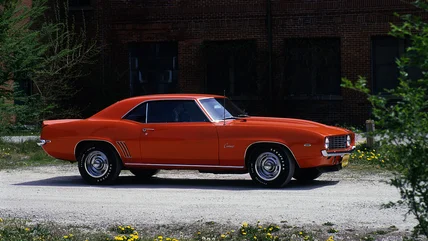
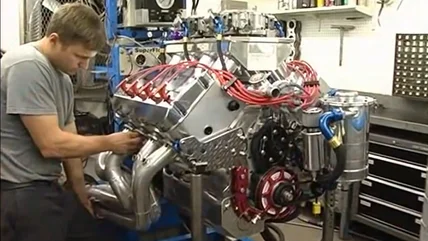
Chevy made waves with its engine designs throughout history. Its small-block 327 proved that size wasn't the only thing that could help you win races.
Read MoreChevy made waves with its engine designs throughout history. Its small-block 327 proved that size wasn't the only thing that could help you win races.
Read MoreAllison transmissions were featured in General Motors vehicles for almost a century. The breakup between the companies was a long time in the making.
Read MoreThe Japanese automaker has produced some fantastic cars over the years, but few compare to the S2000 that launched with a high-revving 2.0-liter VTEC engine.
Read MoreThe rotary engine isn't very common today, but back in 1973, Chevy experimented with one of its own in a special concept design. It didn't get far, though.
Read MoreThe history of the DTC stretches back to early 20th century, when inventors explored ways to make gear changes smoother long before modern electronics existed.
Read MoreIt was nicknamed the Mystery Motor and the Porcupine. Whatever you call it, this engine is so rare that only nine examples are still known to exist.
Read MoreFormula 1 racing wasn’t always at the forefront of automotive engineering. In the early days, the sport used front-engine cars, but eventually had to switch.
Read MoreCars used to use bench seats in the front, but now bucket seats are the standard choice today. Here's why that is, as well as whether bench seats could return.
Read MoreIn the 1950s, Commer created a special engine known as the TS3. Its unique design allowed it to stand out, and many still recognize it today.
Read MoreThe first gallon of leaded gasoline was sold in 1923, and it wasn't officially banned until decades later. Why did the toxic fuel endure despite known risks?
Read MoreFor a company that popularized the automobile, Ford has had its fair share of flops. And by flops, we mean cars that failed to impress buyers and fizzled out.
Read MorePower windows go back many decades, to an era of innovation that preceded electrical operation. Instead, they worked by way of complex hydraulics.
Read MoreOlder car tires used to use inner tubes for their tires, but tubeless designs have reigned supreme in the modern era. Here's why the switch was made.
Read MoreChrysler created the Slant-Six all the way back in 1960. Despite its odd design, it lasted for a long time, and it even inspired the design of a concept car.
Read MoreFormula 1 champ Senna had lots of reasons to give IndyCar racing a whirl at the end of the 1992 season. The results spark questions about what might have been.
Read MoreWith all the hoopla that surrounds the Chevy Corvette these days, it's hard to remember the days seven decades ago when it was an endangered species.
Read MoreBFGoodrich made history by creating North America's first tire factory in Akron, Ohio. However, it originally didn't manufacture car tires at all.
Read MoreFour-cylinder engines are usually kept small to minimize vibrations. But the size and power of the five largest four-cylinders are tough to beat.
Read MoreThe Pontiac and Ford 428 cubic-inch engines ruled the late '60s and early '70s, but they also share a dirty little secret you need to know about.
Read MoreFrom minibar gloveboxes to record players, cars came with accessories that show automakers were once bold, creative, and only mildly concerned with safety.
Read MoreEveryone was optimistic about new ideas in aviation and city life in the 1970s — until Pan Am's rooftop experiment collapsed in a dramatic fashion.
Read MoreIn the late 1960s, Chrysler created the Ball-Stud Hemi as a leaner alternative to its heavy big-blocks, but it arrived at the wrong place and wrong time.
Read MoreThere are many Pontiac concepts out there, but there are five models worth mentioning in particular, even though they never made it to production.
Read MoreIt stands as a tale of hope, passion, and automotive enthusiasm, the kind of story that us car nerds can't get enough of.
Read MoreMetric horsepower is different from imperial horsepower, which can be pretty confusing. Here's why those numbers don’t line up as neatly as you’d expect.
Read MoreHave you ever wondered why we still measure an engine's output in horsepower? It all started as clever marketing, but the term never went away.
Read MoreMany old school limousines had a boomerang attached to their back. While it's certainly stylistic, that strangely-shaped addition wasn't just for aesthetics.
Read More