0
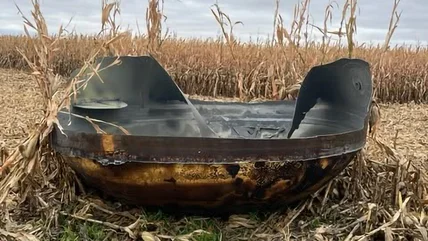
Debris From Chinese Rocket Found In Minnesota Cornfield
When space debris is normally measured in inches, something that's over 11 feet wide is a break from the norm and big enough to get on law enforcement's radar.
Read More

When space debris is normally measured in inches, something that's over 11 feet wide is a break from the norm and big enough to get on law enforcement's radar.
Read MoreIn all four cases, it appears that once they got around the dark side of the Moon, each astronaut saw the Earth and decided to never leave it again.
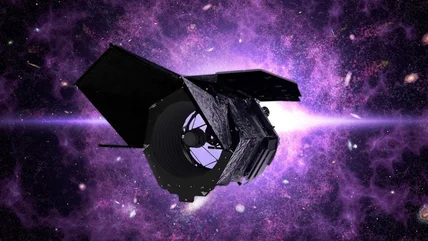
Read MoreDiscover how NASA’s Nancy Grace Roman Space Telescope differs from James Webb—from its massive field of view to the quest for dark energy and exoplanets.
Read MoreIt's headed out now to study the universe, but the new Nancy Grace Roman telescope almost had equipment too small to matter. Then a U.S. spy agency helped out.
Read MoreWhile normal people struggle to afford to fill up their cars, the shipping companies are raking in the cash.
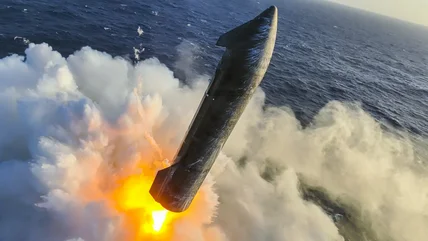
Read MoreTo keep its NASA lunar contract, SpaceX has to get the Starship operational by 2028.
Read MoreBeyond all the "Star Wars" models, George Lucas' $1 billion museum has amazing illustrations, comics and paintings featuring boats, planes, cars and spaceships.
Read MoreComing in several thousand pounds under its projected weight and using just a fraction of the projected fuel has done wonders for its potential time in space.
Read MoreThis won't be fully built out until 2031, but an interim program will take an initial cohort of students in 2028.
Read MoreThe Chinese mission to Mars is on pace to launch in 2028, and it may beat the U.S. back to Earth with soil samples, even though the U.S. is already there.
Read MoreFuel would be an issue on such a long journey, so the AI-theorized probe would need a solar-electric power system and head for our sun first.
Read MoreKeep in mind that all this hinges on Starship eventually becoming a real boy!
Read MoreThe plan was for the Link satellite to fly over to Swift, grab onto it, and haul it back up into a stable orbit. Unfortunately, that's not what happened.
Read MoreThe more and more rockets humanity launches, the more and more likely we are to litter the lunar surface.
Read MoreFreshly spotted, but probably already dead.
Read MoreCalled the Global Hypersonic & Orbital Spaceport Technology (GHOST), this modular system was designed to be fit within standard shipping containers.
Read MoreNASA began playing wake-up music for Gemini 6 in 1965, but it wasn't a regular routine until Apollo 10, leading to the '70s use of this panic-inducing number.
Read MoreThe EU and European space companies are building up their space muscles, creating a network of satellites that will provide critical communication support.
Read MoreIt may sound a little like the fire truck you called is on fire. But this is space, and things go wrong all the time.
Read MoreIf NASA wants to land astronauts on the Moon again, it's got three problems, and they're all bodies.
Read MoreThink you know speed? Discover the fascinating story behind the fastest man-made object in history and just how fast it's actually traveling.
Read MoreHumanity is dramatically increasing its presence in space, and that's putting strain on the legal framework around it.
Read MoreIf America is to continue its role as a leader outside our home, it will need to find whole-of-society methods to navigate setbacks. This is a good start.
Read MoreStarship V3 has a long way to go before its ready to land astronauts on the Moon.
Read MoreFour good people with the Right Stuff (plus two alternates) will be selected for the Moon and Mars Exploration Analog, or MMEA.
Read MoreSagan's team created the greatest puzzle of all time, which you can only solve if your species understands the basic nature of the universe.
Read MoreStep into the future of space exploration. Learn how magnetic fields could power spacecraft acceleration—completely eliminating the need for rocket fuel.
Read More