

SpaceX's Rivals Are Already Filling The Void Left By Falcon 9
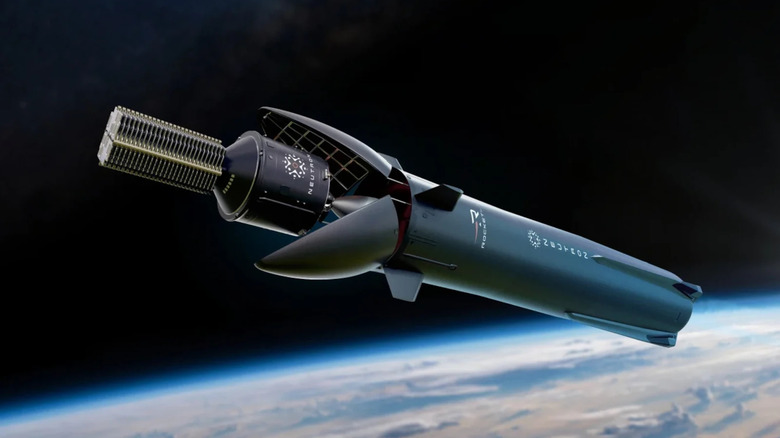
The future of American access to space is in doubt for the first time in decades. That very uncertainty is already starting to show itself as an opportunity for the companies positioned to seize it. In the last few weeks, the Pentagon has handed out two separate $150 million loans to rocket companies Stoke Space and Rocket Lab, investments meant to build out their launch infrastructure and manufacturing capabilities. That ought to help get them to a place where they can reliably launch military assets into space, but critically, it also helps them attract and deliver on commercial contracts, too. Business is booming, and a lot more is expected to come the way of these two and many other rocket companies in the next few years. The main reason: SpaceX, the dominant force in the entire sector, is giving that business away.
Elon Musk's rocket enterprise has expanded a lot lately, getting into everything from AI infrastructure to natural gas mining. Its future mainly depends on the in-development Starship rocket, however. The largest and most powerful rocket ever built, it is supposedly taking astronauts to the Moon and is the only rocket that can deploy Starlink's newest V3 satellites. SpaceX really, really needs Starship to work. So it's acting as if it will work, which means the company has already stopped taking reservations for flights on its workhorse Falcon 9 rocket. While it appears that the military and NASA may get a few extra years to use that rocket, Musk has made it clear he intends to wind down the Falcon 9 sooner rather than later.
The question is, what happens if Starship isn't ready in the next few years? Even if it is, what if it's so busy launching Starlink satellites that it won't take other customers? Plus, as a larger rocket, Starship will likely be more expensive to commission than other rockets. Where does the rest of the space ecosystem, including the military, go once the Falcon 9 is gone?
Small companies, small rockets, big opportunity
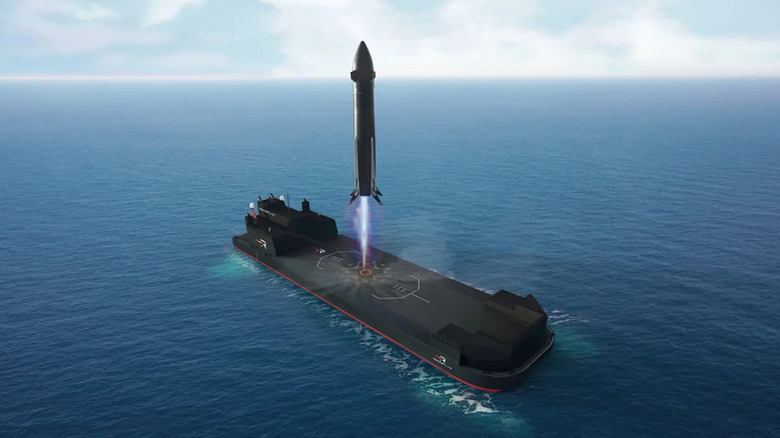
The Pentagon sees the coming crunch in launch capacity and is moving now to mitigate it. It wants more companies capable of delivering its payloads to orbit to reduce its dependence on one provider and, really, one particular business leader. That's why its Office of Strategic Capital, the military's investment arm established in 2022, is pouring resources into SpaceX's smaller rivals right now. For Stoke Space, this money is intended to help it build out a new launchpad at the Space Force base in Cape Canaveral, where its in-development Nova Block 2 rocket will operate. For Rocket Lab, the money will help it upgrade its factories and expand its drone boat fleet for the recovery of returning rockets.
It's not a coincidence that Stoke's Nova Block 2 and Rocket Lab's in-development Neutron rocket are more or less competitors to the departing Falcon 9, not Starship. Though they are a bit smaller, capable of 15 and 13 metric-ton payloads respectively compared to the Falcon 9's 23, that still puts them in position to scoop up business for medium-sized missions. For a lot of satellite and other space companies, that's all they need, so it's a better fit for them than a more expensive Starship launch. And that's assuming Starship would even take reservations for launches beyond its Starlink needs.
Still, that word "in-development" keeps cropping up, which is its own cause for concern. All of these rockets need to actually prove they can launch and recover reliably, or there's no business at all. The Neutron rocket already delayed its debut to 2027; the Nova Block 2 isn't scheduled to start flying until 2029. It really puts into perspective how far ahead of its time the Falcon 9 was. Of course, there are other competitors knocking at the door, most notably Jeff Bezos' Blue Origin and its New Glenn rocket. What will determine the next decade of the space industry is how many of these rockets come online when and how successfully.
Good for the military, good for business
As the Russo-Ukrainian War has proven, space is a critical component of modern warfare; in multiple instances, Ukraine's sudden disconnection from Starlink (reportedly at Musk's behest) directly impacted its ability to conduct strike operations. Those instances also prove the fragility of depending on one company. So these investments are meant to diversify the Pentagon's corporate partners in this domain, giving it several ways to reach and, in the future, utilize space. Redundancy is going to be key to military space endeavors in the event of a war with a near-peer adversary.
However, it's worth noting that investments in launch infrastructure and manufacturing also set up these companies for success in their launches for commercial clients, which in turn nurtures the whole space industry. As a primary strategic concern for the 21st century, the American government is essentially subsidizing the growth of the entire space sector. The more companies are active here, the more innovations and technologies are created. Those then become the engines of both economic and military might. As ever with the military-industrial complex, it feeds on itself.
And with the Falcon 9 fading away, the feeding is good. Rocket Lab's Neutron rocket, which hasn't even flown yet, is already completely booked through the rest of this decade. It also increased its launch fee from $55 million to $70 million, because it knows that Falcon's absence gives it pricing power. If you're a SpaceX competitor who's felt crushed by the dominance of the SpaceX workhorse for all these years, the boom times are coming. The hard part, of course, will be meeting all that new demand. The Falcon 9 launched 165 times last year. The booked-out Neutron is on the docket for... 16 launches over the next few years.