

Why Some Drivers Hand Police A Blue Envelope During A Traffic Stop
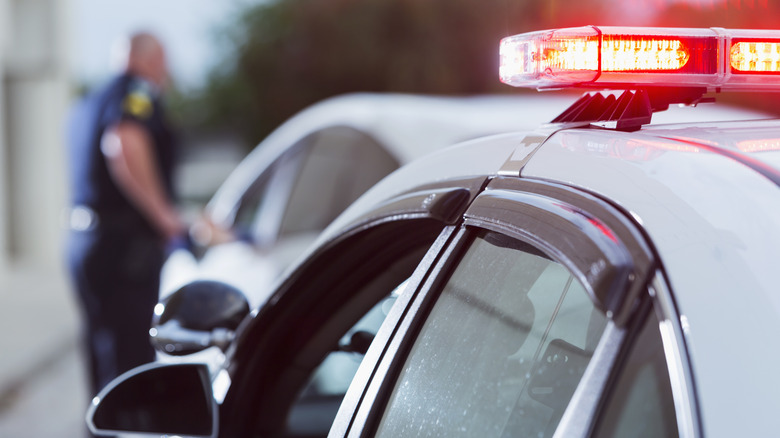
Getting pulled over is never a fun time. The reasons are seemingly endless, from driving a police magnet to dangling a keepsake from the rearview mirror or having Flock misidentify your car as stolen. Now imagine going through any of these scenarios while also having a disability that creates communication challenges, such as autism. For someone with sensory, cognitive, and verbal difficulties, the already stressful event of being pulled over could lead to trauma or even being shot. And for the police officer, being unaware of the driver's medical condition can lead to miscommunication and mishandling of the situation.
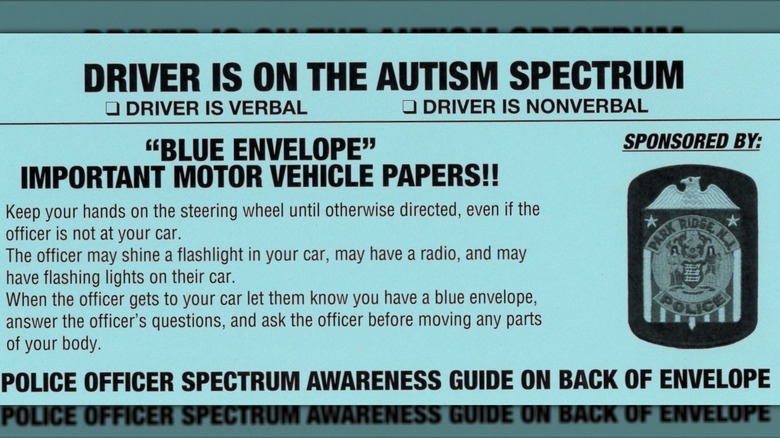
That's why the Blue Envelope Program was developed: to improve communication between law enforcement and people who require additional accommodations or time during stops. Designed to be an all-inclusive information tool that's easy and straightforward to use for both the driver and officer, on the envelope's exterior are printed instructions and guidelines regarding how to interact with one another, while inside are essential documents, such as a driver's license, proof of insurance, and vehicle registration.
How does the Blue Envelope Program work, and what states use it?
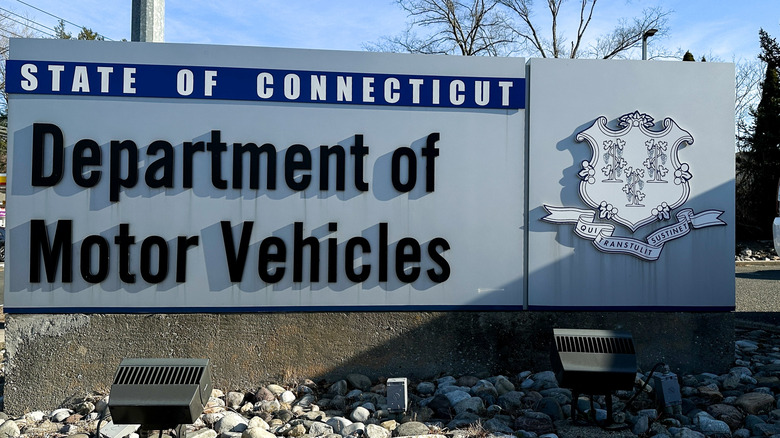
To improve awareness and reduce stress for drivers with Autism Spectrum Disorder, Connecticut created the first Blue Envelope program by state law in 2020. As of February 2026, per the Organization for Autism Research it had been adopted statewide or locally in 30 states. Of those, 13 have made such communication a statewide effort, reports the National Conference of State Legislatures: Arizona, Arkansas, Connecticut, Florida, Idaho, Indiana, Mississippi, Nevada, New Hampshire, New Jersey, Rhode Island, Tennessee and Virginia.
Using the color blue, or even envelopes, is not universal, however. The envelope color can vary based on jurisdiction and medical condition. The legislature group says blue is generally used to signify an autism diagnosis, yellow is displayed for those with communication impediments, and green signifies a mental illness. Arkansas, for example, provides both blue and green envelopes based on a person's condition and needs.
Then you have states that distribute decals instead to inform police and first responders about a driver's extra needs. Florida, Idaho, Indiana, Nevada, New Jersey and Tennessee use yellow-dot stickers, applied either to the driver's license or the vehicle. Arizona's program requires that the decal be 3½ inches in diameter with "saving lives" imprinted in the center and affixed to the upper left corner of the vehicle's rear window. Beyond that, though, there is no set standard on where these identifying dots are placed, only that they are visible to instantly inform responders to approach the driver with patience and care.
What is autism?
Autism was first recognized in 1943 by scientist Leo Kanner. According to the Autism Science Foundation, "autism" is a catchall phrase for a neurological condition in which people can display apathy in social settings, insist on routine, and exhibit repetitive behaviors like rocking or flapping their hands. Some cases of autism may involve aggression or self-injury. The foundation says about 40% also include a cognitive disability.
Although available science suggests a genetic origin, there's no single known cause for autism, which is found in all cultures, races, regions, and ethnic groups. Boys are four times more likely to be affected than girls, but characteristics vary greatly from individual to individual. Without a single distinctive trait, people with autism aren't obvious, which is why programs like Blue Envelope need to be the first line of communication with officers or EMTs. If not for this context, a person's lack of eye contact, rapid movements, or unresponsiveness to directions could be misinterpreted as disobeying an officer or resisting arrest.
Laws don't need to be enacted to improve traffic stop safety for people with autism. Local law-enforcement agencies can organize Blue Envelope programs without needing state authorization. And for participants, diagnosis documentation isn't required to obtain a color-coded envelope or decal, which are readily available through motor-vehicle registries, police departments, driving schools, and advocacy groups in places that have adopted the program.