

According To Leaked Pitch, Flock Cameras Were Once Nearly Put In Ubers And Lyfts
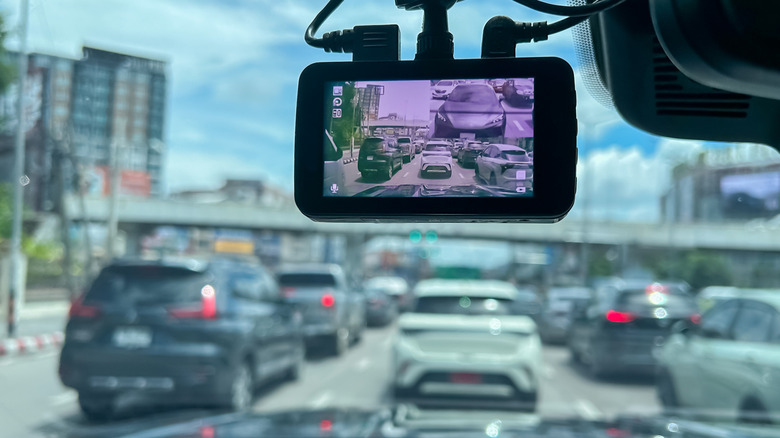
No matter how you cut it, Flock cameras are a nightmare. Law enforcement officers have routinely abused these Fourth Amendment-violating, privately owned spy cameras to, among other things, successfully stalk a woman after she changed her identity to escape her abusive cop ex-boyfriend. That's not an isolated incident, either: 17 Georgia cops have been arrested and fired for using Flock cameras to illegally stalk people, and a USA Today report that instigated further arrests identified 240 Flock users who exhibited similarly concerning behavior, though the publication reminds readers that the data covered a mere fraction of Flock searches conducted during the studied period.
Now, imagine a world where Flock also had access to footage from a moving fleet of hundreds of thousands of vehicles. That world was almost a reality, and there's actually no federal law to prevent this from happening in the future. A recently leaked pitch exposed by 404 Media shows that the 100,000-camera-strong spy network that creepy cops love so much was nearly integrated with over 350,000 rideshare and delivery vehicles for services like Uber and Lyft — possibly without their owners' knowledge or consent.
As it stands, Flock Safety's vast network of spy cameras is already so dastardly it would've made Winston Smith stain his britches, but this thankfully unrealized partnership between Flock and Nexar, a dashcam company, would've quadrupled the network's size overnight. That would've meant Flock's automatic license plate readers (ALPRs) — which already get only 29% of plates right in some places — would've had an even vaster well of data to misinterpret and could've gotten even more auto journalists detained for "stealing" their press cars. The reasons this partnership didn't go through aren't fully known, but it's clear how bad it would've been for the average driver.
How Flock sought to expand its surveillance empire
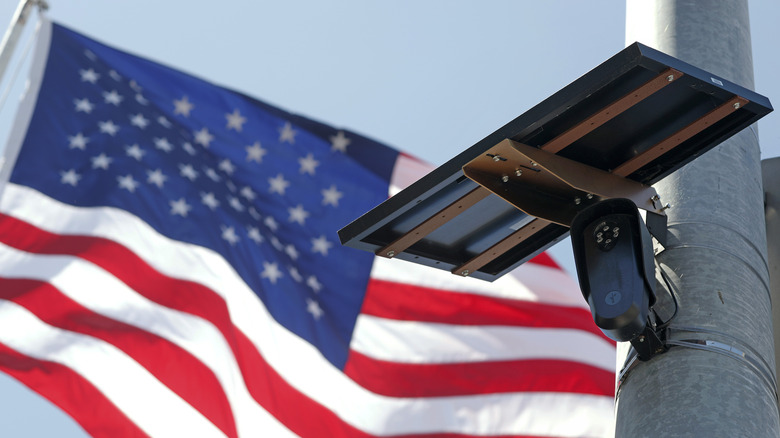
The pitch was pretty simple: Atlanta-based Flock Safety wanted to partner with Nexar, a company that markets its dashcams to rideshare and delivery drivers in the name of protecting their livelihoods, to share data openly in order to perform license plate reads from moving vehicles. This plan, proposed to the Georgia Office of the Attorney General in August 2025, would have represented an enormous expansion for Flock's data collection efforts and a transformation of how it collects said data.
As it is, Nexar's dashcams provide live feeds that capture HD video of a high enough quality to read license plates. These cameras can be both street- and cabin-facing, and they automatically upload footage to Nexar's database. This means that the data is all already there; a Flock-Nexar partnership would've primarily meant that Nexar passed its data to Flock, leading to Flock having access to an even deeper data set than what Flock's staggering 20 billion license plate reads monthly already produce — in fact, Nexar once claimed the company's dashcams produce trillions of images monthly.
What would Flock Safety do with all that extra data? The same thing it does every night, Pinky: Try to take over the world! Or, rather, sell that data to law enforcement, vastly increasing their available data without having to spend money on infrastructure. The company could've turned its stationary surveillance mobile nearly overnight.
One can only imagine that, armed with more data, cops could busy themselves with so much more stalking. After all, with more than 5,000 Flock cameras at their disposal, Atlanta police aren't resolving more crimes than before.
Security was, is, and will remain a cornerstone issue with ALPR networks
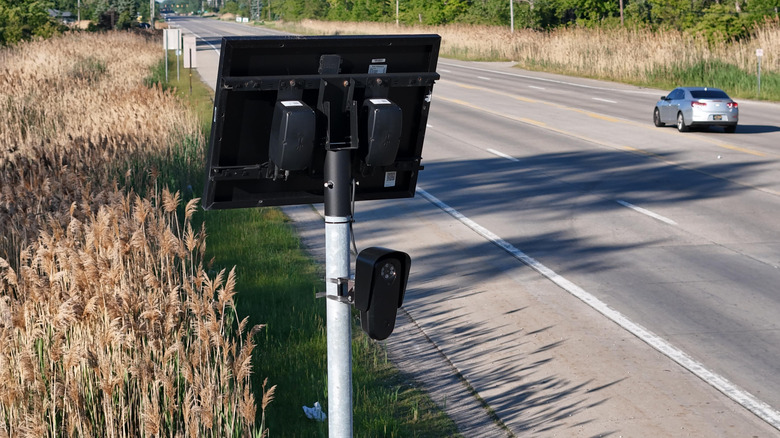
Beyond the general uncouthness of a privately owned panopticon that police can use to stalk citizens, this Flock-Nexar plan was still bad. Around the time Flock was preparing this pitch for the Georgia AG, Nexar had some embarrassing security issues.
Per a separate 404 Media report, in just two hours, a hacker broke through Nexar's security and accessed truly mind-boggling volumes of video data. Remember when the 30-gigabyte iPod dropped in the early 2000s and felt like it held endless numbers of songs? The 130 terabytes of data the hacker unearthed would have filled a full 4,333 of them. The hacker, who exploited an Amazon Web Services key found on every Nexar device that allowed access to an entire Nexar database, said that they suspected bad actors had already been accessing this data undetected.
Hacktivists have also been able to break into Flock numerous times. In late 2025, YouTuber Benn Jordan showed how easy it is to hack a Flock camera and found that some Flock cameras were streaming on the open internet. And in September 2026, Wired reported on a hacker group that obtained a Flock camera's encryption key, accessing thousands of videos. Despite Flock's claims to the contrary, it's increasingly clear that ALPRs don't just collect license plate info. But if we're all constantly being filmed without our consent, and those filming us have flimsy security and questionable intentions, then how can anyone have a reasonable expectation of privacy?
The Nexar deal would've made things worse, subjecting rideshare riders to such surveillance without their consent. In fact, Nexar wouldn't even have had to inform the dashcam owners of these changes.