

Space Entrepreneur Wants To Prove There Are Aliens By Sending A Probe On An 80,000-Year Voyage To Alpha Centauri Because AI Said That Would Work
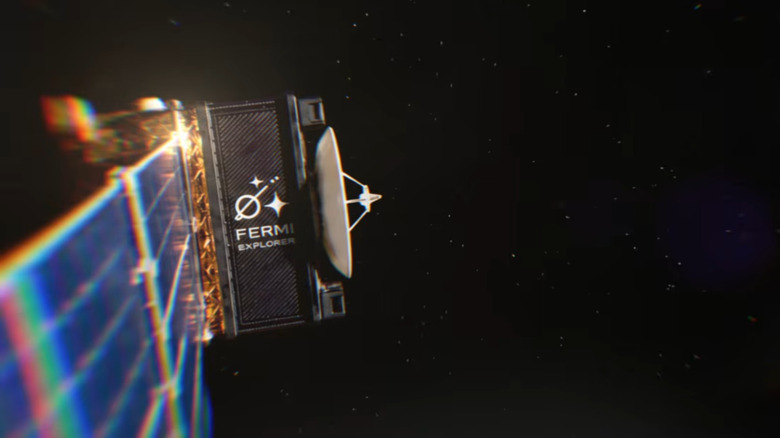
Let's pretend that you want to figure out why alien civilizations have not yet made contact with our little island Earth, a concept called the Fermi paradox. One possibility is that they're out there, but they won't or can't send probes past their own solar system. So to disprove that, you think it's high time that our civilization send a probe to our closest stellar neighbor, Alpha Centauri. To do that in a fuel-efficient way, you ask AI what the best plan would be. It spits out a pretty wild but seemingly plausible trajectory that would circle ever closer to the Sun before slingshotting the probe out into space with its gravity. Total trip time: a mere 80,000 years. Makes perfect sense to me!
It also makes sense to Philip Johnston, a British physicist and supporter of putting data centers into space, is currently trying to raise $15 million to make this happen. And that includes taking donations on the Fermi Explorer website, Kickstarter-style. For $10, you could be a humble supporter; for a cool $1 million, you could place a small item onboard and have your name engraved on the probe.
Practically speaking, the real money will probably come either from a corporate sponsor or a very rich nerd (assuming the money comes at all). To that point, Johnston is on a bit of a media blitz to hype up the project. In an interview with NBC News, he says that the reasons to do this crazy thing include "the spirit of exploration" and proving that humanity could "actually settle the galaxy in maybe five to ten million years." To Ars Technica, he added another rationale: "So we were like, 'F*** it, let's send a spacecraft for the cheapest amount possible.'"
Boldly going, maybe
Even with an 80,000-year timeframe, fuel is a problem. A probe can only carry so much xenon gas onboard, so thrust will mostly have to come from solar-electric propulsion. Get far enough from the Sun, and there just isn't enough light to power the latter system. Enter AI! Physical Superintelligence, an AI startup, used its model to generate an 81-page report on how to get to Alpha Centauri. It is not peer-reviewed. The plan is to go towards the Sun instead of away from it, circling ever closer for a solid 12 years, somewhat like the Parker Solar Probe. That gets the probe moving faster and faster, until it finally uses a slingshot maneuver on the last pass, flinging it towards Alpha Centauri for another 80 millennia.
It will be so lonely for the probe, in the void of space for all that time, only to arrive at our (probably) unpopulated neighbor! Except that's not what the Fermi Explorer team seems to think will happen. According to the group's video (made with AI, errors and all), humanity will invent faster travel within the next few thousand years and overtake Fermi Explorer anyway. So when the probe finally gets to Alpha Centauri, it will receive a hero's welcome from the humans already there. And then we'll colonize the whole galaxy in 8 million years, and then colonize the next galaxy in 1 billion years. Yes, this is all in the video.
So what is the actual goal here? Possibly, this is just a fun project for rich kids, who collectively won't mind a $15 million price tag. Or maybe Johnston just wants to raise his media profile a bit, in which case, well, that worked. Anyway, if all that sounds good to you, feel free to donate $1 million of your dollars to the cause. This way, you can disprove the Fermi paradox, I guess, by showing that our civilization has the will to explore other stars.