

The Ford Fathom Platform May Underpin A Fiesta-Sized Hatchback
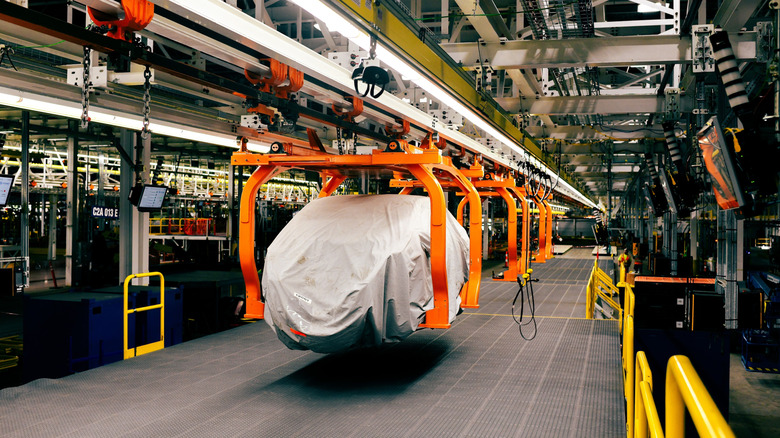
There is, understandably, a lot of hype around Ford's newly announced midsized electric pickup. The Fathom, expected to arrive next year, promises to deliver more interior space than a Toyota RAV-4, revised battery chemistry, and either rear- or all-wheel-drive configurations for under the magic $30,000 number (before destination charge). The truck is underpinned by Ford's new Universal Electric Vehicle platform, and will be leading the charge as the first vehicle released from that, um, slate. The even more exciting part, however is Ford's promise that UEV will find its way into several other segments as well, including a tiny Ford Fiesta-sized vehicle.
In a recent question-and-answer session about the UEV platform, Ford let slip some of its upper and lower limits for the future. A Ford rep told Ford Authority, "The UEV platform is designed to be highly flexible and will support a family of vehicles across multiple body styles (from B-car sized up to commercial vans). It is also engineered to be flexible for multiple chemistries and form factors beyond the initial Lithium Iron Phosphate or LFP battery, allowing it to adapt to future advancements."
Early in the development of electric vehicles, there were plenty of compact cars to go around, from the Nissan Leaf and Chevrolet Spark to the Honda Fit and Mitsubishi i-MIEV. As time went on, the electric car seems to have left its compact roots behind for fast midsize and larger crossovers, including Ford's own Mustang Mach-E. As a veteran auto writer and small-car enthusiast, I am hopeful that Ford's "B-car sized" electric will initiate a revival of the EV city car. It certainly shows that Ford is at least entertaining the idea of returning to car-shaped vehicles.
Ford left cars behind, but are they coming back?
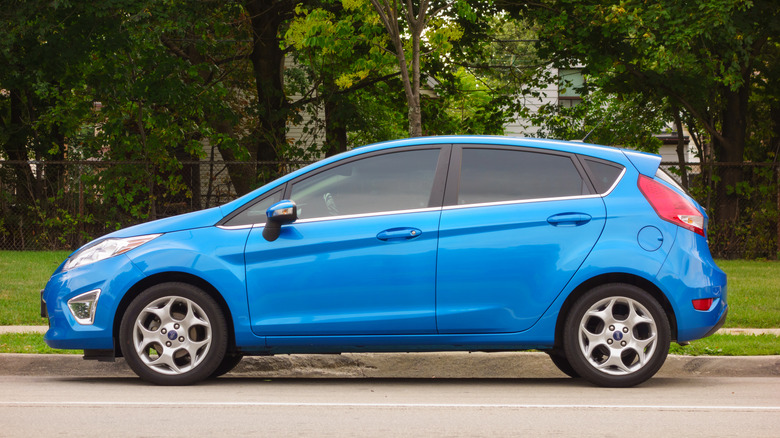
There isn't a single B-segment car available in the 2026 United States automotive landscape. Ford was among the first to abandon the small-car segment when it killed the Fiesta for the 2019 model year. Since then, we've seen the departure of every Fiesta competitor, from the Honda Fit and Nissan Versa to the Chevrolet Sonic and Mitsubishi Mirage. It's a crying shame that as the economy continues its "K-shaped" trajectory there isn't a single inexpensive compact offered for the people who need them most. Ford's comment that it's working to revive the small-car segment with a UEV platform compact is a welcome one, and it can't come soon enough.
 Ford
Ford
Ford is already in the midst of investing almost $2 billion in revamping its Louisville Assembly Plant to build the UEV platform-based Fathom pickup, reinventing the assembly line for time efficiency. The new procedure would see an "assembly tree" that has three different sub-assemblies start their journey in different places, merging into a final assembly area. Ford says this will make the truck 40% more quickly than on a traditional assembly line. It's a smart idea that I'm surprised took over 100 years to figure out.
By lowering costs, simplifying systems, and improving speed and efficiency, Ford hopes it can compete on a global scale with Chinese electric vehicles. To do that, it will need to expand its offerings beyond the midsized pickup truck pretty quickly. BYD currently controls the global EV space, and its compact Dolphin is likely the car Ford is benchmarking for a new Fiesta-sized car. The Dolphin is 9 inches longer and just over 1 inch wider than the 6th-gen Fiesta five-door.
What could an electric Fiesta-sized vehicle be?
Obviously this is all speculation, as Ford hasn't officially announced much about the Fathom yet beyond its general shape, size, and some of its capabilities. Knowing that it will be available in rear-wheel or all-wheel drive configurations is certainly a welcome bit of information. This indicates to me that the UEV platform can be adapted to power either end of the vehicle, but I'm hopeful that Ford will see fit to build an electric hot hatch with rear-driven wheels, or perhaps all-wheel drive, to really give the people something to talk about. Maybe Ford could engineer the car to accept front-, all-, and rear-wheel drive propulsion, as the Polestar 2 did.
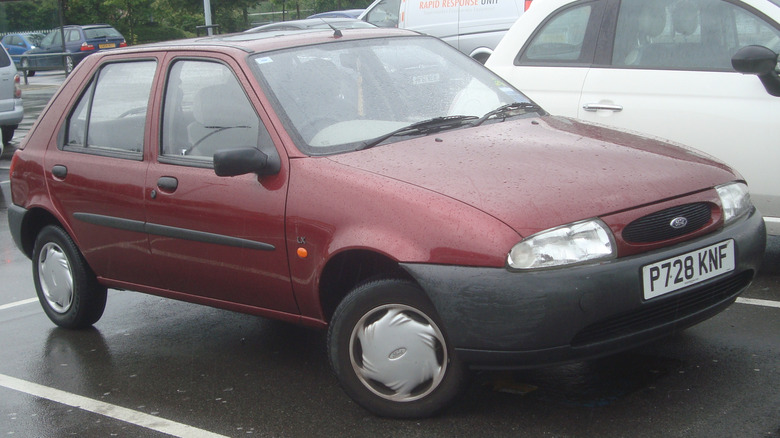
While the Fiesta has always been a front-wheel-drive car, there's no saying this B-segment car will actually be called a Fiesta. Maybe Ford will grab Bobcat, Escort, or Pinto from its back catalog, all available as rear-drivers at some point, or maybe give the compact new nomenclature altogether. And with recent news that Mini might be developing a rear-drive EV platform for its next-generation Cooper compact, Ford could have some serious competition in the as-yet-non-existent electric rear-drive compact space.
Whatever this compact Ford EV turns out to be, I am excited at the prospect of the Blue Oval returning to building something that isn't an SUV or pickup truck. The decision to leave cars behind has been detrimental to the overall car market, and I hope that Ford can return to building smaller cars, hopefully with a dash of fun.