

After Chrysler Bought AMC, We Almost Got This V8 Sports Sedan
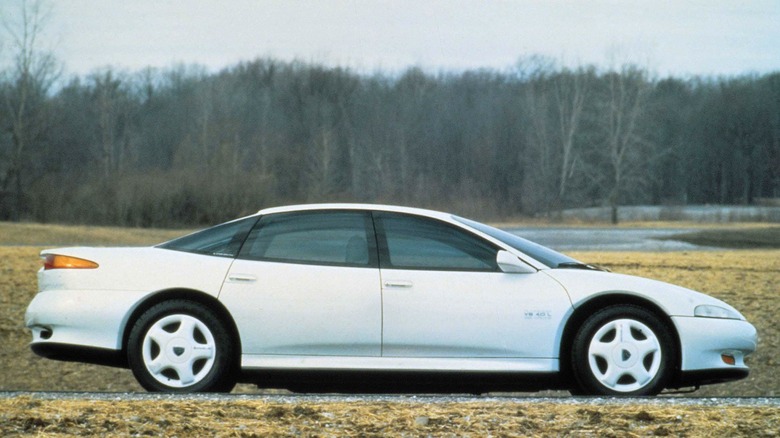
No doubt one of the most influential people in automotive history, Lee Iacocca has been associated with his share of famous rides over the years. The Ford Mustang and Lincoln Continental Mark III from his time at the Blue Oval are just some of the highlights, as are the Plymouth Voyager and Dodge Viper launched during his tenure at Chrysler. But even Iacocca had some swings and misses, like the Eagle Optima sports sedan introduced in 1990.
Sleek and sexy on the outside, with a 4.0-liter, 32-valve all-aluminum V8 under the hood, the Optima previewed Chrysler's new cab-forward design philosophy. The look would appear in production form for cars like the 2002 Chrysler 300M that we found for sale in 2025. The idea was to push the windshield and A-pillar forward toward the front of the car, allowing for a much more spacious feel inside and a striking new appearance on the outside.
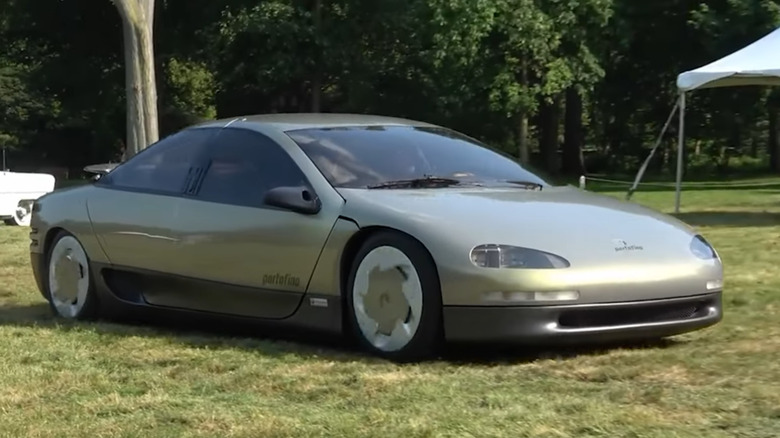
The cab-forward cars would go on to be an impressive success for Chrysler, with the company selling more than 1.2 million of its cab-forward LH cars between their introduction in 1992 and the end of the first generation in 1997. Yet one thing that never carried over from the Optima was its V8. That's despite the fact that it actually would have fit in the production LH platform. The decision makes a kind of sense once you understand the Optima's backstory. Remember that Chrysler owned Lamborghini back then — overseeing the Italian brand from 1987 to 1994 — and the Optima actually owes its roots to a car that demanded at least a V8: the Lamborghini Portofino concept created under the Chrysler regime.
From Raging Bull to Eagle Vision
The complicated story of the cab-forward design began as Chrysler was working on a follow-up to its famed K-cars in the mid-1980s. The company's styling team, under the direction of Tom Gale, had floated a number of potential designs for a new sedan, and one that stuck out was the Chrysler Navajo – essentially ground zero for the cab-forward movement.
This was about the same time as Chrysler's Lambo purchase, which led to an over-the-top K-car among other interesting vehicles. For instance, another automotive icon — Bob Lutz — thought using the Navajo's design principles on a Lamborghini concept vehicle would be a great way to grab some attention. The result was the Lamborghini Portofino that blended a cab-forward appearance with front/rear scissor doors and a mid-mounted V8. This is where AMC, Jeep, and Renault come into the picture.
Jeep, then owned by AMC-Renault, was also on Chrysler's shopping list in the 1980s. However, the only way Renault would give in would be if Chrysler also took on AMC's commitment to sell rebadged Renaults in this country. So, Iacocca simply leveraged those Renault products to create the Eagle brand in a move meant to parallel GM's efforts with Saturn. In the end, the Portofino basically gave up its Lambo-like doors and engine placement to become the Eagle Optima. Then, when the Eagle brand was looking to replace the Premier sedan — itself an Americanized Renault — the Optima-inspired LH platform was transformed into the Eagle Vision. And despite never packing a V8, the Vision did come with a 214-horsepower V6 with just six fewer ponies than found in the 1990 Ford Taurus SHO.