

The Mercedes M104 Inline-Six Made The W124 300CE A German 2JZ Sleeper
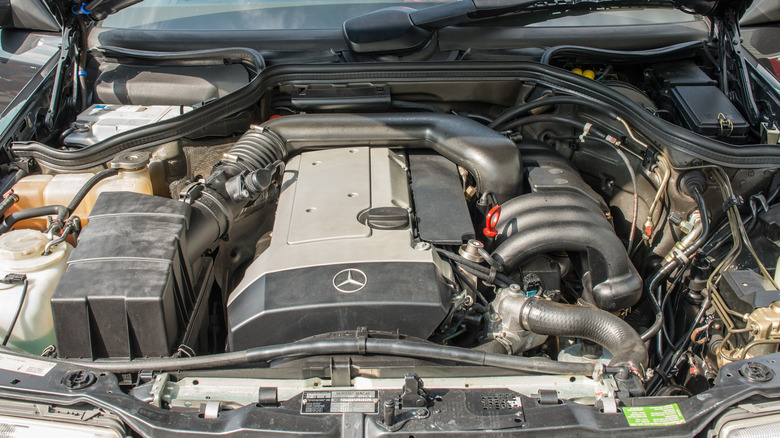
Mercedes has a history of building big engines. Its best in-house offering was the V12 from the W140 S-Class, one of the most complex cars ever made. Meanwhile, most Americans best knew the three-pointed star for its diesel-powered engines. Despite this history, the arrival of the M104 inline-six in 1989 — and the subsequent iconic 300CE — allowed Mercedes to have a viable rival to Toyota's 1991 2JZ engine.
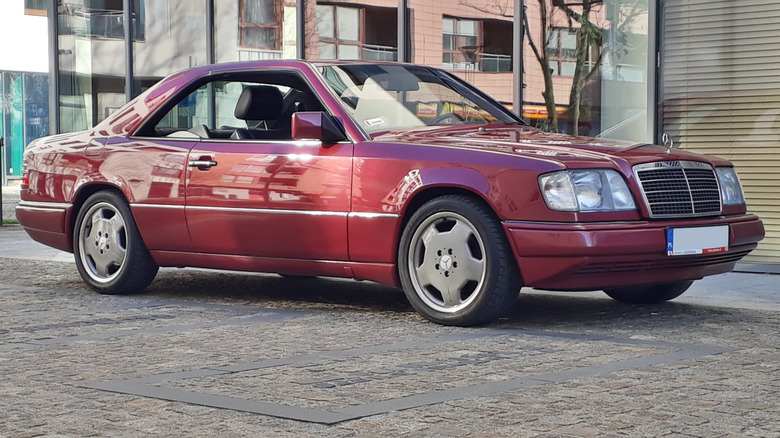
The W124 300CE isn't an attention-grabbing car. Its proportions are upright and composed, and the body lines restrained to the point of near-invisibility in traffic. A driver who didn't know what to look for could park next to one every day and never register it as anything beyond an inconspicuous German coupe. And yet, it's still a stellar pick for enthusiasts looking for a bargain performance icon.
What most people miss from a cursory glance at the rear-wheel-drive coupe is the M104. At its peak, Mercedes' bulletproof 3.2-liter inline-six produced 217 horsepower in European specification — though it was dampened to 180 horsepower in North American models to satisfy emissions requirements. The 300CE had similar specs to the ubiquitous W124 saloons of the time while also providing a tighter driving experience that enthusiasts yearned for.
Making the 300CE an underrated retro benchmark
The engine boasted four valves per cylinder, dual-overhead cams, and the kind of mechanical refinement that Mercedes applied to engines it expected to last rather than impress. And that design easily created parallels to Toyota's 2JZ. Toyota's straight-six became a benchmark not primarily because of what it produced from the factory, but because of what it tolerated afterward. Its cast-iron block absorbed sustained stress, a naturally aspirated foundation had genuine headroom for forced induction, and it could last for mileages that would retire most performance engines.
The M104 earns the comparison on similar terms. With the M104, drivers have noted crossing 200,000 miles on stock M104 internals without significant mechanical work — as long as they stuck to the maintenance schedule. The engine's own cast-iron block and aluminum head construction gives it the same structural resilience that makes ambitious builds achievable.
The 2JZ comparison holds up precisely because of what both engines share: an accessible tuning ceiling, a reputation for reliability at high mileage, and a presence in countless cars over the years. They both left obvious headroom for the people willing to find it — and a cult-classic legacy that real enthusiasts venerate. And so, while not looking nearly as fancy as the Supra, the 300CE still manages to stand up to its power, durability, and tunability.