

NASA Can't Rescue The Satellite That Was Going To Rescue Another Satellite After All
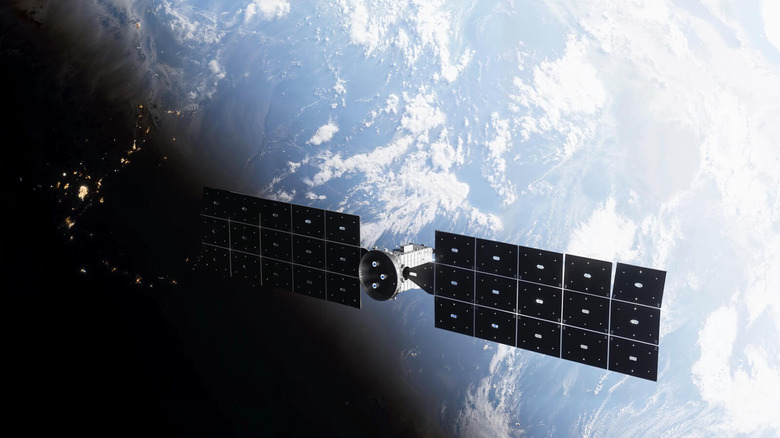
NASA and Katalyst Space Technologies have jointly announced that the latter's Link satellite will no longer attempt to grab and boost the former's Swift satellite back into stable orbit. To put it another way: The attempt to rescue the rescue satellite could not rescue the rescue satellite, which will no longer be able to rescue the other satellite, which now cannot be rescued at all, and neither can the rescue satellite. Despite the apparent failure, both NASA and Katalyst still see positives in the fact that an attempt could even be put together in under a year, something that would have been impossible not all that long ago.
The backstory here is that the Neil Gehrels Swift Observatory, a NASA space telescope launched in 2004 to study gamma-ray bursts, decayed out of orbit and began to fall back to Earth. In fairness, the mission was only supposed to last two years, so Swift did pretty well overall. As a test and flex of America's growing commercial space capability, last year NASA gave Katalyst $30 million to see if they could get a rescue attempt together. The plan was for the Link satellite to fly over to Swift, grab onto it, and haul it back up into a stable orbit. Unfortunately, just a few weeks after making it into orbit itself, Link went into a terrible spin. Katalyst made a heroic effort to use its remaining propulsion to arrest the spin and continue the mission, but now, the towel has been thrown. That doesn't mean it's all over, though.
Dancing on a grave in space
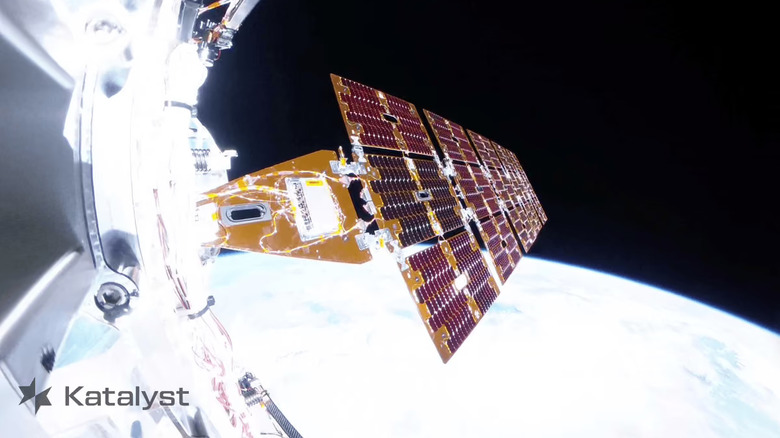
On July 25, Link transited into a known communications black-out zone, which should have only lasted an hour or so. Somewhere in that hour, something went horrifically wrong, and the rescue satellite went into a rapid multi-axis spin. Katalyst never formally announced what went wrong, though the New York Times reports that it was due to faulty maneuvering thrusters. In any case, the loss of communication resulted in a cascade of other failures, including the reaction wheels and thrusters, which control where the spacecraft is pointed. Katalyst tried to make up for these losses by using the remaining reaction wheel, thrusters, and electric propulsion system. That did appear to bring Link out of spin and back into regular communications contact.
Unfortunately, doing so ate up a bunch of the precious xenon fuel onboard. There just isn't enough of that fuel left to safely attempt to boost Swift back into orbit. So, rather than risk a crash, the rescue mission is off. Instead, Link will attempt to get near Swift and perform maneuvers around it. This might seem like dancing on Swift's grave, but the idea is to test out whatever Link can still manage and pass on those learnings to future space operations. Maybe one day, NASA and Katalyst will try again with another satellite, and the lessons of Link will lead them to success. "We knew this was a high-risk, high-reward mission – a first-of-its kind attempt," said Shawn Domagal-Goldman, director, Astrophysics Division, NASA Headquarters in Washington. "But we knew the takeaways from this mission would be worthwhile either way."
This is the end for Swift and its multi-decade survey of gamma ray bursts, though. NASA expects it to re-enter Earth's atmosphere sometime this year, where it will mostly burn up. Some pieces will strike the surface, though. The space agency told the NYT that "the risk of harm coming to anyone on Earth is unlikely." That sounds like just hoping for the best, which is more or less how most satellites crash back to our planet. As we send more and more satellites into orbit every year, we're going to need to have a serious discussion about how we retire them. Or, maybe, how we rescue them.