

'Contrary To Law' Polestar Still Doesn't Understand Why It's Banned From Selling Cars In The U.S. But Volvo Isn't
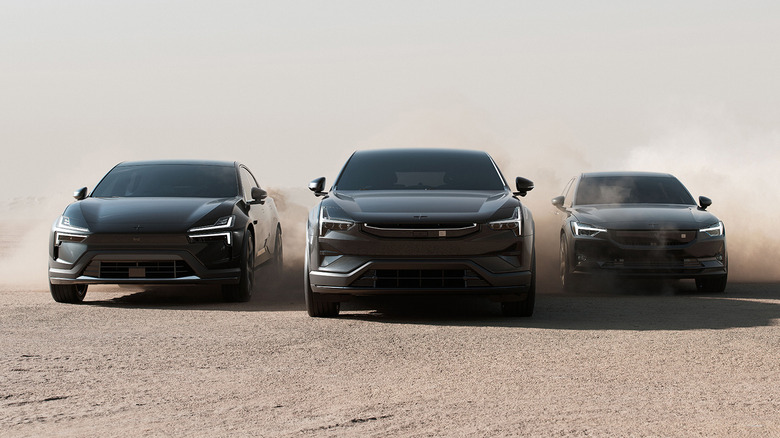
When it was announced that Polestar would be forced to pack up shop and leave the U.S. market, it came as a shock to many, including Polestar itself. Two months after the Swedish-Chinese automaker was told to get out, it sent a letter to its nearly three-dozen dealerships saying it was caught off guard by the U.S. government's June 24 decision, and it doesn't understand why its sister company, Volvo, isn't being treated in the same manner.
In an August 18 letter to dealers seen by The Wall Street Journal, Polestar said it still doesn't have an explanation for why it must cease its U.S. sales, while Volvo is allowed to continue on even though it sells some vehicles that are nearly identical. The letter also alleged that the U.S. Department of Commerce signaled that the automaker would be allowed to stay in the country. I guess Trump and his boys changed their minds.
In the letter, Peter Wexler, Polestar's U.S. head of product, retail network and government affairs, said, "We are currently focusing on getting the attention of [the Commerce Department] to obtain the requested information and to understand the underlying basis for the denial."
Polestar's ban is part of a wider crackdown on Chinese vehicle tech aimed at preventing China from spying on Americans with connected-vehicle technology, something we've reported on in the past, typed up on our Chinese-made laptops that you've undoubtedly read on your Chinese-made phones. The ban has been implemented by the Trump administration, but it would be unfair to neglect the fact that the Biden administration kicked this whole thing off.
Strung along
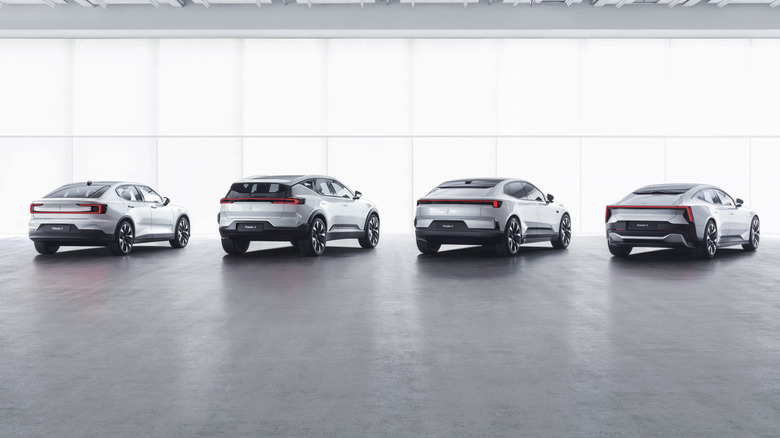
Commerce officials were apparently ready to approve both Volvo and Polestar staying in the United States. Polestar answered multiple rounds of questions in 2025, and back in April, an official told the automaker that it would be reasonable to expect that if Volvo was approved by the government, Polestar would be as well, The Journal reports. That, clearly, did not happen. According to The Wall Street Journal:
Polestar offered multiple times to discuss "mitigation measures," including restrictions as to where data is stored and who can access it, auditing and reporting requirements and independent cybersecurity assessments, Wexler said. Commerce officials then approved Volvo's application in May, before denying Polestar's application the following month. The Volvo EX90 is "a car that is essentially (the) same as the Polestar 3 and that uses the same software stack," while the two models are built on the same line at Volvo's factory in South Carolina, Wexler said.
It really is quite a head-scratcher as to why Volvo gets to continue in the U.S., but Polestar must die. It's enough of a bizarre situation that Wexler told the Commerce Department that its treatment of Polestar and Volvo runs "contrary to law."
My best guess, and I know this sounds sort of insane, is that the Trump administration has heard of Volvo but hasn't heard of Polestar. After all, the company is relatively new, and it sold fewer than 6,000 vehicles in the U.S. last year. Whoever made the decision probably didn't even read far enough into the paperwork to realize Volvo wasn't completely Swedish.
In any case, it's not just Polestar corporate that wants answers. Dealers do too. As we reported, one of them is even suing the automaker for at least $25 million in damages after investing to build a dedicated Polestar showroom, and they claim that Polestar was always planning to leave the U.S. How the lawsuit shakes out, this is very much the end of Polestar in the U.S. It won't appeal the denial, and it will turn its attention to sales in Europe instead. I get it. I wouldn't want to hang out at a party I wasn't invited to, either.