

These 5 Modern Cars Have Retro Designs Inspired By '70s Icons
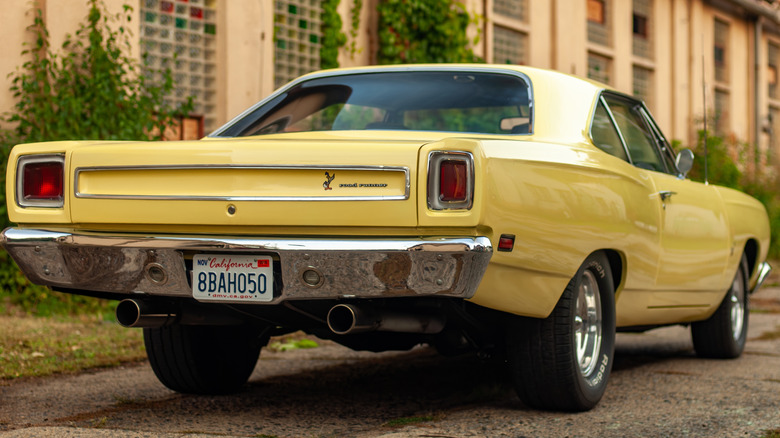
The automobile has been around for well over a century. In that time, certain models have transcended being just a point A to point B machine. The most iconic ones have reached cult status, can cost millions of dollars, have shaped entire design trends, and made us into devoted enthusiasts.
But not everyone who loves an old car wants to live with the realities of owning one. Vintage cars can be expensive to maintain, difficult to use every day, and far less convenient than their modern counterparts. Still, that enduring love for classics is easy to see today, especially in the booming restomod industry, which takes the best of old cars and mixes it with modern performance, technology, safety, and reliability.
Automakers know that nostalgia can carry enormous appeal, and many have turned to their back catalogs for inspiration, borrowing recognizable shapes, proportions, and styling details from past models while updating them for modern buyers.
The 1970s produced no shortage of amazing cars, and several of them continue to influence today's vehicles. For enthusiasts who want that unmistakable '70s character without the maintenance headaches of an actual vintage machine, the five modern models below bring some of the decade's most distinctive design DNA into the now.
Ferrari 12Cilindri (2024)
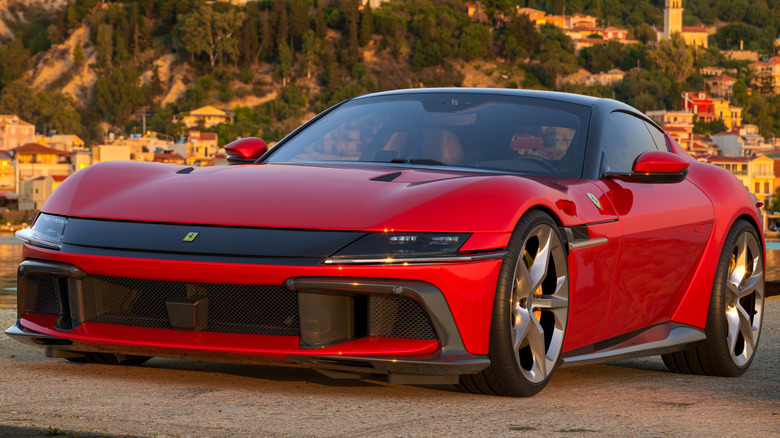
The Ferrari 12Cilindri continues an uninterrupted lineage of front-engined, naturally aspirated V12 Ferrari super GTs that started with the 1996 550 Maranello. The idea of the front-engined V12 Ferrari goes back even further, into the 1940s with the Ferrari 125 S. Many of the models within the lineup tie in with their ancestry.
For example, the Ferrari F12 TDF borrowed design cues and its name from the 1956 Ferrari 250 GT Berlinetta "Tour de France," while the Ferrari 599 GTO also borrowed its name from the 250 GTO. One of the more striking design touches of the new 12Cilindri, and also one of the most controversial ones, is the black bar that spans the width between the two headlights.
This bar ties in directly to Plexiglas-nose variants of the 1365 GTB/4. These Plexiglas-nose variants were available from 1968 to 1971 model years. When Road & Track did a deep dive into the design language of the new 12Cilindri, they asked Ferrari chief design officer Flavio Manzoni about it, and he said, "The main idea was to draw inspiration from the future." But look at the car itself, and Ferrari is just as clearly drawing inspiration from the past. Manzoni himself has said, "The front is clearly inspired by the Daytona," referring to the 365 GTB/4. The 365 GTB/4's complete production run spanned 1968 to 1973 model years.
Besides the black bar, the 12Cilindri also follows a Daytona-inspired silhouette, carrying over the same long front bonnet, set-back cabin, and short rear end that defined the original 365 GTB/4's proportions. Even the very latest stick-shift Ferrari 12Cilindri Manuale looks back to the past with its gated manual shift box — similar to the design the Daytona (and many other Ferraris) had, but with a modern twist.
Lamborghini Countach LPI 800-4 (2022)
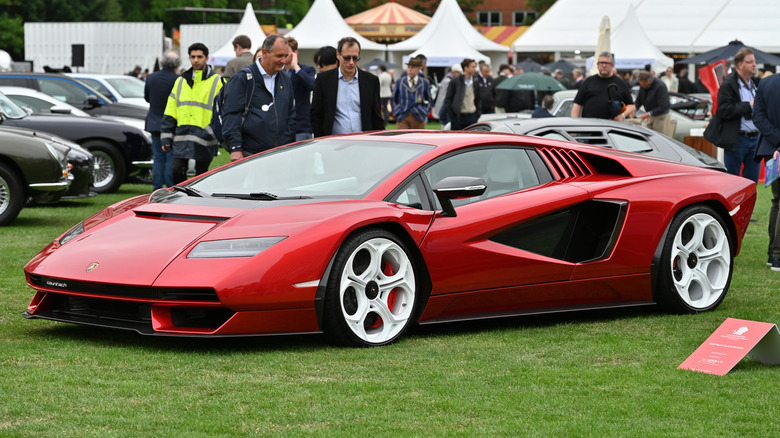
The 1970s supercar design has its signature elements, and among these, hardly any other (besides pop-up lights, maybe) is as prominent as the iconic wedge shape. Out of all of the wedge-shaped supercars that have ever wedged, no other wedged as hard as the original Lamborghini Countach.
Where the Ferrari 12Cilindri takes design inspiration from the past but clearly looks to the future, the Lamborghini Countach LPI 800-4 takes inspiration from the past purely to celebrate it. In other words, this is a car built as a tribute first, with everything else second. Revealed back in 2021, the Lamborghini Countach LPI 800-4 is envisioned as a tribute to the original Countach that was unveiled as a prototype in 1971, with exterior styling also borrowing cues from other generations. Lamborghini ended its Countach's production run in 1990.
The 2022 Countach's chassis is derived from the modern Lamborghini Aventador's chassis. This Countach also shares the Aventador's transmission and interior, with the hybrid powertrain lifted from the limited-edition Sián FKP 37. When looking at the new Countach from the outside, you can immediately recognize its wedge. From the side, both the new and the old Countach share other basic design cues, such as the triangle intake, the slats behind the doors, and the hexagonal wheel well cutouts. The lights also follow a similar idea, albeit very modernized for the LPI 800-4.
Cars from the 1970s often get a bad rap, but the Countach is certainly one of its bright spots. The new LPI 800-4 Countach was made as a limited-edition tribute, each retailing for the better part of $3 million.
Nissan Z (2023)
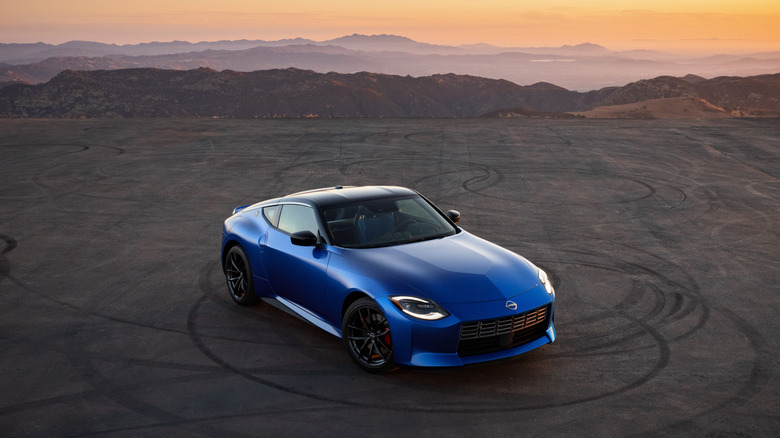
Ferrari and Lamborghini both prove that 70s reverence and nostalgia can sell at the highest end of the market. However, Nissan kinda pulled off a similar trick for a fraction of the price with its Z, which starts at under $50,000. The current, seventh-generation Z debuted for the 2023 model year, but its design language reaches straight back to the car that started it all: the first-generation Datsun 240Z (1970 to 1973).
In the new Nissan Z press kit, Nissan's global head of design, Alfonso Albaisa, described the approach directly, saying the team "created a Z that travels between the decades while being completely modern." When looking at the latest iteration of the Z, one of the cleanest callbacks to its 70s origin is its headlight design.
The LED units are shaped as two half-circles — a nod to the Japan-only 240ZG variant (1971 to 1973). Remaining portions of the exterior follow the same design language: a long hood, a low tail, and a roofline that tapers down toward the rear end, celebrating the original 240Z's dropped rear fender line. The 2023 Nissan Z ultimately reminded us that cheap thrills are timeless.
Nissan's new 2027 Z plays into nostalgia even more than its 2023 counterpart. The grille, now featuring a body-colored horizontal bar, is directly inspired by the S30 240Z (1969 to 1978). Additionally, the 2027 Z's wheels mirror the Z31's (1984 to 1989) shape, two-tone finish, and spokes. Its Shinkai Green Pearl Metallic color is inspired by the 1970 and 1971 240Z, and so is its tan cabin.
Volkswagen ID. Buzz (2024)
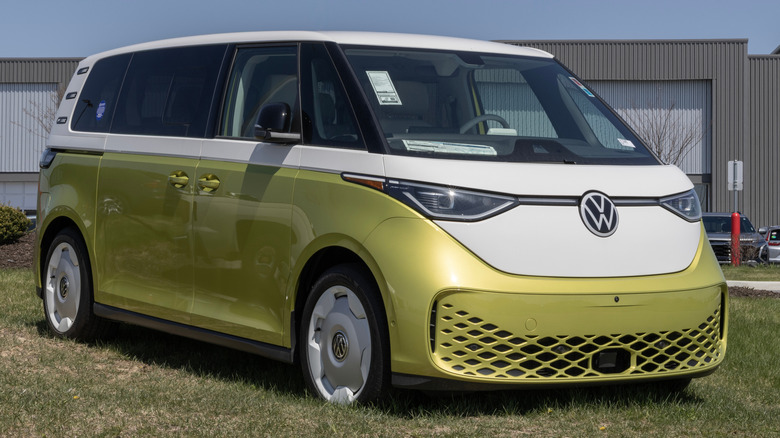
The first three cars on this list feature speed, thrills, and performance, but the VW ID. Buzz chases the feeling of cramming into a van full of people with nowhere in particular to be. The ID. Buzz went on sale in the US in 2024, and its inspiration is about as literal as retro design gets: it's the electric successor to the VW Type 2 Microbus, a vehicle that came to define American counterculture through the 1960s and 70s.
Volkswagen of America's president and CEO, Pablo Di Si, as covered by Fox News, was direct, calling the ID. Buzz "the spiritual reincarnation of the Microbus, reimagined for our electric future." The design team went all out with the resemblance, offering two-tone color combinations like Day-Glo lemon yellow and white, which were available in the 70s, and have become one of the model's most recognized looks. Examine the ID. Buzz's top portions, and you'll find rectangular window shapes, air vents mounted behind the rear side windows, and a small shade strip above the windshield embodying 70s VW Type 2 aesthetics.
Underneath the retro shell, the ID. Buzz is fully modern: an electric motor mounted at the rear, a touchscreen infotainment system, and a footprint (North American version) around 20 inches longer than the 70s version. One thing is certain: the 2025 Volkswagen ID Buzz has the best vibes of any new car on sale.
Dodge Challenger (2015 to 2023 refresh)
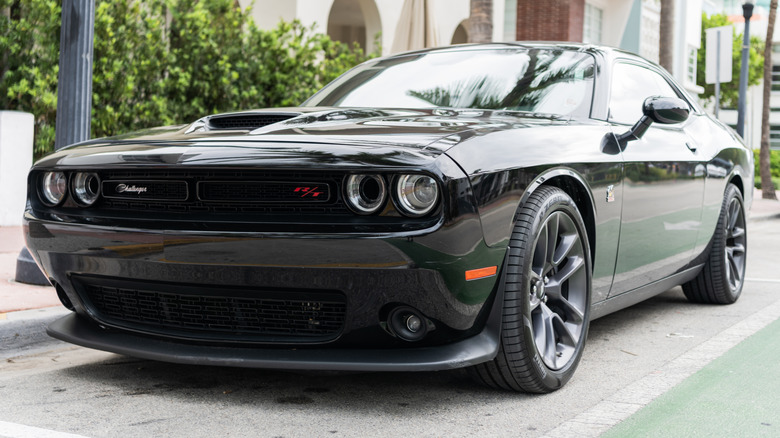
Both the Dodge Challenger and the Dodge Charger have a rich lineage of muscle car glory. So much so that Dodge never really changed the design in a meaningful way, constantly linking it back to what made 1960s and 1970s models so iconic. This is also apparent with the mid-cycle refresh (2015 to 2023) of the Challenger's last generation (2008 to 2023), which went all out with 1970s Challenger design cues.
According to Dodge's own press kit, Joe Dehner, then-head of Dodge Design, said the team "looked at the 1971 Challenger model to inspire us." That's not a vague nod to "muscle car heritage. It's one specific model year, chosen on purpose. Even without pointing it out, the 2015 model is filled with obvious giveaways.
Dodge dropped the single rear light bar used on 2008 through 2014 Challengers and replaced it with dual taillights, a distinct touch from the 1971 model. A two-piece split grille and the interior's redesigned console and gauge cluster expanded this homage.
The available shaker hood is another piece of period-correct theater. On the 392 HEMI Scat Pack trim, the hood scoop bolts to the engine itself rather than the body, so it physically moves along with the motor — a functional detail lifted straight from the Shaker-equipped 1970 Challenger R/T. Sadly, both the Challenger and the Charger are no more, as Dodge discontinued them — two cars that should have never been killed off.