

When Was Mercedes-Maybach Born?
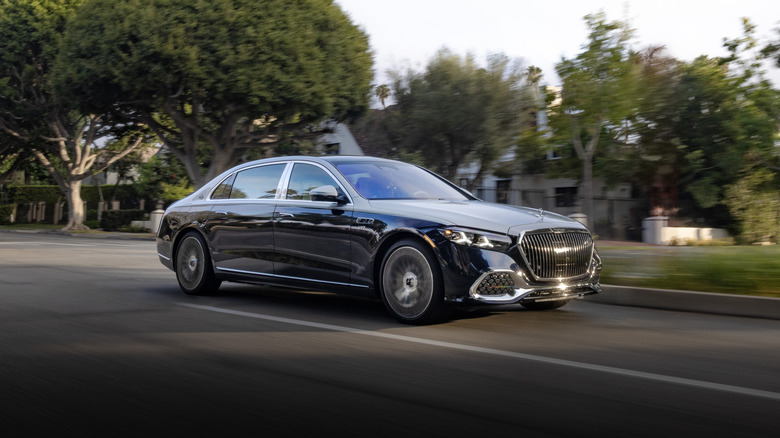
The company that sprang from Carl Benz' 1886 Patent Motor Car has gone through a number of name changes over the years. Most have come from founding fathers — including not only Benz, but also Gottlieb Daimler and Emil Jellinek, who contributed the Mercedes moniker in honor of his daughter. For example, in 2014, Daimler AG's vehicle divisions were Mercedes-Benz Car, Daimler Truck, Mercedes-Benz Vans, and Daimler Buses. And if we drilled down one more level later that same year, we'd have found Mercedes-Maybach as a newborn sub-brand beneath Mercedes-Benz Cars. Mercedes compared it to AMG at the time.
Of course, Mercedes-Maybach wasn't meant to be beneath anything. The first car to wear the new badge was the 2016 Mercedes-Maybach S Class that was aimed directly at status-seeking drivers looking for "peerless exclusivity." That's according to Mercedes, of course, which did help the Maybach stand out with lux details like a twin-turbo V12 engine and an incredibly spacious rear cabin that was the quietest in the world among production sedans of the time. FYI: Delivering a dozen cylinders is still a brand hallmark, with the 2027 Mercedes-Maybach S 680 continuing to exude V12 fabulousness.
The choice of the "Maybach" name made some amount of sense, too. Wilhelm Maybach was another key figure from the early days of German automaking. He was a partner and friend to Daimler, and would set up on his own in 1907. It wasn't until 1960 that the company then known as Daimler-Benz would purchase Maybach-Motorenbau and secure rights to the Maybach name.
Maybach: The early years
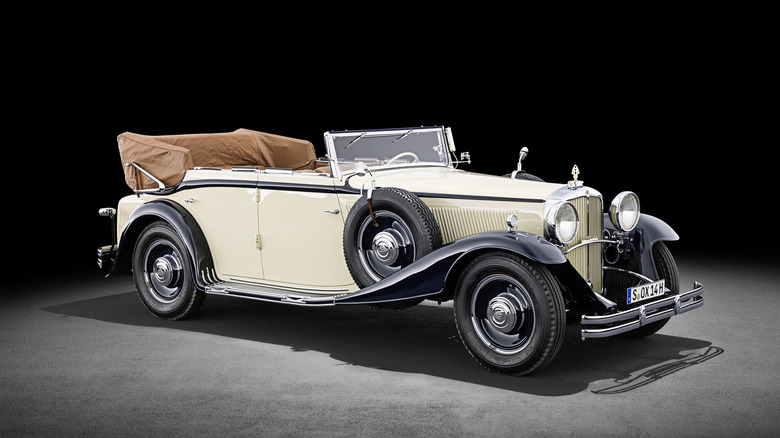
Wilhelm Maybach was born in Heilbronn, Germany, in 1846, but he had been sent to an orphanage 10 years later. It was that stroke of fate that put him on the path to success, though. Maybach began training in a local machine shop, which, at some point, came due for an inspection — and the person sent to do the inspecting was Gottlieb Daimler. The two began working together nearly immediately. By 1890, Daimler had formed Daimler-Motoren-Gesellschaft with Maybach as chief designer. The men and the company would have an on-again, off-again relationship over the years, but by 1907, Daimler was dead and Maybach had resigned.
Maybach's next major move was to create a company, with his son Karl, to supply engines for Zeppelins. That naturally came to an end with the end of World War I. The Maybachs remained in business as engine builders, picking up clients such as Spyker, the company that itself had invented the inline-6 engine. When Spyker went belly up, the Maybachs decided to manufacture their own cars to use the surplus powerplants.
The Maybach W3 was the outcome, introduced at the 1921 Berlin Motor Show as an unbodied chassis created as a blank canvas for the era's coachbuilders. Karl carried on the business after Wilhelm's death in 1929, eventually creating impressive machines aimed at the likes of Bentley, Bugatti, Rolls-Royce, and, yes, Daimler-Benz. The war essentially closed the books on Maybach auto production — although it continued life as an engine-builder until 1969, when Daimler-Benz, its owner since 1960, merged its operations with another of its divisions at the time, MTU Friedrichshafen. In another coincidence, that Daimler division would end up as a train and marine engine supplier owned by Rolls-Royce Holdings (not to be confused with Rolls-Royce Motor Cars).
Modern Maybach 1.0
The Maybach brand name, however, stayed in Daimler's possession — well, until Daimer AG split off its truck business in 2021 as an independent entity. The car operations were then renamed Mercedes-Benz Group AG in 2022. So you could say that it was only then that Mercedes-Benz really owned Maybach.
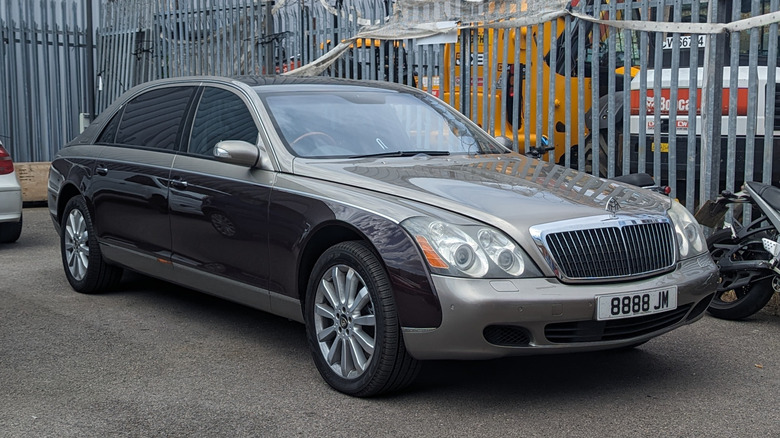
Also worth pointing out that the Mercedes-Maybach models launched in 2016 actually represented a second attempt at rebooting the Maybach name. It had also happened in 2002 when the Maybach 57 and 62 first appeared — under the auspices of DaimlerChrysler. The goal was the same then as it is now: beating the usual ultra-lux suspects at their own game. In fact, the brand was only created after Mercedes failed to purchase Bentley or Rolls-Royce in the late 1990s. The former would land at Volkswagen while the latter would come under BMW's control.
As for the Maybachs, they were never able to gain much traction in the marketplace, and the recession of 2008 probably didn't help any. In the end, Daimler decided it would have a better chance in the upper echelon of the auto market by focusing on the "Mercedes" name for 2013. On the other hand, folks today say that chasing ultra-rich customers helped knock the company off the top of luxury mountain, sales-wise. The other other hand? Mercedes-Maybach remains an important part of the company's ambitious plan to win back the U.S. luxury sales crown.