

Tesla Is Absolutely Dominating A Shrinking EV Market
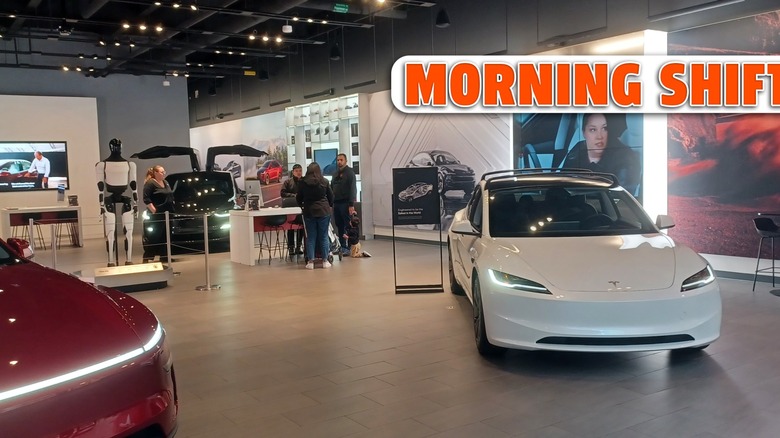
Good morning! It's Friday, August 14, 2026, and this is The Morning Shift, your daily roundup of the top automotive headlines from around the world, in one place. This is where you'll find the most important stories that are shaping the way Americans drive and get around.
In this morning's edition, Tesla reaffirms its place atop the EV field as others retreat, the Big Three automakers are scared Trump's North American trade deal redo could cost them billions, Jaguar-Land Rover just suffered a quarterly 69% profit slump, and Tesla gets more good news as it uses money to end a three-year strike in Sweden.
If you'd like a recap of the latest auto news sent to your inbox each weekday, you can sign up for Jalopnik's free Morning Shift newsletter here.
1st Gear: Tesla claims majority of EV registraions in a declining market
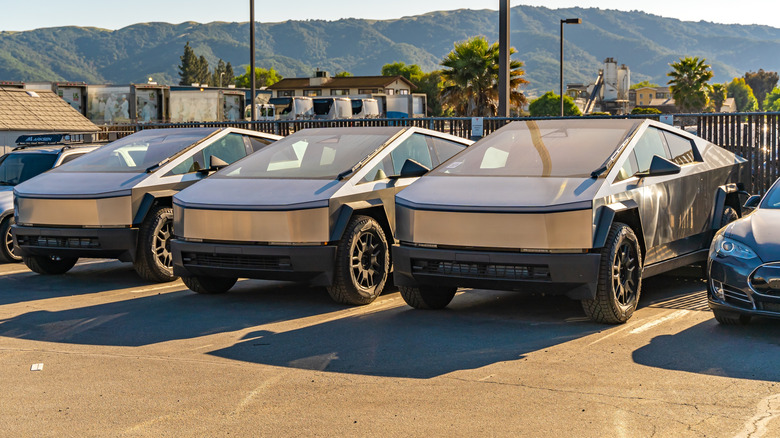
As brands retreat, the electric vehicle market is shrinking, and Tesla is here to clean up the scraps. The Cybertruck may be an Edsel-style flop, but the Austin, Texas-based automaker claimed more than 60% of the new EV registrations in the U.S. in June while registrations for other brands sharply declined, according to data from Mobility Global.
Total new EV registrations were down 11% in the month — the ninth straight month on a downward trajectory following President Trump's dismantling of the $7,500 federal EV tax credit at the end of September 2025. Non-Tesla brands were the main driver of the drop in June registrations from a year earlier, accounting for 100,515 vehicles. All in all, the EV share of the U.S. light-vehicle market fell to 6.9% from 8.6% a year earlier. From Automotive News:
While most of its legacy rivals posted steep declines in June, Tesla's registrations rose 8 percent from a year earlier to 61,813 vehicles, and its share of the EV segment reached 61.5 percent, an 11-point gain, Mobility Global said.
Among the nearly three dozen non-Tesla brands, June EV registrations dropped a combined 31 percent to 38,702 vehicles.
[...]
Meanwhile, Tesla's reputation as the most popular EV brand is driving its gains. Its top seller, the Model Y crossover, captured 42 percent of the EV market on its own in June.
Despite a weak EV market in June, there are still some signs of a recovery, and automaker EV incentives were still high — sitting at $7,290 per vehicle (about 13% of the average transaction price).
EV registrations broke 100,000 in June, the first month to reach that milestone since September. EV registrations for the first half of 2026 also came in stronger than skeptics had predicted.
EV registrations fell 21 percent in the first six months of the year to 492,651 vehicles, while share slipped to 6.1 percent from 7.5 percent a year earlier. Those numbers beat the most pessimistic predictions of a 50 percent EV decline this year and a 4 to 5 percent share.
[...]
Rivian was the No. 2 brand for EV registrations in June. Registrations fell 1.7 percent to 4,535 vehicles, Mobility Global said. Its commercial vans posted a 43 percent gain to 2,061 vehicles while its R1T pickup and R1S crossover both declined from a year earlier.
Rivian's share of the EV segment rose to 4.5 percent from 4.1 percent in June 2025.
Chevrolet came in at No. 3 with a 57 percent drop to 4,094 vehicles, the June data showed. Registrations of the Equinox EV crossover fell 78 percent to 1,361, while the Bolt hatchback, which was not on sale last year, had 1,371 registrations.
Chevrolet's EV share fell to 4.1 percent from 8.4 percent a year earlier.
Rounding out the top four were Hyundai with 4,011 registrations (down 23% with a segment share of 4%) and Cadillac with 3,931 registrations (down 4.6% with a segment share of 3.9%).
It seems that all of this is a sign that the average U.S. consumer has either forgotten or forgiven CEO Elon Musk for his meddling in the 2024 election and his incredibly close ties to President Trump, among the other unsavory things he's done in the past.
2nd Gear: Big Three scared of losing billion on Trump's new North American trade deal
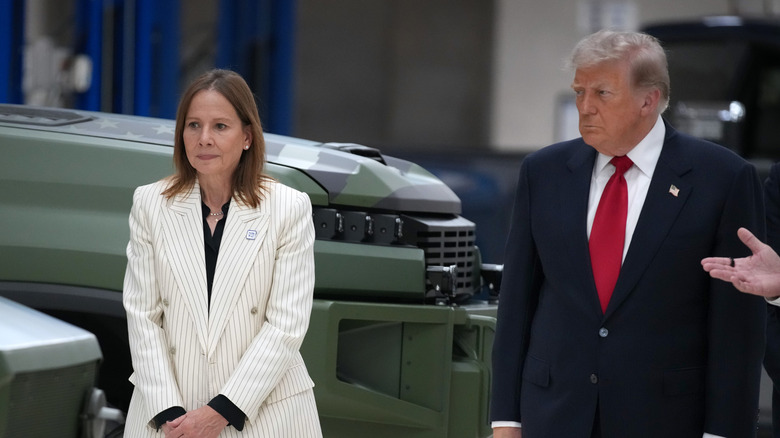
The Big Three automakers are about to go toe-to-toe with President Trump over his revised North American trade deal. They're worried the new plan could cost the companies billions of dollars and hurt their competitiveness with overseas rivals, neither of which is ideal. Meanwhile, the trio is still struggling to deal with and absorb the bevy of tariffs the administration implemented last year, including on steel and aluminum, car parts, and vehicles shipped in from Mexico and Canada. They're arguing rivals from Japan, South Korea, and Europe face lower tariff burdens.
On top of all that, they're worried that U.S. proposals floated out ahead of talks scheduled with Mexican trade officials could cause costs to rise even further. From Reuters:
One of the most contentious points for automakers is Washington's demand that vehicles contain at least 50% U.S.-made content to qualify for lower tariffs, as Reuters reported in May. That requirement, as well as a proposal to increase overall North American vehicle content from the current 75% level, would add at least $2 billion in annual costs for each Detroit automaker, according to estimates at two automakers.
Those expenses would come atop costs the automakers have already been incurring from the various levies in place since last year.
General Motors expects gross expenses related to tariffs to cost it $2.5 billion to $3.5 billion this year, potentially representing more than 20% of its operating profit. Ford Motor has pegged its net tariff hit at about $1 billion this year.
In an apparent signal to the White House of its commitment to make more cars domestically, Ford said on Wednesday it would move production of Lincoln models for the U.S. market to American factories from China, citing the Trump administration's tariffs as a driving factor.
Ford CEO Jim Farley told Reuters the company might have been unprepared early on for the administration's commitment to increasing U.S. auto production. But Ford – which already builds a larger percentage of its U.S.-sold vehicles domestically than its Detroit rivals – got the message, he said.
[...]
The American Automotive Policy Council, which represents Ford, GM and Jeep-maker Stellantis, referred Reuters to a June 30 statement saying that U.S. automakers are at a disadvantage to Japanese, South Korean and European automakers that export into the U.S. and face a flat 15% tariff.
GM CEO Mary Barra said on a July earnings call that the company is focused on "making sure that the U.S. automakers are going to be able to compete and win when we look at what the tariff rates are for Europeans, the Japanese and the Koreans."
One U.S. auto executive said Trump more quickly forged deals with Korea and Japan because those governments were able to advocate on behalf of their automakers as part of broader trade agreements focused on national security, whereas the U.S. car companies didn't have the same leverage.
U.S. automakers currently face a 25% tariff on imports from Mexico and Canada, but vehicles with heavier amounts of U.S.-made parts get lower tariff bills.
All of these companies have done a lot to cozy up to and placate Trump over the last year or so. Now seems to be the time that they're cashing in that goodwill.
3rd Gear: JLR profits hurt by supplier fire, Iran War
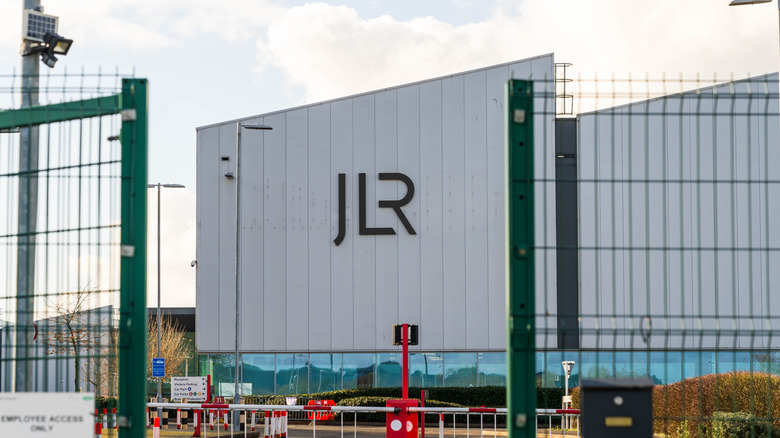
Jaguar-Land Rover couldn't catch a break if its life depended on it. The British-Indian automaker's revenue fell 9.6% to $8.1 billion and pretax profit dropped a not-so-nice 69% to $148 million in the latest quarter as production was screwed up once again. Unfortunately for JLR, a fire at a supplier in Norway caused it to briefly pause production at its Solihull plant in the UK in late March. Add in so-called "market disruption" caused by the U.S. and Israel's war with Iran, and sales are looking rough. From Bloomberg:
Profitability in the quarter suffered from market conditions pushing up marketing costs, the company added, without elaborating.
JLR, owned by India's Tata Motors Passenger Vehicles Ltd., is also grappling with a demand slump in China and higher tariffs in the US, its largest market. Its models include the Range Rover and Range Rover Sport.
Meanwhile, the wider Tata Group faces uncertainty over its capital spending plans after Chairman Natarajan Chandrasekaran resigned this week.
Chief Executive Officer P B Balaji, who joined JLR last year from the parent company, is focusing on the US for growth. It plans to create hybrid versions of the Range Rover and Defender models without a plug.
The automaker, which is targeting double-digit revenue growth, in May struck a deal with Stellantis NV to develop cars with the Jeep maker in the US, which could pave the way for it to eventually gain access to factories there. JLR makes most of its cars in the UK and Slovakia.
[...]
Tata Motors PV reported a lower-than-expected quarterly profit, as the weakness in the UK unit outweighed strong sales in India. Net income fell 80% to 7.75 billion rupees ($81.2 million) in the three months.
The automaker aims to expand its India market share to 20% from 14.2% by March 2031, aided by six new models and more than 20 product refreshes. It expects JLR to contribute as much as $50 billion of revenue by that time.
Of course, this all comes after a massive cyberattack crippled Jaguar-Land Rover's operations for more than five weeks. It ended up costing the automaker about $2 billion in lost revenue, wiping out its annual profit and impacting the wider UK economy. Hell, several suppliers even had to be bailed out. Things are not so hot over in JLR land right now. Here's hoping the Type 01 and Range Rover GT can turn things around.
4th Gear: Three year Swedish strike against Tesla comes to a close
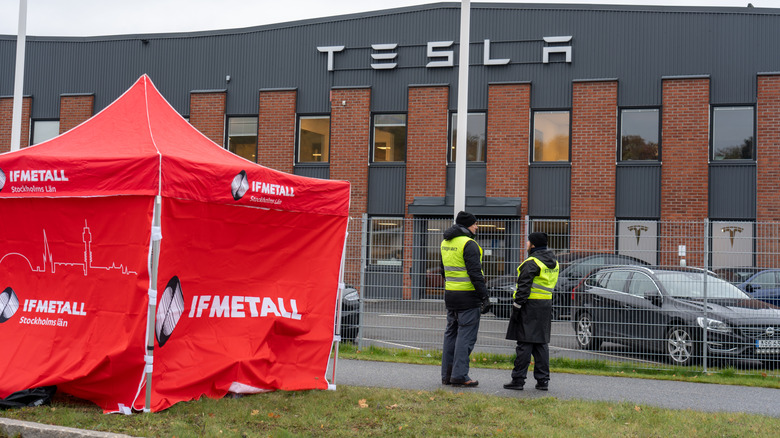
Tesla and CEO Elon Musk's three-year-long fight with Swedish union workers is finally coming to an end because the automaker decided to throw money at the problem instead of dealing with the real issues. Earlier this week, IF Metall said it was suspending the strike against Tesla, effective August 19, after the company bought out all of its striking workers. From Business Insider:
The fractious dispute has disrupted Tesla's operations in the Scandinavian country, with dockworkers refusing to unload the company's EVs from ships and cleaners boycotting Tesla's showrooms and offices as other unions joined the fray.
The strike action, which lasted more than 1,000 days, has drawn Musk's attention, with the Tesla CEO previously calling it "insane." Musk has been sharply critical of unions in the past, and the automaker was accused of cracking down on unionization efforts in the US in 2023.
In a statement announcing the end of the industrial action, which was initially intended to force Tesla to agree to negotiations with the union over pay and working conditions, IF Metall accused the company of "systematic strikebreaking."
In a statement announcing the end of the industrial action, which was initially intended to force Tesla to agree to negotiations with the union over pay and working conditions, IF Metall accused the company of "systematic strikebreaking."
Such collective agreements are common in Sweden's heavily unionized workforce.
The initial strike action, which began all the way back in 2023, covered about 120 Tesla workers. However, at this point it's not entirely clear how many employees were bought out by Tesla or how much the company paid them.
Reverse: A formative memory
 History.com
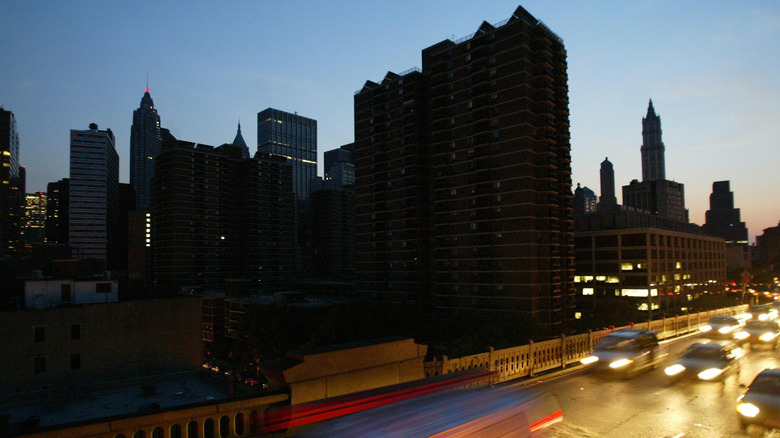
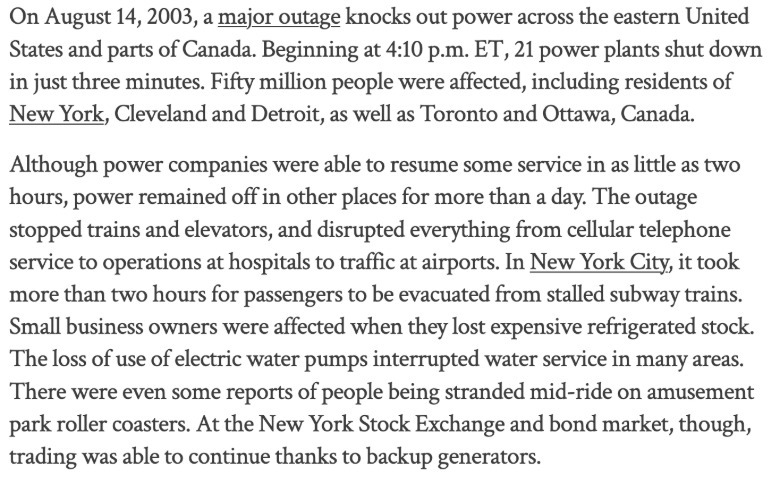
I was a touch under six years old when the 2003 Blackout hit the East Coast, making it one of my earlier memories. I can remember thinking that this was just life now — Nickelodeon was never coming back on, and I was really bummed about that. I can also remember going for a walk and finding a Buzz Lightyear action figure in the street. I'm fairly certain it's still at my folks' house. If you want to learn more about the '03 Blackout, head over to History.com.
The Fuel Up
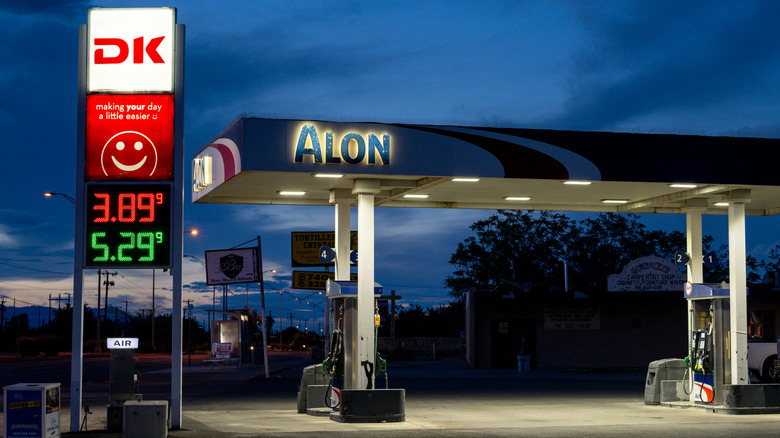
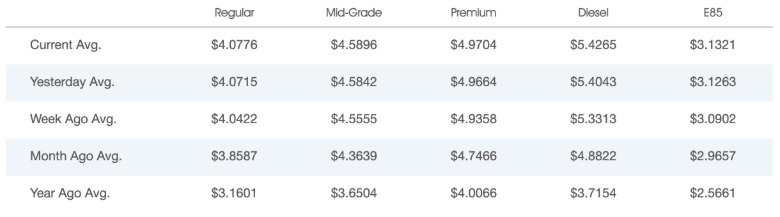
We all knew this was in our future when the U.S. said it could maintain a blockade on the Strait of Hormuz "indefinitely," but now reality is really starting to set in that gas prices aren't coming down anytime soon. WTI Crude Oil futures and Brent Crude prices being stuck around $81 and $87, respectively, at the time of publication, aren't helping matters either.
Here's where national average prices stand right now, according to AAA:
 AAA
AAA
This all means that the average price of a gallon of regular gas rose another cent overnight to $4.08, according to AAA. Remember when we were oh, so close to dropping back below $4.00? Me too. At the very least, we're still a good bit off from the 2026 high of $4.56 that we saw back in May.
On the radio: Katy Perry - Last Friday Night
If you can believe it, it's Friday once again, and what better way to celebrate that monumental occasion than with a little Katy Perry? I know Justin Trudeau agrees. Get excited, my friends. The weekend is finally here.