

The Pros And Cons Of Fast Charging An EV
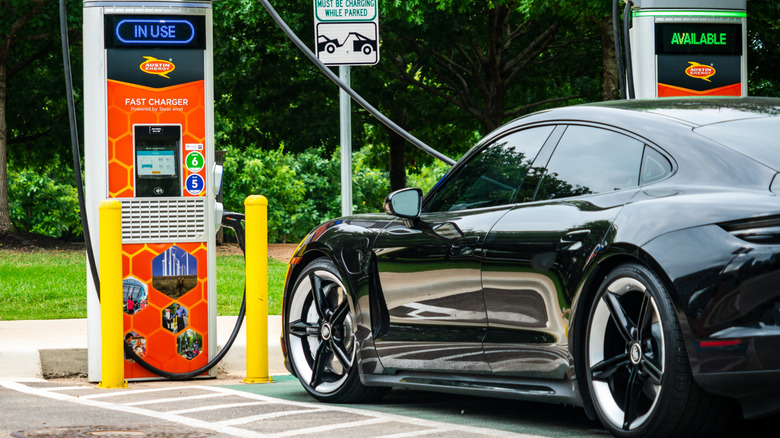
Let's make a few things clear from the jump: Fast-charging an EV means using a DC public charger. That doesn't mean a public Level 2 charger, which may deliver power quite similarly to the several hours it takes to charge at home. By DC, we mean at least the 400-kilowatt (kW) speeds you'll get at Tesla Superchargers and similar stations (which are even being installed by the Waffle House chain). And for "fast" charging, we're referring to the speeds that reach near the limit of what's possible from cars sold in the U.S. In other words, about 18 to 20 minutes for vehicles that can charge as fast or faster than a Tesla. If your ride doesn't have 800-volt architecture, like the 400-volt Toyota bZ, it'll instead take more like a half hour to get from 10% to 80%.
The main advantage of fast charging is being able to add 100 miles of range in under 10 minutes with EVs that support it. If you have a long commute — or you cannot charge at home — this is a huge bonus. You can top up charging in small drinks of current around town, grab enough range as needed, without being forced to chill for too long. And the locations of these chargers can also lead to increased convenience during your daily commutes. But fast charging costs more than regular charging, and it can degrade your EV's battery faster, too.
Fast charging means you're always getting great parking
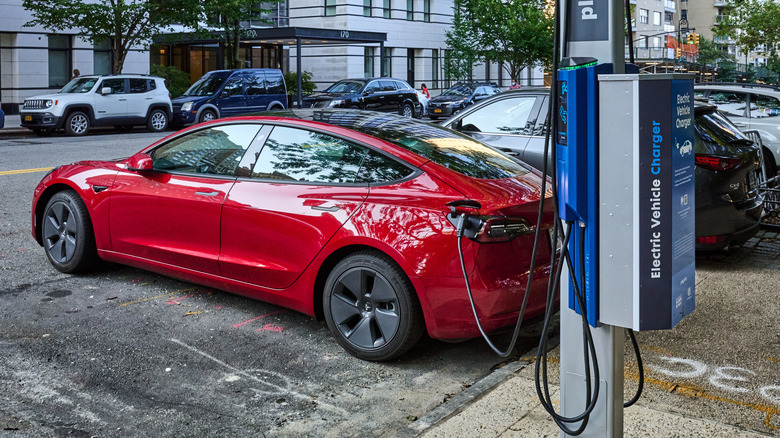
There are several EVs that can charge very rapidly, and while a lot of them are expensive, they're not all exorbitant. Sure, there's the yet-to-be-priced 2027 Mercedes-AMG GT53 4-Door Coupe that can add 332 miles in just 10 minutes. But even if that model turns out to be on the pricier side, consider instead the CLA Coupe ($48,500 with destination), which can add 202 miles of range in that same time frame. The even more affordable Kia EV6 ($39,445 with destination) takes 20 minutes to zap from 10% to 80% charge. You can do slightly better with the Hyundai Ioniq 6 ($39,595 with destination), charging from 10 to 80% in 18 minutes.
Even if your EV is on the pokier side of charging, there's a hidden upside to fast charging that doesn't come up in conversation as often: parking. See, it just so happens that fast-charging spaces tend to be in primo locations, especially at malls and supermarkets. Most office parks and businesses tend to have them up front, too, because all the infrastructure to support chargers needs to be close by — and shorter-run wiring is cheaper. That all actually works to your advantage; schedule your juicing around other errands and you'll likely scurry across a lot less asphalt. Certain smartphone apps can make the process even more seamless, since they let you see spaces that are unoccupied. And with enough practice using those apps, you might be able to predict when your local stations are most frequently vacant.
Nothing in life is free
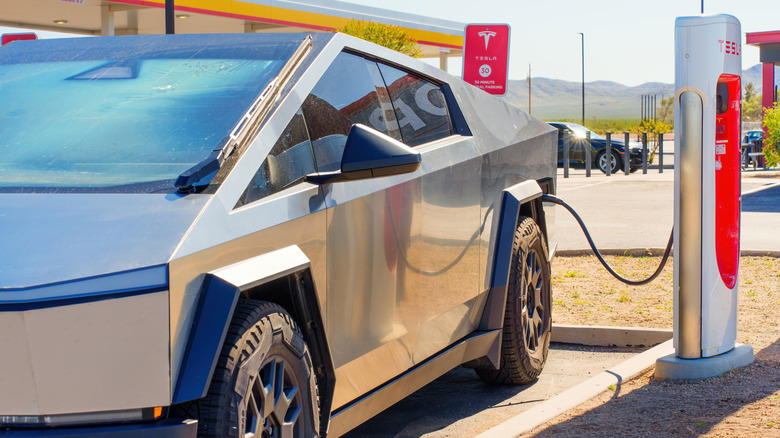
Fast charging is the most expensive way to own an EV. Qmerit (a home charger installer) has produced the following math: At the average per-kilowatt-hour (kWh) cost of 18 cents, filling up a 72 kWh EV on a home socket will cost you about $13. That's dirt cheap; if gas costs $4 per gallon and your car has a mere 10-gallon tank, you'll end up paying over three times as much for a refill. But public fast charging is closer to even with current gas prices. Qmerit puts the national average for it at 53 cents per kWh, meaning that same 72 kWh refill will now run you $38.16. That becomes roughly $2,000 annually, which is about what you can expect from constantly refilling a Toyota bZ. By comparison, the annual fueling costs of a gas-powered Toyota RAV4 will run you between $1,450 and $1,600.
If you're indifferent to the cost, you may worry that frequent DC fast charging is profoundly harmful to your EV's batteries. But the actual damage is lower than you'd guess. Carmakers shield batteries with tech that prevents overcharging or overheating, which is why going from 80% to 100% takes a bit longer to achieve. That's not to say there's no risk at all; Geotab, a data analytics firm, found that performing DC fast charging more than 12% of the time will slightly degrade your car's battery. Even so, the difference between heavy and occasional fast charging is a mere 8% lost capacity in eight years. For many drivers — particularly those who don't have convenient home charging — that's a worthwhile trade-off.