

Rocket Lab Announces Portable Spaceport To Let It Launch From Anywhere

New Zealand-based space company Rocket Lab has created a new full-suite launch system that can be transported, deployed, and operated anywhere. Called the Global Hypersonic & Orbital Spaceport Technology (GHOST), this modular system was designed to be fit within standard shipping containers. In those containers (no word on how many) are the infrastructure, ground support, and range control systems needed to launch the company's small Electron and HASTE rockets — which are also in the containers. Basically, Rocket Lab can roll up to any (presumably flat) piece of land it wants, set up a launch pad, and get mass into orbit. For instance, GHOST could come to me, right now, and yeet me into space, right now. I'm just saying.
Aside from the obvious benefits (yeeting me, personally, into space), this amazing feat of engineering solves a couple of problems in one. First up, the company just recently signed a deal with the U.S. Space Force to launch missions from the Pacific Spaceport Complex in Kodiak, Alaska. To launch Electron and HASTE rockets, the spaceport will need new launch pads. With GHOST, that's no problem! The complex will be the first place the new system is deployed, making for two pads. The issue goes beyond just Alaska, though. And it goes beyond just peacetime.
To space, from anywhere
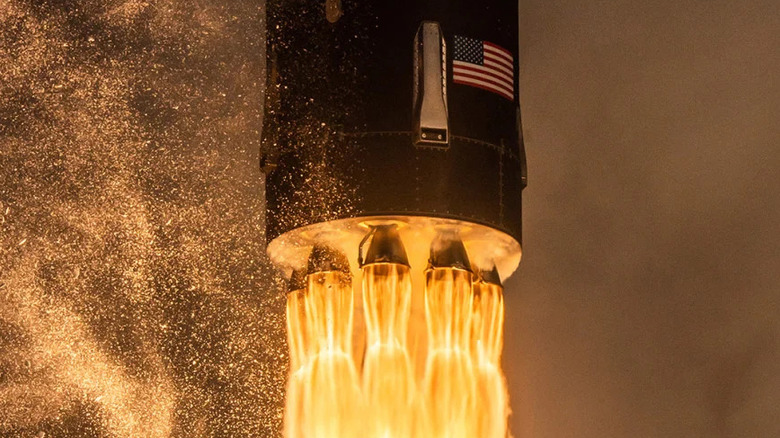
Human activity in space is absolutely booming right now. More rockets were launched last year than any other year in history, and that number is increasing at an exponential rate. As SpaceNews reports, that's putting America's existing space infrastructure under enormous strain. Secretary of the Air Force Troy Meink, via Breaking Defense, has said that the main barrier to the military's growth in space is the crunch in launching points. If you want to launch more rockets, you need more launch pads. But building a bunch of new spaceports would take a long time. You know what's much faster? Rolling in with a stripped-down system you can put together like a giant Lego set. Of course, Rocket Lab will need to get lots of regulatory approval to actually set up anywhere, so don't worry about them launching from your backyard.
The really great capability here, at least from the military's perspective, is that this is a redundancy for current infrastructure in case of an attack. A future war between global powers will involve orbital conflict, which is why we have a Space Force in the first place. That makes spaceports a juicy target. Right now, if a few were taken out, America's ability to get assets into orbit would be severely compromised. GHOST could set up shop in an undisclosed location, unknown to the enemy, and start launching again.
GHOST is proprietary to Rocket Lab and only works with its rockets. Now that it's proven the technology, though, don't be surprised if others follow suit. Rocket Lab's advantage is that the Electron is quite small (hence the name), so it can make do with less. If SpaceX, for example, wanted to build its own mobile system, it would require a lot more hardware for its much larger rockets. Being light and nimble has its upsides.