

FAA Proposes Letting Space Companies Ignore Environmental Damage To The Planet They Launch From
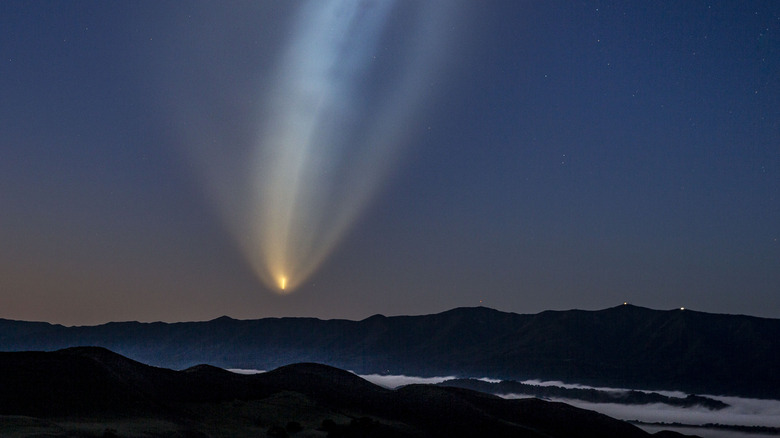
Invoking authorities invested in the Secretary of Transportation, the FAA is proposing a new rule that would allow space companies to waive legal requirements meant to protect the environment. That would mean laws like the Clean Water Act, Clean Air Act, National Environmental Policy Act, Endangered Species Act, and nine others would no longer apply to rocket launches and satellites. Even the Noise Control Act is on the list, just in case you wanted more rockets blasting past your house. The intention is to speed up American activity in space; the question is will the planet they're leaving behind be severely damaged. The public can leave comments and concerns about the proposed rule through August.
The long and short of it is that humanity is dramatically increasing its presence in space, and that's putting strain on the legal framework around it. As an example, the SpaceX Falcon 9 alone launched 165 times in 2025, the equivalent of one launch every other day; that represents a 660% increase from just five years prior. There's just never been this much rocket activity before, and both stock valuations and national security concerns incentivize continued acceleration.
What's getting in the way of getting off the planet is, well, the planet. For example, all those Falcon 9s launching from Vandenberg Space Force Base in California are putting the Western snowy plover, a threatened bird species, under stress. The California Coastal Commission therefore blocked the Space Force from increasing its launch cadence. As a result, the Space Force... ignored that and just did it anyway. Now, the FAA wants to apply that same philosophy to pretty much everything: every rocket, every satellite, every law. The Western snowy plovers and I don't see what could go wrong.
Environmental damage so novel, we don't even know how bad it is
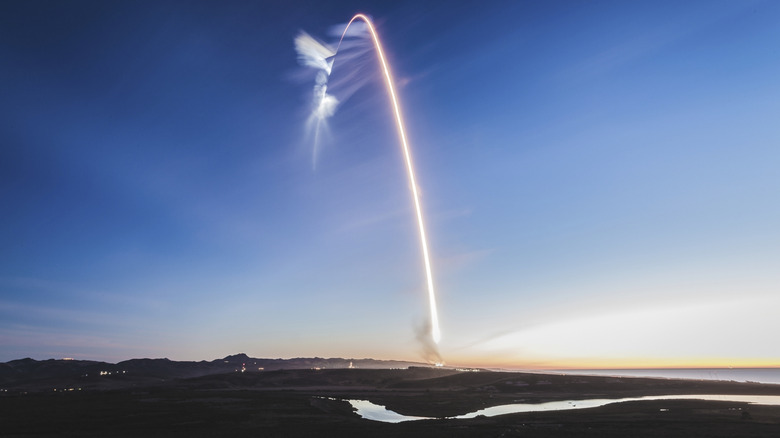
Strictly speaking, the FAA's proposal is to "invoke the Secretary of Transportation's statutory authority to waive requirements of laws of the U.S. for a license or permit, after consultation with the head of the appropriate executive agency, when the requirement is not necessary to protect the public health and safety, safety of property, and national security and foreign policy interests of the United States." So it's not quite a blank check, and there will be times when one agency or another puts up a roadblock. But this proposal would make that the exception, not the norm. The norm would be to launch like crazy.
Just last week, the Guardian reported on what that would mean, and the answer isn't pretty. Every rocket produces "a range of emissions like black carbon, nitrogen oxides, carbon monoxide, aluminum oxide, chlorine gases and, once in orbit, mercury." If that sounds bad, don't worry, it gets worse. The satellites in SpaceX's Starlink constellation are only intended to last for about five years or so, after which they are intentionally de-orbited to burn up in atmosphere. That means heaps of gaseous metals are being released into the atmosphere. The scientific consensus on the effect of this is... nothing, since nobody has ever thought to study that before. Why bother? Who would put a bunch of gaseous metal in the atmosphere all at once? Now, here we are.
Space is a part of humanity's future, and both commercial and geopolitical competition over it is only going to increase. But as we lift our eyes to the stars, let's remember that our feet are staying on the ground. Let's be good shepherds to the first planet we ever traveled to. If you'd like to say something to the FAA about its proposal, comments are open now.