

EVs On Track To Account For 29% Of Global New Car Sales This Year, Despite Republican Attempts To Kill EVs In The U.S.

You don't exactly have to be Sherlock Holmes to notice the Republican Party is anti-EV. From murdering the gas tax to paying companies to end wind and solar efforts, it seems the oil and gas industry owns Trump and pretty much every other politician, for that matter. But while Republicans do their best to limit our choices here in the U.S., a new International Energy Agency report shows that globally, EVs are on track to account for nearly a third of new car sales in 2026.
According to the IEA's analysis, even with sales down in the U.S. and China, EVs will likely account for 29% of new car sales this year. Compared to 2025, that would be about a 10% increase in the share of new cars that are electric thanks to higher demand in Latin America, Europe, and Southeast Asia. In Australia, Brazil, India, Korea, and Vietnam, the IEA reports that March-through-June EV sales were essentially double what they were in 2025. And while China's seen a dip in new car sales like the U.S., it's still a huge market for EVs:
The pace of recovery of the Chinese car market remains the main constraint on global sales growth. Electric car sales in the country are expected to reach similar levels as in 2025, though the EV sales share is expected to grow to more than 60% in 2026.
Additionally, while China's new car sales dropped by about 20% in the first half of the year, its new car exports jumped by 65%. That boost in exports means the Chinese automotive industry only saw about a 6% drop in H1 2026. If you only look at EVs, exports jumped more than 120%, essentially erasing China's drop in domestic EV sales. That also means that while about 35% of the cars China exported in 2025 were EVs, through the first half of 2026, that figure has jumped to 45%.
Blame Trump's war to make gas expensive
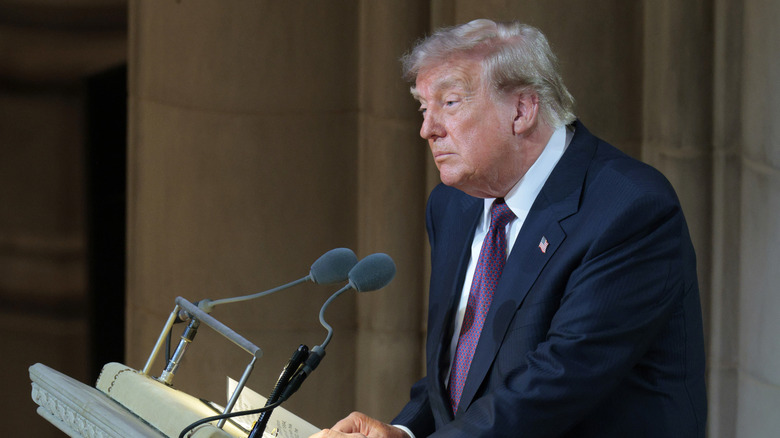
The oil and gas industry has worked hard to limit EVs' appeal by spreading easily debunked myths about them. Heck, they even try to pretend we still haven't figured out how to recycle old EV batteries. In reality, people who buy EVs love owning them, and it's hard to beat old-fashioned word-of-mouth advertising. Still, the IEA report claims there's a much bigger factor behind EVs' growing popularity — Trump's no-end-in-sight war with Iran.
As the IEA noted, on-road vehicles account for about half of the world's annual oil consumption, and Trump's disastrous war with Iran created a global energy crisis that's driving increased interest in cars that aren't dependent on oil, or peace in the Middle East. If you're still paying less than $4 a gallon like we are in Georgia, calling what's happening right now an "energy crisis" may sound like hyperbole or communism, but that's what the IEA calls it. Look outside the U.S., and you can't miss it.
After years of failing to conquer Ukraine, Russia's experiencing a massive gas shortage. Australia is considering building a new oil refinery for the first time in decades. Egypt, Jordan, and Pakistan have been hit especially hard, as have Bangladesh and Sri Lanka, and rising fuel prices are already making daily life much more difficult in countries such as Chile, Nepal, Nigeria, and the Philippines. You can also expect the energy crisis in the Pacific to get worse now that Houthi forces have blockaded the Bab al-Mandab strait.
Before Trump attacked Iran, cargo ships could move freely through both the Bab al-Mandab strait and the Strait of Hormuz. Now, safe transit is no longer guaranteed. But hey, at least Trump and the Republicans who enable him have absolutely nothing to show for it, and there's no end to the war in sight.
Legacy automakers are losing out
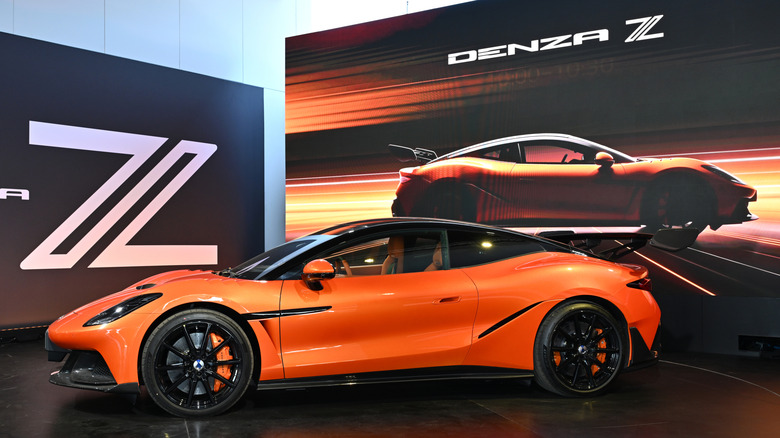
No one can say exactly how the global transition to EVs will play out, but one thing that's clear is that legacy automakers don't dominate the same way they do with old-fashioned gas cars. The IEA found that legacy (they call them "incumbent") automakers still account for about 98% of internal combustion engine sales but only 55% of global EV sales. Those legacy automakers will likely remain dominant in the U.S. and, to a lesser extent, Europe for a while, but globally, you can expect Chinese EVs to continue to gobble up an even larger share of new car sales:
Chinese carmakers have expanded rapidly both at home and abroad, including in emerging markets, where they hold a particularly high share of EV sales. With China and other emerging economies set to represent 60% of global car demand over the next decade, success in these markets will increasingly determine future market leadership.
Legacy automakers have a huge advantage when it comes to developing engines, but as the IEA's report points out, "Value is shifting from traditional mechanical components towards batteries, electronics and software, with China occupying a leading position across much of the battery value chain." And in an industry where mastering logistics is so important, "Chinese manufacturers benefit from integrated supply chains, strong battery capabilities and production costs that are around 35% lower than in advanced economies."
That said, the IEA's report isn't all doom and gloom for automakers outside of China. We don't have to accept a total Chinese takeover of the new car industry, but it's going to require some changes in strategy. "Closing the competitiveness gap will require co-ordinated action by governments and industry, including stable demand signals, support for innovation, stronger battery ecosystems and improvements in manufacturing efficiency."