

5 Automakers Who Rekindled Their Love For V8s
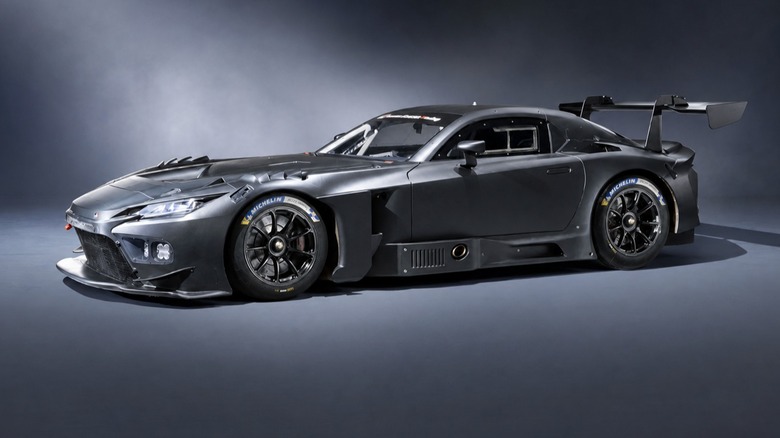
The European Union (EU) has been pretty ambitious in tightening emissions standards for vehicles, as it wants to become a climate-neutral continent by 2050. That's a tall order, and automakers have felt the pressure. The US has gone the opposite direction during the current administration, actually dropping regulations around emissions. Still, car manufacturing is a global venture, which means even the automakers based in Detroit have to pay attention to what the EU is doing.
To a lot of car executives, it seemed that one quick and easy way to help meet these stricter standards would be to drop V8 engines. This especially appeared to be the case when, for a brief time, there seemed to be a real push in the market for EVs. But getting rid of V8 engines is no easy task in the US. We Americans, or a large part of us, anyway, love our V8s, and don't mind letting automakers know about it.
This pushback has caused several car companies to reverse course. For example, Ram tried taking HEMI V8 options away from the 1500, but that didn't last long. Dodge has made some real foibles with the Charger in the last few years, but it is finally bringing back a V8 engine option. Mercedes-AMG brought a V8 back for the C63, and Jeep never went through with its plans to get rid of the V8 option in the Wrangler. Even Toyota is bringing a V8 to its GR line for the first time.
Ram – Return of the HEMI
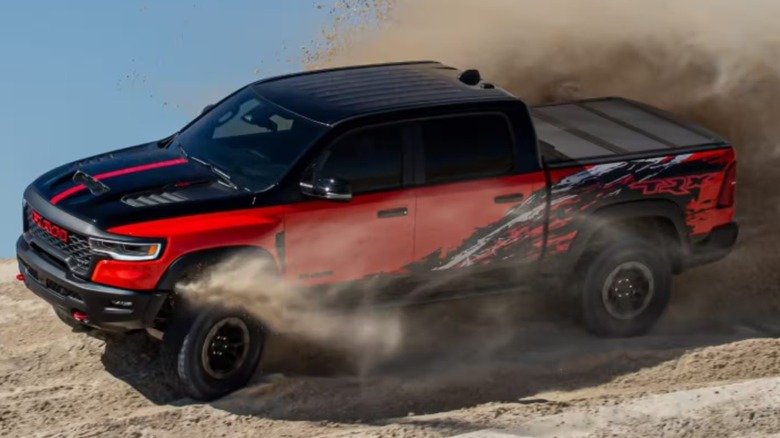
No one drives a full-size pickup hoping to get great gas mileage. The best you can hope for is gas mileage that's not as bad as it could be. Not that it wouldn't be nice to have both good gas mileage and a big powerful truck. But drivers who choose to buy these trucks know they're making a choice, and it's not for fuel efficiency.
Yet, a few years ago leadership at Stellantis and Ram made the outrageous choice to stop making the fan-favorite V8 HEMI engines available in Ram 1500s, in favor of V6 offerings. This happened during an initiative by Stellantis to push toward fuel-efficiency, with more EVs being the ultimate goal. The backlash was immediate. That, coupled with a change in leadership at both Stellantis and Ram moved the brand to make an about-face and bring back the Hemi V8 for the 2026 line of 1500s. Stellantis is known for killing things and bringing them back, but this was inevitable.
The Hemi V8 eTorque hybrid engine offered in the 2026 model produces 395 hp, kind of modest for a full-size V8 pickup. However, Ram is bringing back the 1500 TRX SRT for the 2027 model, and it features a 5.7-liter Hemi V8 that can kick out 777 horses. Tim Kuniskis, CEO of Ram, was quoted as saying: "Everyone makes mistakes, but how you handle it defines you. Ram screwed up when we dropped the HEMI — we own it and we fixed it."
Toyota Gazoo Racing – Adding V8 engines to the stable
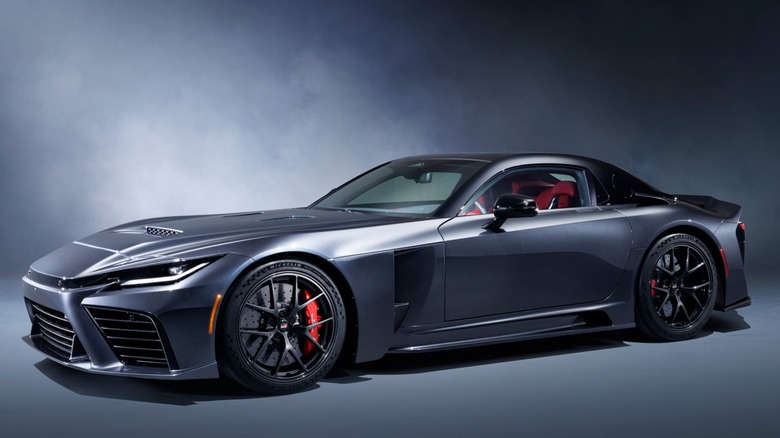
Gazoo Racing, Toyota's racing arm, seems to specialize in squeezing a lot of horses out of just a few cylinders. The current Toyota GR road car lineup consists of a three-, four-, and six-cylinder. The three-banger GR Corolla can get 300 hp, while the four-cylinder GR86 gets a mere 228, and the V6 GR Supra gets 368 hp. But recently, the GR lineup has a new entry, in the form of the GR GT, featuring a twin-turbo V8.
The 4-liter V8 in the hybrid GR GT produces around 640 hp (650 ps) and can reach a top speed of around 198 mph (320 km/h). Those aren't exactly earth-shattering figures for a V8 that was developed by the racing arm of a major automaker. But they're not bad, either. This is the road car version of the GT, and where are you going to drive 198 miles per hour, anyway? The racecar version of this vehicle, the GT3, is not a hybrid (hybrids are banned in GT3 class races), but is an honest-to-goodness all-gas twin-turbo V8. We couldn't find any official performance specs for the GT3. The company's website says that it is a "development vehicle", so the scant specs that are on the site are subject to change. Toyota says that this racecar is for drivers "who want to win." That's good, we guess, since we don't know anyone who buys racecars wanting to lose.
Dodge – Bringing a V8 back to the Charger
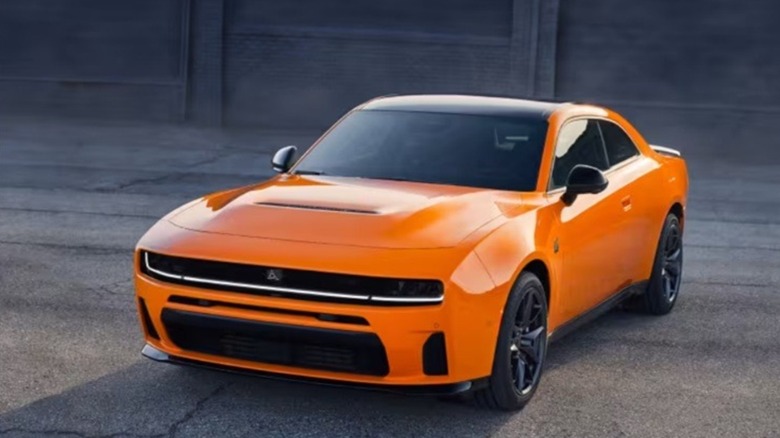
Stellantis didn't make its ambitious EV plans in a vacuum. At the time, it seemed to Stellantis and other major automakers that electrification was where the market was heading. So Stellantis, and thus Dodge, decided to get ahead of it and replace a significant portion of their gas models with EVs. Surely, then, Dodge would choose its SUV, the Durango, for this, right? No, that would make too much sense. Instead, Dodge made the boneheaded decision to get rid of the gas versions of its popular muscle cars, the Charger and Challenger, and to replace them with EV versions. In the meantime, not only did the Durango remain gas-driven, it got to keep its V8 engines. Sometimes you have to wonder if automaker executives are fans of the very cars they make.
This move went over with the public about as well as, or maybe worse than, the decision to take V8 engines way from the Ram 1500. Dodge quickly changed course and brought back the gas-driven Charger, this time in two-door and four-door versions. But, infuriatingly, the new Charger did not come with a V8 option. And yet, for some strange reason, the Durango has multiple V8-specific trims, including two Hellcat trims.
Thankfully, the Dodge execs seem to have come to their senses. Recently, they unveiled several future models to journalists, and one of them is a V8 Charger. It's expected to have a Hellcat engine that can exceed 700 hp.
Mercedes-AMG – Pivoting back to V8 engines
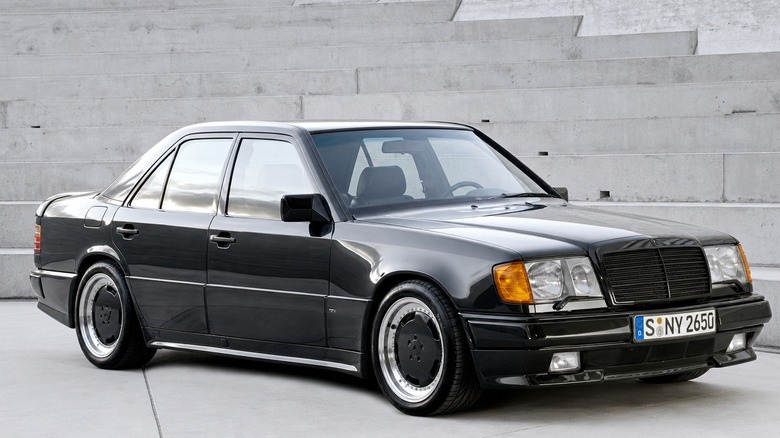
There was a time when the AMG label of Mercedes-Benz was synonymous with performance V8 engines. In 1986, it came out with "The Hammer", a V8-equipped car that was the fastest sedan in the world. Then a few years ago, Mercedes-AMG decided to take the C63, the most powerful C-Class model, and replace its V8 engine with a turbo-charged, hybrid four-cylinder. Then, it took the V8 out of the E63 and replaced it with a six-cylinder PHEV. Predictably, except to automotive executives, apparently, AMG fans were not happy with these moves. Even AMG admitted it may have lost some customers over this move. If you've read this far, you may be sensing a pattern.
Surprise, surprise, Mercedes now has plans to bring a V8-equipped AMG C63 back, specifically to the North American market. Executives of Mercedes-Benz USA seem to be very impressed with the new V8 model, with the CEO telling MotorTrend that it will be "phenomenal". It's supposed to produce both high performance and lower emissions. Governments have been cracking down on emissions, after all. To walk the line between tightening global emissions standards and the American market's lust for raw power, BMW has been developing a family of V8 engines that are designed to satisfy both. One 4-liter version is currently available in the new S-Class. When exactly the V8 C63 will reach showroom floors and whether the new V8 engines will be brought to any other AMG vehicles is unclear.
Jeep – When final isn't final
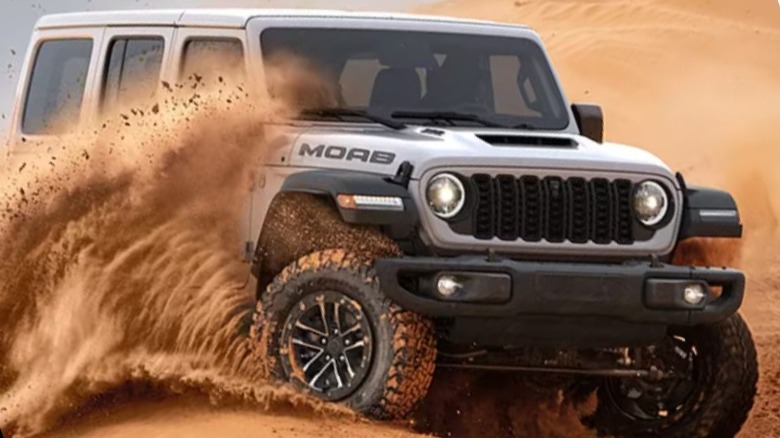
Jeep was done, done, we tell you, with offering the V8 392 engine as an option on the Wrangler. They were so done that they named the 2024 model equipped with a V8 the "Final Edition". You know a company is serious about discontinuing a product when they put it in the name. But customer demand for the engine was so high that they extended production of this "Final Edition" into the 2025 model year. But surely, that would be it for Wranglers offered with that engine, right? We mean it would be silly to have a Final Edition otherwise.
Well, the fat lady never sang for the V8 Wrangler, and Jeep didn't even give customers a chance to miss it. The 6.4-liter V8 SRT HEMI MDS Engine is currently standard on two Wrangler trims of the 2026 model, the four-door Willys 392 and four-door Moab 392. Jeep calls these 392 trims "limited editions", but we've seen just how much that sort of thing means coming from Jeep.
Judging from what we've seen in the examples we've considered here, maybe the answer to meeting stricter emissions standards isn't getting rid of V8 engines entirely. Some automakers are simply making V8 engines more efficient. Our review of the Wrangler Rubicon 392, however, revealed that it's very old school. Whatever the case, it's clear Americans aren't quite ready to give up the V8.