

Why Do Some Ray-Bans Say 'Not Suitable For Driving?'

You might think that all sunglasses are sunglasses, and you don't need to know anything about them beyond whether they're comfortable. But a fresh pair of Ray-Bans can carry a variety of properties, and choosing the right ones, particularly for driving, can make all the difference. You should care what coatings your glasses have, and what color and grade of tint the lenses have. The shape of your frames matters, too. And what about smart glasses?
Sunglasses are like window tint. If you wear a pair of Ray-Bans tinted too dark, it could impair your ability to see details outside your car that could prevent a crash. This is particularly true if your car's windows are already tinted, as tint effect is additive. There are five categories of light transmission tint, from 0 to 4, each allowing less light than the one before. The darkest, category 4, allows just 3% to 8% of light through. Lenses in this category are illegal for driving, and should come with a "not suitable for driving and road use" label. And categories 1 to 3, allowing 8% to 80% of light to reach your eyes, are not appropriate for driving at night. This isn't exclusive to Ray-Ban, of course. All sunglasses tinted to this level are legally required to be labeled.
Polarized Ray-Bans (and other sunglasses) have a special coating designed to block out horizontal glare, making colors and details appear sharper than traditional sunglasses. It's typically a good idea to wear polarized sunglasses while driving, but keep in mind that they aren't always conducive to working well with your car's many screens and digital displays. If you have a car with a lot of information provided by screens instead of analog displays, you may want to avoid them.
What else do you need to know?

Lens color is much more important than you might have imagined. Most sunglasses have grey or brown-shaded lenses, and those are perfectly fine for driving purposes. You should avoid, however, using pink, blue, or green glasses, as they can make it harder to determine color, particularly when it comes to traffic lights. Amber or faintly yellowed lenses can be good for driving as they enhance definition and clarity, though yellow is a particularly bad lens color for night driving. Yellow lenses may give a driver a false sense that they are seeing better at night, but that simply isn't true, as any tint is by definition blocking some light.
The shape of your glasses can make a huge difference for your driving safety and awareness as well. Your best bet is to use a large, oversized lens with a thin frame to keep your peripheral vision unobstructed. Aviator-style glasses like the Ray-Ban Bain Bridge are a good choice for driving, as they were invented specifically to let pilots protect their eyes while flying, but maintain peripheral sight. So-called wraparound glasses are also good for peripheral vision, but they make you look like a dork. A big thick arm might look cool, but it might prevent you from seeing a car creeping up beside you on the highway.
Photochromic lenses — you probably know them as "transitions" — are not suitable for driving glasses. There aren't adverse effects if you wear them while driving, but because they typically activate with UV light and car windows block UV light, they simply won't darken while inside your car on a bright day. It's best to have a dedicated set of sunglasses among the stuff rolling around in your car specifically for driving. Just make sure they're comfortable.
What about smart glasses?
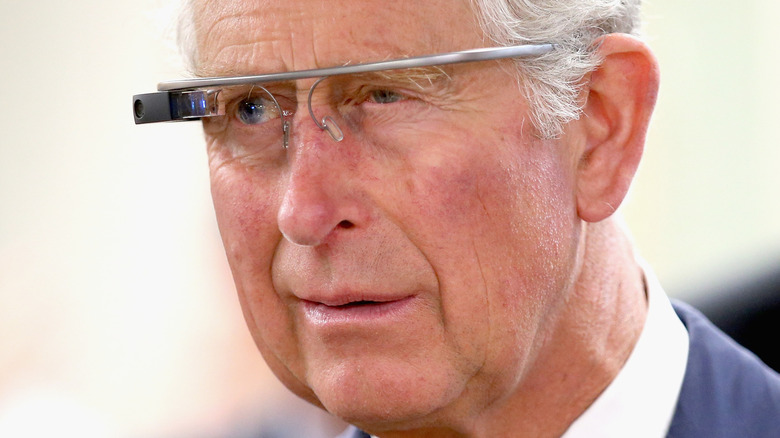
This year Illinois became the first state to introduce legislation banning the use of smart glasses while driving. In much the same way that the state already bans the use of smart phones while driving, smart glasses may be banned from the driver's seat. Drivers would be subject to up to a $75 fine for the first offense, and $150 per repeat violation. If the use of smart glasses contributes to a crash with severe injuries or death, the fine would be a minimum of $1,000, in addition to potential vehicular manslaughter charges.
Google, Apple, and Meta (partnered with Ray-Ban) are all currently developing new products for this market. Google Glass is something of a joke from a decade ago, and I don't think they've gotten any less dorky since. Aside from the surveillance and privacy issues with these glasses being able to record pretty much anywhere, advancing augmented reality tech could become a major distraction for drivers who are supposed to be paying attention to the road.
In addition to all of that, having a small screen with tiny text just an inch from your eyeball could lead to strain, dry eye, and difficulty refocusing between real world vision and the display in your lens. There are real distraction and vision issues that could arise here, and it seems like tech companies aren't interested in solving them. I wouldn't be surprised to see many other states fall in line with Illinois in banning these glasses from behind the wheel.