

Missing Pan Am Flight Crash Site Found Hidden 2,000 Feet Below The Atlantic's Surface 75 Years Later
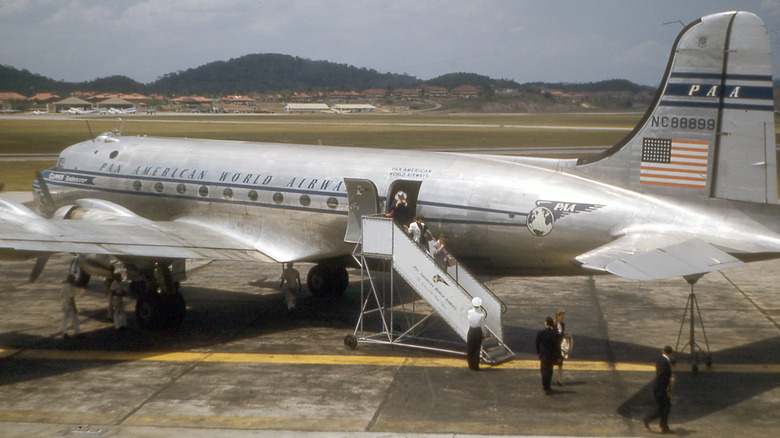
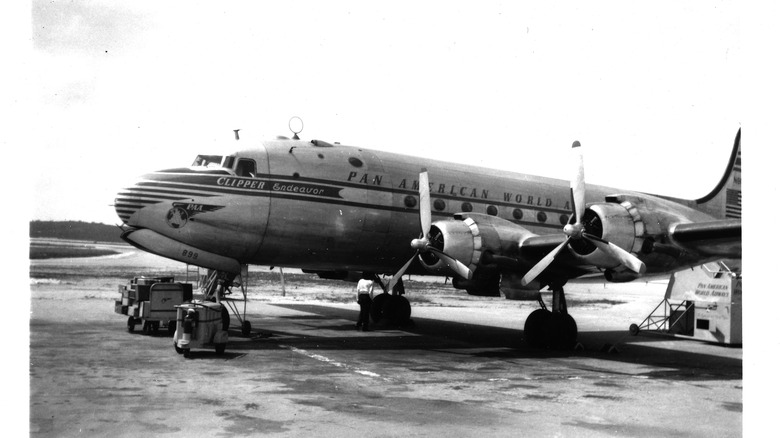
On April 11, 1952, 69 passengers aboard Pan Am Flight 526A were heading towards Idlewild Airport in New York City from San Juan, Puerto Rico. But a half hour after its departure, one mechanical failure after another would send the plane at the bottom of the Atlantic Ocean instead, taking 52 of those lives with it. Despite testimony from survivors and individuals that saw the plane go down, the plane, Clipper Endeavor, would remain unrecovered for almost 75 years, until technology could help reveal its deep ocean gravesite in early June of this year.
Its discovery was shared this week by the Air/Sea Heritage Foundation (ASHF), which worked in partnership with with Deep Sea Vision (DSV), an eco-mineral company, and Discovery Channel's "Expedition Unknown," to find the lost aircraft. The search for the Clipper Endeavor was actually started by accident, as Russ Matthews, historian, explorer, and president and co-founder of the foundation, had been looking into another Pan Am flight that had crashed. Matthews' happened upon the history of Flight 526A and its doomed flight, known in Puerto Rico as "La Tragedia del Viernes Santo" or "The Good Friday Tragedy" in English. The unfortunate events leading up to its demise inspired safety reforms and the emergency procedures most flyers ignore at the start of their flight before take-off today.
Time was the enemy in tragedy and discovery
According to a Nevada State Journal article published the following day, Flight 526A, one of Pan Am's Douglas DC-4 aircraft, had only been in the air for 11 minutes when one of its engines died. The plane's pilot, John C. Burn, had been through a similar scenario that ended in a downed plane nine years prior. He turned the aircraft around bound back for the airport when the plane's other engine died. Without power, the Pan Am craft inevitably crashed into the Atlantic, just five miles from San Juan Harbor which resulted in the deaths of 52 of the 69 people on board. Burn happened to survive. And although the final location of Flight 526A was fairly close to land,, the majority of the plane had never been found.
Rescue efforts wouldn't have been able to find the plane wreckage 74 years ago. Matthews told the New York Times that the Clipper Endeavor's final resting place was discovered 2,000 feet under the Atlantic's surface, a distance divers wouldn't have been able to safely traverse today, let alone back in 1952. Technology had at least advanced enough that sonar data from World War II was able to map the topography of the ocean floor through the 1950s and discover the Mid-Atlantic Ridge. In an emailed response, Matthews told Jalopnik there were no mentions of sonar searches of the wreck. Early sonar likely would have had difficulties finding a downed aircraft at that time.
Mission Endeavor
Matthews' began research on the Clipper Endeavor in 2019, rifling through investigation and accident reports from the crash, while conducting several surveys off the coast of San Juan. The most crucial item he was able to find was a chart map created by US Air Force pilots who had witnessed the crash and was used at the time to guide rescue crews to the scene.
Emotional testimony from survivors in those reports spoke of the fear some passengers had with exiting the plane after it had crashed into the waters, believing it was infested with sharks and barracudas. Language barriers and a lack of guidance as to what to do in case of an emergency like this left most of those lives in their own hands (inspiring today's safety guidances on flights). While some left the plane for safety — likely having realized the other option was drowning with it — many remained. Accounts say the main cabin was only afloat for about three minutes before it plunged into the depths of the ocean.
The search for Clipper Endeavor had garnered enough attention that it earned Matthews and his crew a chance to work with Josh Gates of Discovery Channel's "Expedition Unknown," for an episode that aired in October of 2024. That crew would later rejoin the search team to film what will become an upcoming episode on its actual discovery.
Miss Millie's push to be the first to lay eyes Clipper Endeavor
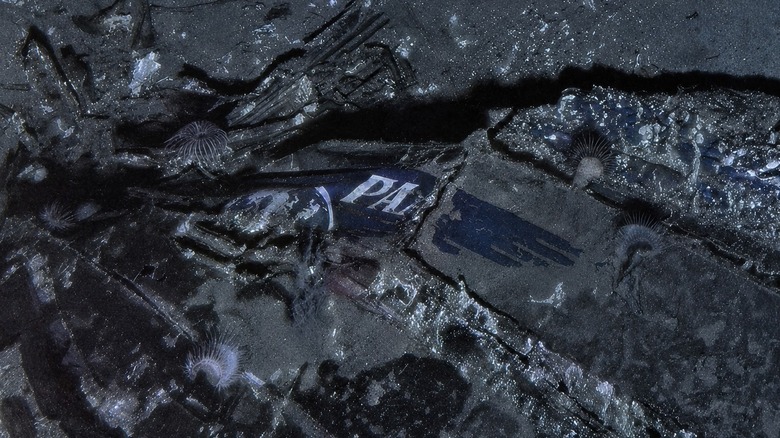
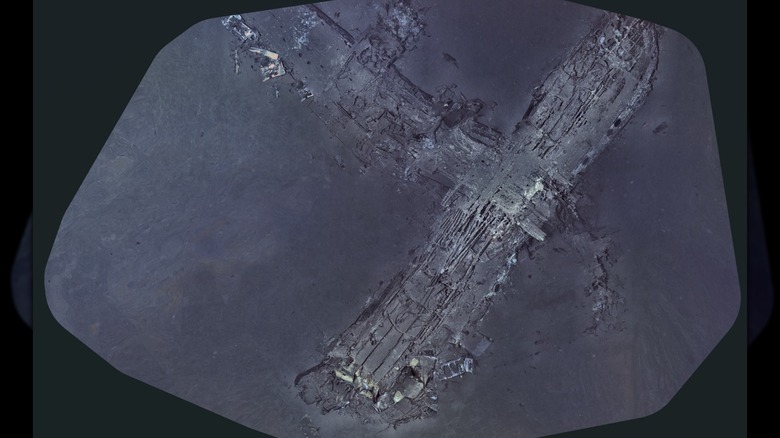
The star to finding Flight 526A though might be DSV's autonomous underwater vehicle, known as "Miss Millie." She was aboard a survey ship named Fugro Brasilis, which agreed to help Matthews and his crew with surveying the 10-square-mile site they had targeted. Miss Mille's tiny undersea capsule could reach depths of 20,000 feet below the surface, and do passes for 4 days at at a time, collecting images and saving them to its hard drives encased in crush-proof casing. It manage a total of 30 passes, discovering a ship wreck no one knew anything about, before finding the Clipper Endeavor on pass 13. There, images revealed the tail as well as the fuselage, landing gear, and the windows to the main cabin. The rest of the passes were dedicated to taking some 350,000 photos of the wreckage, which may still contain the remains of the 39 bodies that were never recovered.
While the site remains undisturbed, more a grave marker to those lost in the tragedy, the images and the discovery of the plane will help fill in the rest of the blanks of what happened that fateful Good Friday in 1952. It'll also give the families who lost loved ones some closure. For the rest of us oddballs who love a good find of a ship or plane wreck in the depths of any body of water (fresh or salty), we now have a new story to rabbit hole accompanied by new images as another nearly lost mystery finally surfaces.