

Data Shows Tesla Cybertruck Is A Bigger Flop Than The Goddamn Edsel
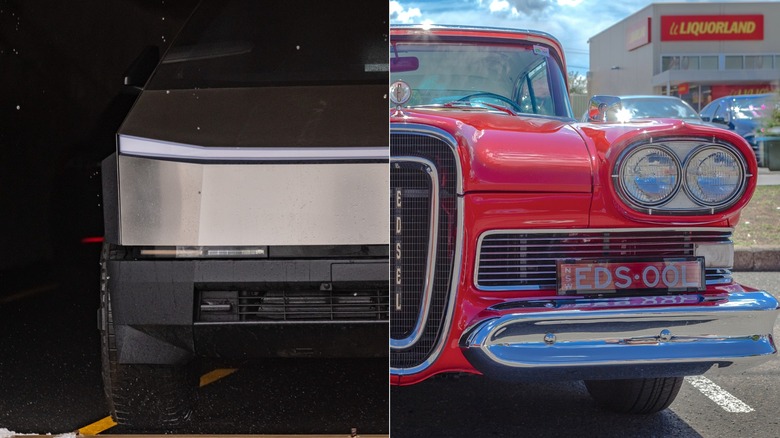
The Edsel is one of the greatest and most infamous flops in automotive history, but it's in trouble. It's perilously close to being dethroned by a newcomer: the Tesla Cybertruck. Despite the fact that their debuts are separated by over 65 years, they bear some striking similarities. Both were predicted to sell over 200,000 units in their first year on the market, both have — uh — unusual design languages, both have suffered sales drops every year they've been on sale and both have become the punchlines of their respective eras.
After unveiling the Edsel in 1957, sales dropped every year until its ultimate cancellation in 1959. Somehow, Cybertruck sales are off to an even worse start, according to Bloomberg. As I mentioned, Ford planned to sell 200,000 Edsels in its first year. In 1958, it ultimately sold 63,110 of them, and in 1959, that number dropped to 44,891. Tesla wishes it could hit those sales numbers. Despite CEO Elon Musk thinking it could hit a quarter-million registrations in its first year, in 2024, Tesla registered just 38,965 Cybertrucks. The number was sliced to 20,237 in 2025, and through May of this year, just 7,133 Cybertrucks have been registered in the U.S. Keep in mind, a good chunk of that is because Musk's other companies — like SpaceX — have built up fleets of the things.
Despite the sales SNAFU, Tesla's newfound emphasis on driverless vehicles and humanoid robots means the Cybertruck probably won't be outright canceled, according to Bloomberg. Instead, it'll probably just fade away, quietly and pathetically. Perhaps Tesla will try some sort of mid-cycle refresh to drum up sales, but its weird styling, high price, hideous unreliability, limited usability and the fact it reminds everyone of Musk are going to make that a pretty tough ask.
Bad design, bad sales
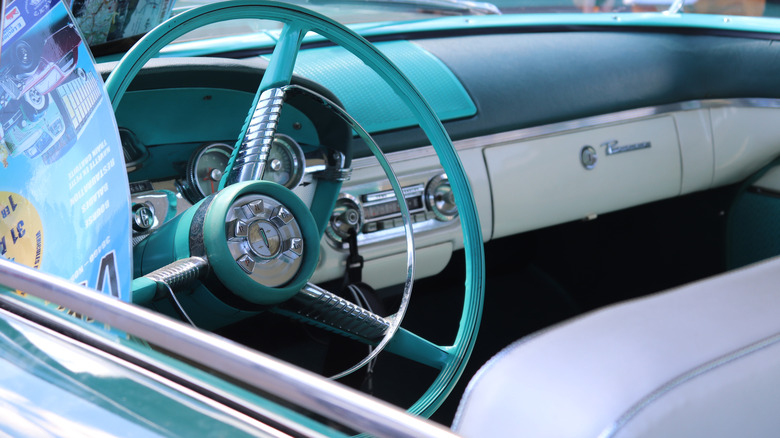
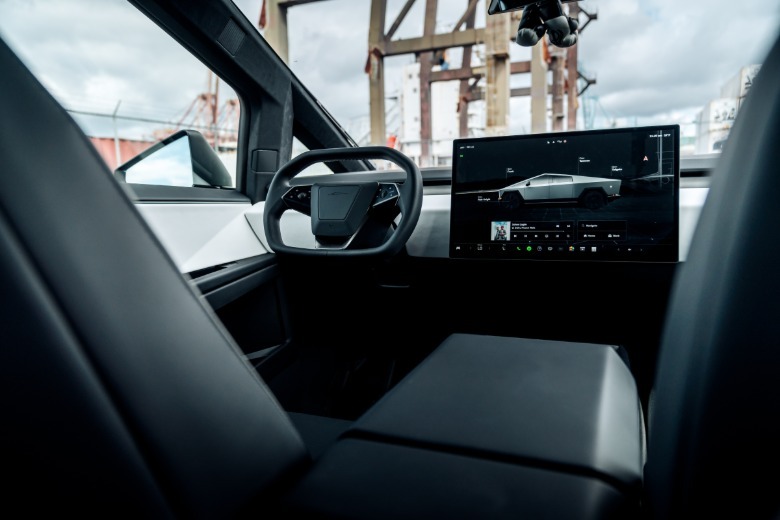
At the end of the day, much can be forgiven about a car if it looks good. The thing is, that's one thing the Edsel and Cybertruck really don't have going for them. You'll be hard-pressed to find folks who have a nice thing to say about the design of either, and some of that compromised design means the usability was equally compromised, as Bloomberg explained:
Edsel's steering-wheel-based Teletouch transmission system frequently malfunctioned and confused drivers – many attempting to honk the horn would end up reversing their car instead.
Ford had the Edsel built on the same assembly lines as its standard Ford and Mercury vehicles. Quality suffered, since workers had to switch tools, then switch back without slowing the production line. This led to Edsels being shipped unfinished, with parts in the trunks for dealerships to install.
 Brandon Woyshnis/Getty
The Cybertruck had (and still has) its own share of production issues thanks to its stainless steel body that is difficult to piece together. It's also already been recalled 11 times, according to the National Highway Traffic Safety Administration, which is pretty impressive for a vehicle that is only in its third model year. Of course, Tesla has also been sued because the truck's doors failed to open after a horrific crash, according to Bloomberg.
All in all, the implosion of the Edsel ended up costing Ford about $350 million in the late 1950s. That works out to be right around $2.5 billion in today's money, Bloomberg says. The one silver lining is that today, those cars are a bit of an automotive novelty, much like other famous flops, such as the Pontiac Aztek, DeLorean and AMC Pacer. I'm not sure if the Cybertryck will end up with the same sort of lovable loser aesthetic those cars garner now, as it's very rare that the lovable loser in your life also has a metaphorical boot on your neck.