

Lucid Motors Definitely Isn't Trying To Decide Between Bankruptcy Or A Buyout, Despite The Rumors And Reports
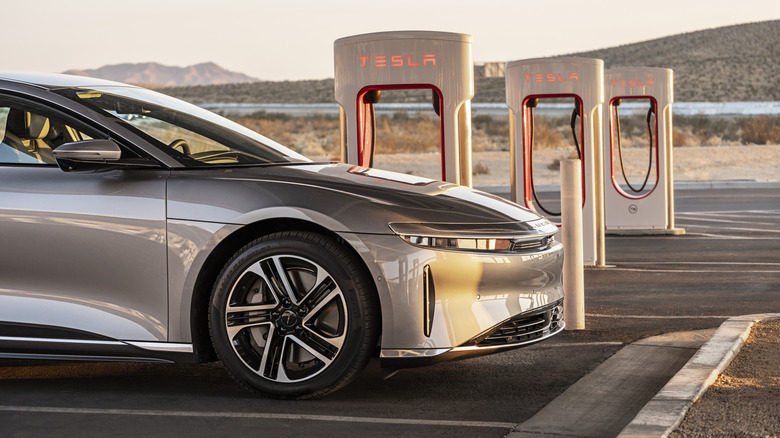
Building cars is incredibly difficult, which is why it's so impressive that the Lucid Air actually made it to production. Then Lucid followed the Air with the excellent Gravity crossover, and a few months ago, it showed us several upcoming, more-affordable models. Lucid's build quality and software, however, haven't been up to snuff, and the company has kept spending money way faster than it's been making it. So when a new report came out that Lucid's board was trying to decide between Chapter 11 bankruptcy and selling itself to a private buyer, it just made sense. However, Lucid just told TechCrunch that's not true. Oh thank God. For a minute there, Lucid had me worried.
According to that initial report from electric-vehicles.com, which does not appear to have been updated since the TechCrunch article was published, Lucid hired the restructuring advisors at AlixPartners to help the electric startup, including potentially choosing between going private or filing Chapter 11 bankruptcy. Chapter 7 is version of bankruptcy that involves total liquidation, so Chapter 11 wouldn't necessarily be the end of the line for Lucid, but it's still less than ideal. However, the board reportedly hasn't made up its mind about what it's actually going to do.
The report claims that "AlixPartners is urging the board to run one more round of restructuring in the United States and Europe, and to narrow the company's focus onto its Gravity SUV." That includes focusing on getting its second factory in Saudi Arabia built, as well as working harder on its robotaxi partnership with Uber, while also doing its best to ensure the more affordable Cosmos still goes into production later this year. As the site put it, "Delivering that model on schedule without sacrificing quality is treated as the fixed point of the plan, one of the people said, with other programs bending around it."
AlixPartners will, however, reportedly recommend pulling back in Europe "because sales agents are finding the cars difficult to sell amid quality problems that have dented the brand's reception." Which is probably smart. It's a lot easier to sell cars with software problems in the U.S. where we're used to everything being broken and falling apart, but Europeans are used to things that work. Additionally, EV's report claims that an "emphasis on quality recurs through the adviser's recommendations, from Gravity to Cosmos to the European retrenchment, suggesting the firm sees product execution as central to whatever path the board ultimately chooses."
Don't say the B-word

When TechCrunch contacted Lucid for a comment on reports that it might file Chapter 11 or go private again, chief communications officer Nick Twork said those "rumors are completely false." He then posted a statement to Twitter further denying the reports:
$LCID The rumors are completely false. The company has sufficient liquidity to carry its operations well into next year, as recently published in its last quarterly filings, and it has not formed any special Board committee to explore the scenarios reported today. Our focus is...
— Nick Twork (@ntwork) July 14, 2026
As for the claims, which CarBuzz first reported, that Lucid is currently working with AlixPartners, Twork says the nature of their business relationship has been mischaracterized. Lucid and AlixPartners are working together, yes, but the California-based EV manufacturer hired the reorganization specialists to help improve operations but "nothing else." According to Twork, AlixPartners "has not recommended bankruptcy to management or the Board."
That said, based on TechCrunch's reporting, it doesn't sound like Twork addressed EV's claim that Lucid could also go private. But if there's no "special Board committee" looking at potential bankruptcy options, a committee that doesn't exist can't consider selling the company, either. The original report doesn't actually mention a committee, though, so it's possible the board didn't need a special committee to explore potential options with AlixPartners.
Read past the headline of the report, though, and it's entirely possible neither publication is wrong. "The strategic options under review include taking the Saudi-backed EV maker private or filing for Chapter 11 bankruptcy protection," doesn't necessarily mean those are the only two options. And Lucid narrowing its focus while it does its best to get Cosmos production going is probably the smartest path forward, especially since newly hired CEO Silvio Napoli replaced most people in senior leadership positions after joining the company. Meanwhile, robotaxis may not generate much revenue for Uber, but that partnership involves Uber buying 10,000 Gravity SUVs, which certainly wouldn't hurt.
If the production Cosmos takes off the way the Rivian R2 has, Lucid could soon find itself in a much stronger position than it's in today. If it doesn't, though, anyone on the board who's thinking about the future would be foolish not to at least consider what they'd be forced to do following a Cosmos flop. At that point, finding a buyer or filing Chapter 11 would make more sense. For now, the biggest question appears to be whether Lucid can convince potential Cosmos buyers it's fixed the software and the cars won't be a nightmare to own. If it can't, the remaining options are pretty limited.