

Can You Add Android Auto Without Having To Switch To A New Head Unit?
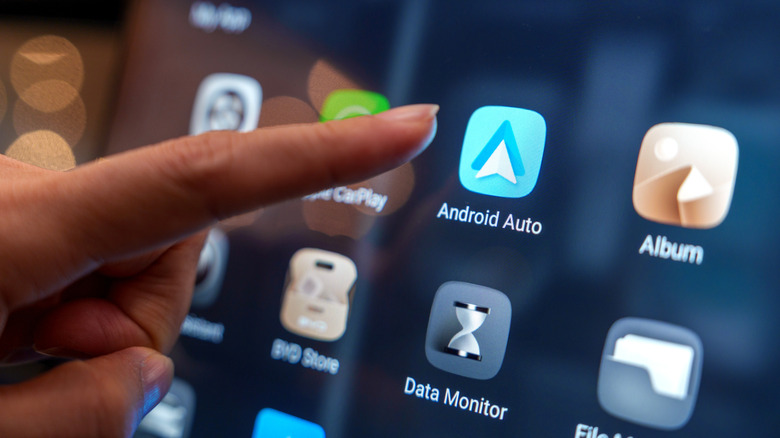
Apple CarPlay popped up in 2014 and found its way into economy cars and ultra-luxe models alike. But not everyone is a card-carrying member of the Apple bandwagon. So, naturally, the Android equivalent — Android Auto — wasn't far behind CarPlay. In 2015, the Android-specific smartphone-mirroring platform launched, with the 2015 Hyundai Sonata becoming the first car to feature it. So, let's say you want Android Auto, but your car didn't come with it from the factory. You're screwed then, right? Not quite. Even though major automakers like GM are dropping Apple CarPlay and Android Auto, the aftermarket is practically chock-a-block with head units that feature both platforms.
Sounds great, right? Not so fast. A replacement head unit can set you back hundreds of dollars. Then there's how complicated installation can shake out to be for a DIYer. Fret not, though. A replacement head unit isn't the only way to install Android Auto in a car. As it turns out, you can use a portable or standalone out-of-the-box screen to connect your Android smartphone without the expense of a replacement head unit. This alternative also cuts out much of the hassle of diving into your dash to replace your car's factory equipment. That said, the portable unit isn't for everyone.
You don't have to jump right to a new head unit for Android Auto
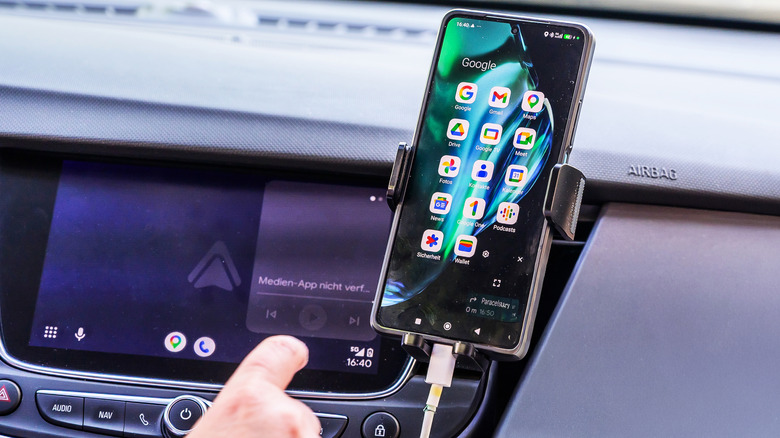
Your all-knowing pocket computer, in addition to spying on you constantly, can be immensely useful. Want some tunes? No sweat. Navigation? Right there in your hand. Therein lies the draw for adding Android Auto (or Apple CarPlay, for that matter) to an older car or an Android Auto-less vehicle. No surprise, then, that Android's smartphone mirroring platform is one of the features you use in your car the most. That said, an Android Auto-compatible head unit can cost between $200 and $600. For professional installation, you can add around $100 to $150. Want to do it yourself? That involves the effort of removing the old unit, taking off some trim, and wiring up the new system.
Instead of going for the pricey head unit swap, you can opt for an out-of-the-box portable wireless screen with Android Auto/Apple CarPlay functionality. Unlike the head unit, the portable option mounts to your windshield or dash and plugs into a power supply like a 12-volt power socket or USB port. As for audio, some models connect to your vehicle's stereo using an auxiliary (AUX) cable or through an FM radio connection. But if your vehicle already has Bluetooth functionality, many portable Android Auto screens will connect to the speakers wirelessly. Boom: Apple CarPlay and Android Auto without all the in-dash surgery. It's especially helpful for owners of older cars or those who don't plan to keep their vehicles for a long time. Of course, there are tradeoffs for going with the portable option.
The downsides of skipping the new head unit
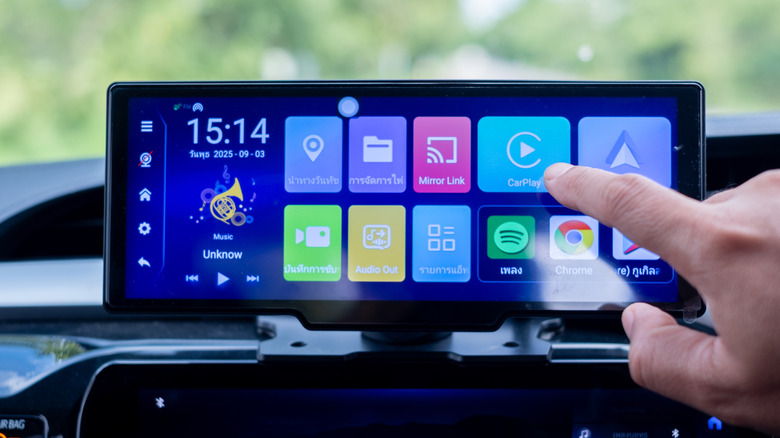
Ok, so you don't have to shell out the cold hard cash for a head unit, struggle to install it, or pay even more to have one professionally installed. The portable option helps, but there are concessions. Take aesthetics, for starters. A replacement head unit replaces your factory touchscreen or double-DIN stereo as directly as possible. That means, installed correctly, your add-on Android Auto head unit could be free of exposed wires and fit (somewhat) seamlessly into your cabin. Doubt it? Just check out a Jalopnik writer's experience installing Apple CarPlay in his wife's 2006 Toyota 4Runner.
And mind you, DIY head unit installation isn't out of the question. But it can be intimidating for tinkerers who haven't dabbled in vehicle electronics or interior disassembly and reassembly. Depending on your make and model, putting in an aftermarket unit could entail removing some trim, installing a wiring harness, connecting a CAN bus module and USB, and buttoning the whole thing up. On the other hand, a more affordable portable head unit option can be an unsightly alternative to an in-console unit. If you take issue with a screen suction-cupped to your windshield or dash and featuring an exposed power cable, perhaps a portable unit isn't the right option for you. Finally, there's audio fidelity and connection quality. Since a portable unit uses fewer permanent connection options than a replacement head unit, audio quality and connection quality may suffer in comparison, depending on the connection you use. Still, a portable Android Auto system is a surefire way for owners looking to modernize the tech in their aging vehicle.