

What EV Owners Need To Know About Electric Car Maintenance
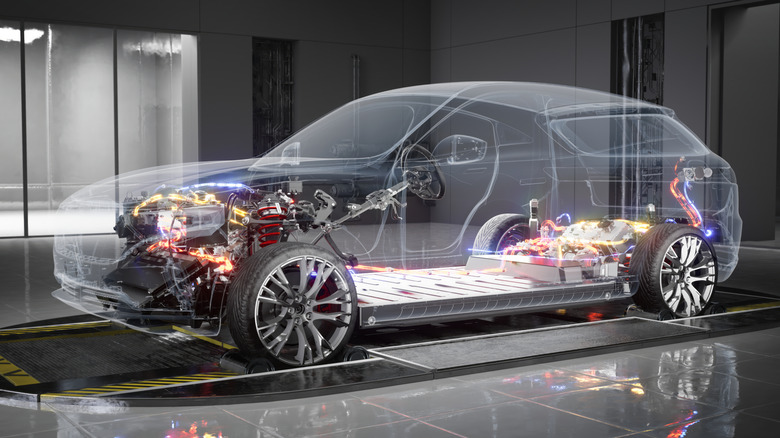
One of the many joys of owning an EV is its maintenance-free plug-and-drive ecosystem. At least, that's what the marketing spiel says. In truth, EV ownership isn't everything it's cracked up to be – though there is some truth to the claim. An electric motor usually only has one moving part inside, compared to the hundreds inside a typical V8 engine, so it requires much less maintenance than internal combustion alternatives. However, there are other parts of your EV you need to take care of for trouble-free miles. These parts include your vehicle's cooling system, brake components and fluids, tires, the primary and secondary batteries, the reduction gearbox, electrical subsystems, the A/C, and air-purifier systems.
EVs also have unique problems which need a unique approach compared to internal combustion vehicles. Some examples include the brakes, which can rust due to minimal usage, or brake fluid and coolant, which need to be religiously replaced. You'll also need to be wary of the tires, as EVs need specific tires for the best performance and longevity. Charging cycles are another major factor, as you should ideally keep your EV's battery charge between 20% and 80% for a longer battery life. Your 12-volt battery system is especially important, too, as a dead 12V battery can cripple your EV.
The dangers of brake oxidation and fluid degradation
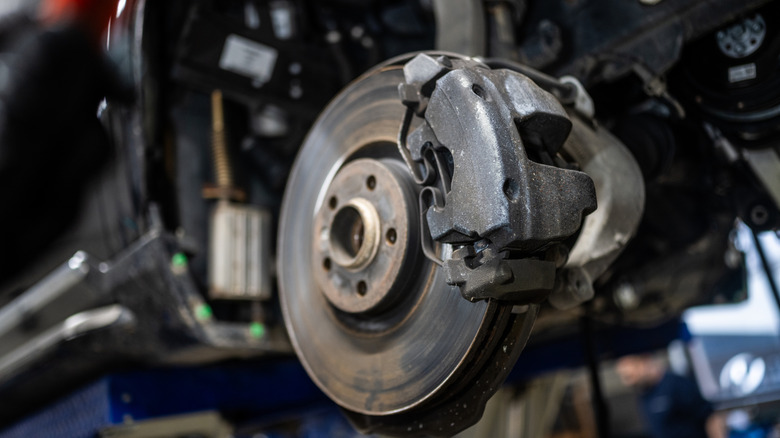
EVs have regenerative braking, which leaves very little work for the traditional brake components like rotors, pads, and calipers. That might seem like a good thing, since they aren't going to be worn out as quickly, but it also creates a problem. In an internal combustion car, the heat generated by frequent braking removes moisture from the steel rotors. But since EV brakes are used less often, moisture from rain or humidity often stays, leading to rotor corrosion.
Brake calipers also suffer from a lack of use. In this case, an unused caliper can dry out and seize. Many EV owners in northern climates must perform a brake service that involves a teardown, cleaning, and re-lubrication of the caliper pins and shims every 12 months. Brake fluid also needs to be checked consistently since it absorbs moisture from its surrounding air. Over time, that moisture will corrode the internals of the anti-lock braking system.
Regardless of whether they're internal combustion vehicles or EVs, most cars use similar brake fluid grades and follow similar maintenance intervals. However, it's still worth knowing that some fluid is specially engineered to support electric vehicles. Liqui Moly provides an example of this with DOT 5.1 EV brake fluid. According to the oil maker, special additives in the fluid help prevent spot corrosion due to extended periods of inactivity. It's also made with high boiling points, as the general heaviness of EVs causes increased heat when braking. Plus, the DOT 5.1 EV fluid claims to have a low viscosity which helps transmit brake pulses more effectively, improving anti-lock braking and electronic stability control sensitivity.
Tires: the toll of instant torque
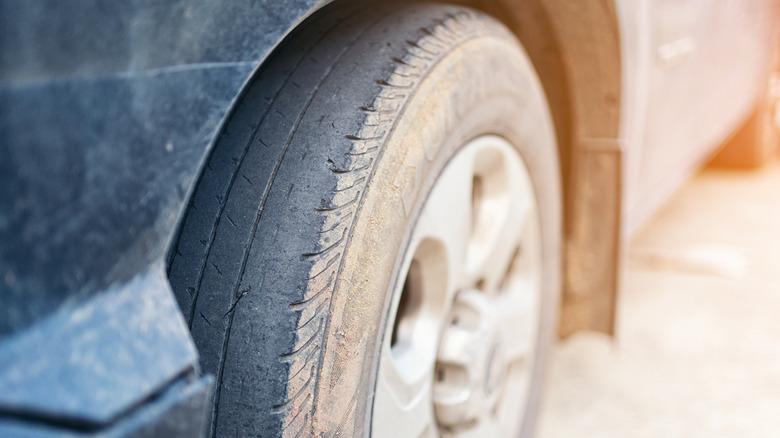
EVs offer peak torque at 0 rpm. So, when you mash the throttle, you are sending hundreds of pound-feet of torque to the road through just four tires. Combining this with continuous regenerative braking places a lot of shear stress on the tires' treads. This isn't helped by the added weight of the battery packs, which makes an EV significantly heavier on average than a similarly-sized internal combustion car. This vertical load, when paired with the longitudinal force of instant torque and regenerative braking, leads to exacerbated wear.
Because of these issues, standard "off-the-shelf" tires often fail prematurely on EVs. That's why there are EV-specific tires specially engineered with beefier construction and unique compounds to handle the extra weight. These also feature acoustic foam liners to quiet noises made by the tires, which usually aren't noticed in internal combustion vehicles thanks to their loud engine sounds. The best time to perform EV tire rotation will vary depending on the manufacturer, but doing it every 5,000 miles is a good interval to aim for. This helps equalize wear, ensuring one tire doesn't get more worn than the other.
The battery pack: slowing degradation
A lithium iron battery degrades due to two factors: cycle count and age. Letting the battery sit at 0% speeds up degradation, but having it stay fully charged isn't good, either. If you keep the battery at 100% for extended periods of time, you increase the stress on its cells, which accelerates the growth of the solid electrolyte interphase layer. This is a layer of growth on the battery's internal components that increases internal resistance and slows down charge speeds. The technical sweet spot for lithium-ion stability is between 20% and 80%, and most modern EVs can allow you to set a limit for charging to avoid staying at 100%.
Additionally, DC Fast Charging should be used sparingly. While convenient, the high amperage creates significant internal heat, which means that you could be degrading the battery of your EV by charging it this way. Frequent fast charging can also cause lithium plating, which permanently reduces a battery's long-term capacity. To avoid this, consider leaving your EV plugged into a less-powerful charger on occasion. It might leave you unprepared for longer trips at a moment's notice, but using fast charging sparingly will keep your range from vanishing overnight.
The small-but-important secondary 12-volt battery
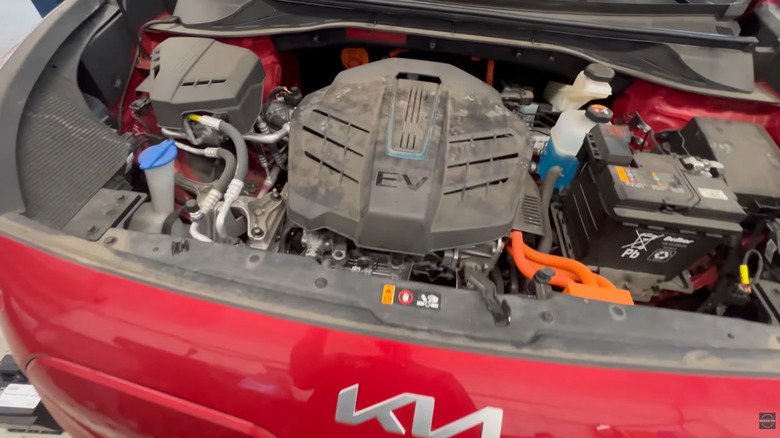
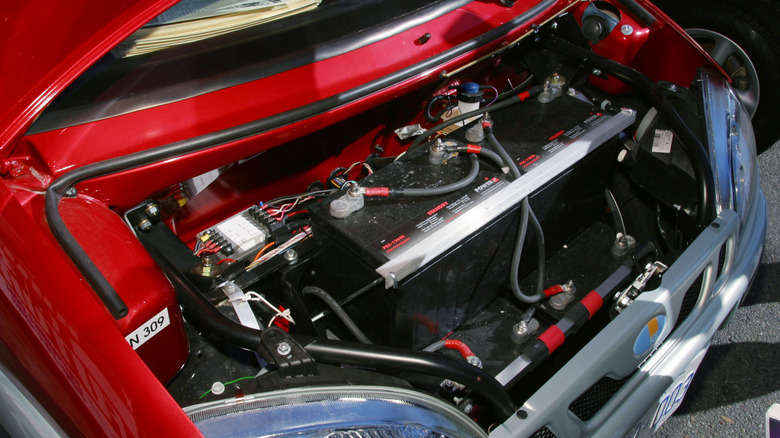
While your EV's electric motor is relatively simple, the subsystems that support it are complex. An EV typically has a main larger battery unit, and a smaller 12-volt battery to go with it. The vehicle utilizes an onboard charger and a DC-to-DC converter to reduce the voltage from the 400V/800V main pack to 12 volts, allowing it to run your car's accessories. All of this high tech can be brought to a halt with the simple 12V battery's demise. That's partially why every EV auto mechanic needs a multimeter – so they can check when that battery is having issues.
Accessories aren't the only thing relying on that battery. In some cases, EV owners might be surprised to find their vehicle refusing to start despite having 100% battery capacity. The high-voltage contactors (the physical switches that engage the main battery) are powered by that 12V battery, so it it goes dead, the EV won't move. The low-voltage battery is also the only thing keeping the car's computers and other features alive when it's parked. Consider replacing it every three years to prevent it from dying out when you need it most.
Inside the EV cabin
The last thing you need to look at in EV maintenance is the cabin. In particular, you should be checking out the climate control and air filtration system. Because EVs lack engine heat, they use resistive heaters or heat pumps to warm the cabin. Rather than pushing cool air into your cabin, like air-conditioners do, heat pumps move heat in and pull cool air out – and they manage this thanks to the help of refrigerant. As a result, you'll have to make sure that refrigerant isn't leaking, and you'll have to replace it with the right type when necessary.
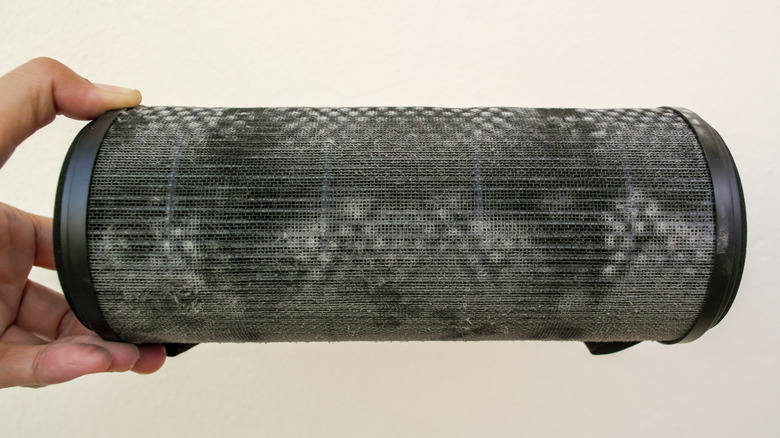
Also, many manufacturers use medical-grade HEPA filters to maintain cabin air quality. A blocked filter causes the blower to work harder to push air through, pulling more current from the 12V system and reducing range. You should be swapping the filters at recommended intervals anyway, regardless of what vehicle you're driving. But for EVs, it's especially necessary to ensure the heat pump operates at peak efficiency — and to prevent a major loss of range.