

Heroic Final Flight Of The Skydweller Drone Lasted Eight Days Through A Storm And Still Nearly Made It Home
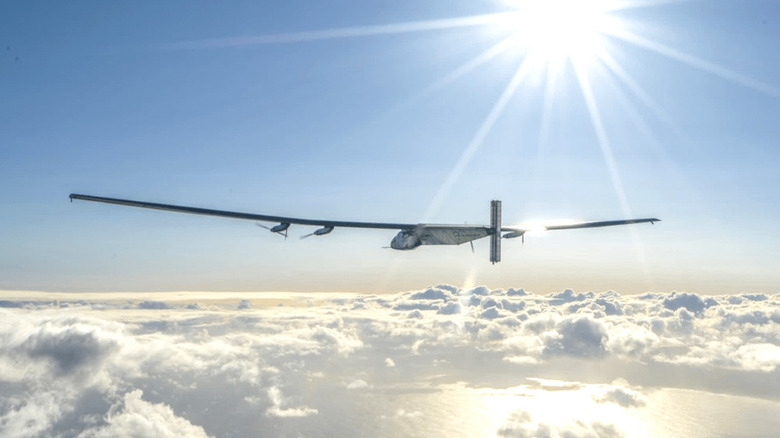
Drone manufacturer Skydweller Aero asked a very simple question a few years back: Why bother landing? The company's goal is to create a perpetually flying aircraft, an airliner-sized UAV rocking solar panels on its wings to power electric propellers. Well, the drone's latest test flight (part of a full-blown U.S. Navy exercise, no less) turned out to be a heroic battle against the power of nature itself, pushing the Skydweller to the limits of what an aircraft can even do. Though it lost that fight, along the way the valiant drone nearly doubled its scheduled flight time, demonstrating just how capable solar drones are proving to be. In all, the Skydweller flew for 192 hours and 14 minutes, almost exactly eight days. Alas, the storm won in the end, and the noble flyer now resides at the bottom of the Gulf of Mexico.
There are a couple of ways that not landing can be useful. One is to be a military surveillance asset that never has to leave the area of operations. The Navy likes that idea and has been working with Skydweller Aero to develop this capability for the last few years. On April 26, Fleet Exercise 26 kicked off in the Gulf, and the Skydweller drone got a chance to show what it could do. All went well, the exercise went off without a hitch, and the Skydweller surveilled many things for four days straight.
Then the weather went bad. While the Navy ships sailed away, a cold front prevented Skydweller from flying home to Stennis International Airport in Mississippi. The drone had already been airborne for half a week; could it possibly stay up there for longer? With no other way home, the 747-sized aircraft had no choice but to try.
Solar versus storm
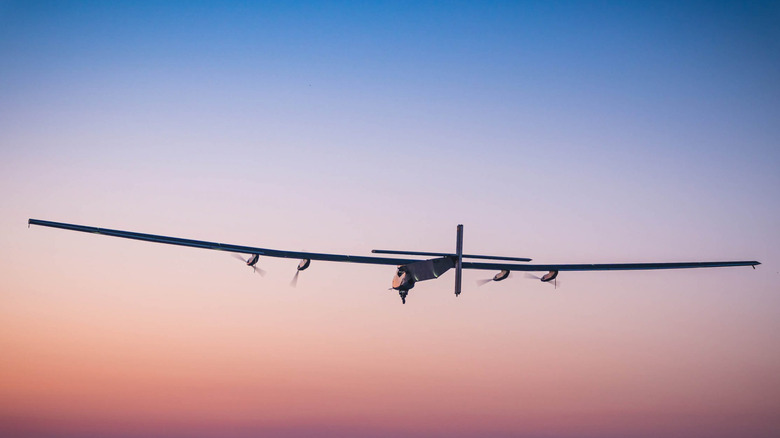
The Skydweller was forced south for the next few days, smashing its personal best records for flight time along the way. Finally, on May 3, it looked like there was a break in the storm. It was now or never. The bold aviator made a beeline for home and hoped the weather held.
It didn't. Angry that something would stay in it for so long, the sky turned its full wrath on the UAV. It hit the Skydweller with heavy winds and truly horrible turbulence, apparently ten times worse than normal. Even for all this pummeling, the drone held firm, suffering no mechanical or structural failures. The remote pilots still had full control of the aircraft. Maybe, just maybe, it could actually make it!
It couldn't. While the drone was physically fine, the power draw to maintain a steady flight drained the batteries too much. The poor guy just ran out of electricity. There was no other choice but to bring it in for a controlled ditch into the Gulf near Cancun, a burial at sea eight days since it has last touched the Earth's surface.
As for the company, it seems to be feeling pretty bullish about what this all means. Prototypes do get destroyed in testing, so this isn't exactly unexpected for an engineering team. The positives are that the Skydweller stayed aloft as long as it did and proved it could even get through a storm without breaking apart. The company was already working on its next-gen prototype anyway, so it'll have something else in the air soon enough. Maybe for even longer than eight days.