

The Pros And Cons Of Making The Switch To A Lithium Starter Battery
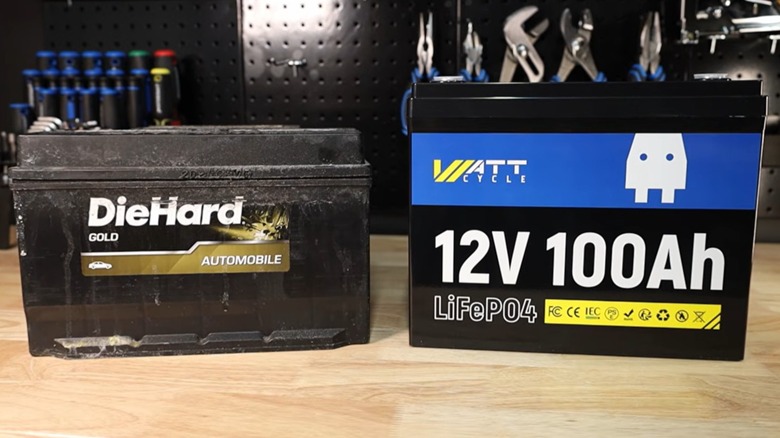
Perhaps you've seen lithium batteries being used in boats and in RVs as "house batteries" to keep the appliances running. We even think they're an integral part of a good RV solar power setup. In fact, some people have also swapped out the lead-acid batteries in their cars for lithium ones, and they often work just fine. But could a 12V lithium battery be used in your car instead of your old lead-acid one? And is it worth making the switch?
Lithium batteries have several advantages over lead-acid ones. For one thing, they're usually smaller and lighter than their lead-acid counterparts. They can also be mounted in virtually any position since they rarely leak. This is also why they're less of a problem for the environment, in addition to generally being less toxic — especially lithium iron phosphate-based ones. Lithium batteries can also last for several years longer than lead-acid ones. They require less maintenance and don't corrode, either. They don't self-discharge as fast as lead-acid batteries, meaning they can be stored for much longer.
Lithium batteries do cost more up front, however, and you may have to get a new alternator or add other components, such as a voltage regulator, along with the battery. They don't charge in extremely cold temperatures, though some manufacturers have workarounds for that. Whether you should make the switch really depends on your circumstances.
Pros: lithium batteries are smaller, lighter, and way less toxic for the environment
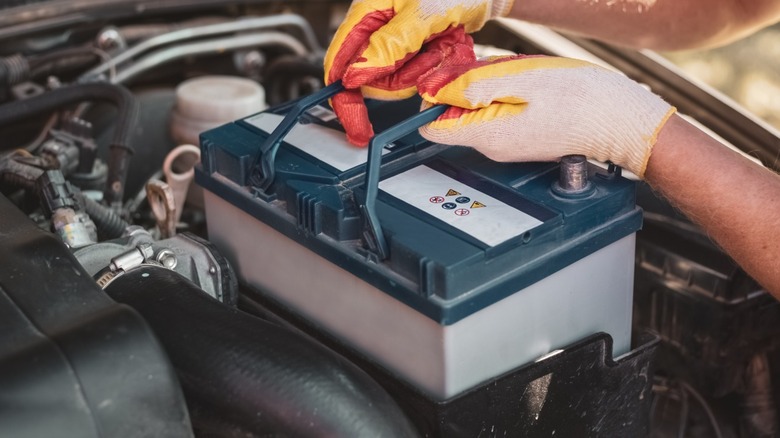
Lithium starter batteries can pack a lot of power in a small package. That means they can take up less space under the hood than lead-acid batteries, leaving more room for engine mods on custom jobs. For added practicality, they can also be stored in any position. Because each cell is sealed, the battery is almost completely leak-free no matter how it's mounted. And since they are smaller, lithium batteries are also lighter — they can weigh up to 50% to 80% less than their traditional lead-acid counterparts. That may not be as important for everyday cars, but it's a real advantage when building a racing vehicle, where every little bit of weight counts.
Lithium starter batteries — specifically ones consisting of lithium iron phosphate (LiFePO4) — are much less harmful to the environment thanks to their absence of toxic cobalt and nickel. Lead-acid batteries, on the other hand, consist partly of sulfuric acid, which is very corrosive and can poison soil. The lead itself is very toxic as well. It can contaminate soil and water. But LiFePO4 batteries do not contain toxic metals and do not leak. We should make it clear that this does not apply to other lithium batteries, like lithium-ion ones. So, if environmental concerns are important to you, look for "LiFePO4" on the label when shopping for lithium starter batteries. To add to that, LiFePO4 lithium batteries are also far less likely to catch fire than other lithium batteries.
Pros: lithium batteries last longer, charge faster, and offer more power overall
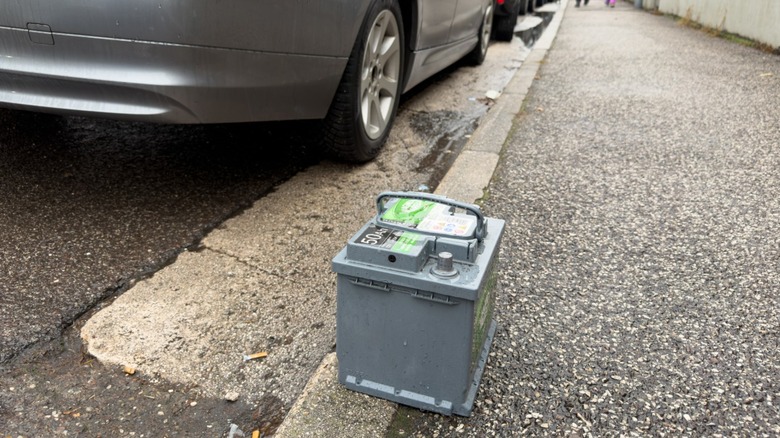
Did you know that LiFePO4 batteries can last from five to ten years? Regular lead-acid batteries only last from one to three years, though there are things you can do to extend your car battery's lifespan. Likewise, a lead-acid battery can last between 750 and 1,900 cycles, while a LiFePO4 battery can go from 2,000 to 3,000 cycles. A cycle is every time you use a battery's full charge, though it doesn't have to be all at once. For example, if you use 25% of a battery's charge four times in a row, and each time it gets recharged completely by the alternator, that counts as one full cycle.
Lithium batteries have a greater depth of discharge, as well, which is an important factor in determining a battery's lifespan. A study by BigBattery shows that, while a lead-acid battery can only be drained to about 50% before its capacity starts to get diminished, a lithium battery can be drained 80% or more with no severe consequences. Some lithium battery retailers claim they can be drained to 100%. Lithium batteries charge up to four times faster than lead-acid batteries, and they keep their charge much longer. If you ever had to store a car for a long time, you may have connected a trickle charger to the battery. You don't have to do that with a lithium battery, which will lose only 10% of its charge after being stored for five years, according to Battery University. A lead-acid battery will lose roughly that much every month.
Cons: lithium batteries can't be charged in extremely cold temperatures

If you live in a cold climate, you've likely had a car battery die in sub-freezing temperatures. That's a problem with all batteries. And while it's possible to jumpstart a cold lead-acid battery, you should never try to jumpstart one that's completely frozen because it could explode. On the other hand, lithium batteries usually won't accept a charge in temperatures under 32 degrees Fahrenheit or above 113 degrees. Battle Born says that charging lithium batteries in freezing temperatures "can cause severe and permanent damage," while Victron claims their batteries are not to be charged in temperatures under 41 degrees Fahrenheit. However, Battery Management Systems (BMS) on some Lithium batteries will keep them from charging in extreme temperatures. As we said, lead-acid batteries have their own problems with the cold, but the freezing point of a fully charged one is around -76 degrees Fahrenheit, meaning they can take a charge at a lower temperature.
Some lithium battery manufacturers have found ways to keep their batteries working in the cold. Battle Born, for example, makes internally heated batteries, and EarthX designed its battery cells to heat up during engine cranking. With each attempt to start the engine, the battery gets a little warmer. Of course, the best way to prevent these issues with any battery is to park your car in a garage, if possible. If you must charge your battery during extremely cold weather, find a way to safely warm it first.
Cons: lithium batteries can have compatibility issues
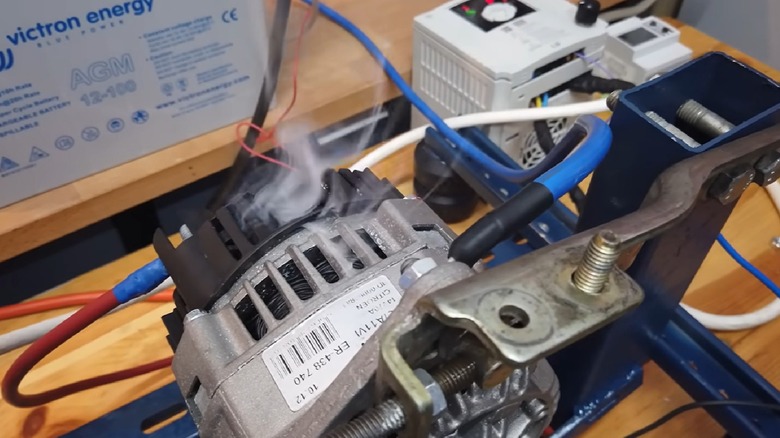
While the alternators in some older cars may not be well-suited for lithium batteries, most newer cars should work fine with a straight swap from lead-acid to lithium. However, even in some newer cars, some alternators are not compatible with lithium batteries. RELiON points out that this is especially the case with cheaper, low-quality alternators. Because they don't regulate voltage as well as high-quality alternators, some lithium phosphate batteries will disconnect from them entirely.
That's not good for the alternator or the battery. The brand recommends using a high-quality alternator and a voltage regulator. Meanwhile, Victron warns that connecting some alternators directly to lithium batteries can also cause the alternator to overheat and smoke. And an alternator that fails while you're going down the road can be all kinds of inconvenient. That's why Victron recommends using the correct charging setup for your alternator and battery, which includes DC to DC chargers and BMS setups.
It's highly recommended to consult a technician who is knowledgeable about vehicle electronics before installing a lithium battery, to make sure that everything is compatible. Your lithium battery will likely not be compatible with the trickle charger you've been using for your lead acid battery. This may not be an issue due to how slowly lithium batteries self-discharge. However, if you use a charger on a lithium battery, it needs to be one approved by the manufacturer, and made specifically to charge lithium batteries.
A Pro and a con: short-term cost and long-term cost

Lithium batteries can cost two to three times more than a lead-acid battery, especially if you go for the more well-known brands like Battle Born. We have, however, found automotive-grade 12V LiFePO4 batteries from lesser-known brands for around a couple hundred bucks. But add to that cost the possibility of having to buy a new alternator and other charging equipment, like a voltage regulator, and you're looking at a hefty initial price tag.
Still, depending on how long you want to keep your vehicle, you might consider the long-term cost, since lithium batteries last much longer. Some manufacturers warranty their lithium batteries for 10 years or longer, while the standard warranty on a lead-acid battery is just one to five years. That is not an insignificant difference in lifespan. But it's not just the lifespan of your battery that is in play. A dying battery can cause other components like the alternator and starting motor to work much harder, meaning they may need to be replaced before their time. So, a battery that lasts longer helps other parts to last longer, as well.
The big question is, should you make the switch? There are some advantages to lithium batteries, but switching probably isn't critical or worth the hassle for the average driver. Still, if you're modding out a car and need the space or need to shave some weight off the engine, it's well worth considering.