

The 'Gentleman's Muscle Car' Expertly Combined Luxury And Performance
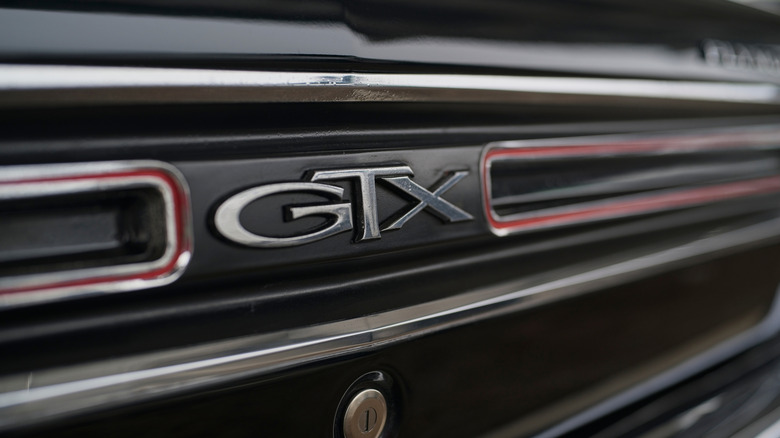
Mopar fans probably know that before being a standalone muscle car, the GTX was Plymouth's way of selling you a go-fast Belvedere. Plymouth's idea of a spicier Belvedere was to pair the Satellite's swanky and upscale interior with a standard 440 Super Commando engine and heavy-duty suspension. That gave buyers a 375 or 425-horsepower Plymouth (if you ticked the optional 426 Street Hemi) with bucket seats, a lot of chrome, and woodgrain inserts. Rounding off the '67 GTX persona are a console-mounted tachometer, simulated hood scoops, a blacked-out front grille, and red stripes around the tires. At circa $3,200, which, for context, was almost $500 more than a Satellite Hardtop, this became a pricey Plymouth. Because of its nice-looking interior, gobs of performance, and a relatively steep asking price, enthusiasts quickly began calling the GTX the gentleman's muscle car.
Although the GTX gained its own identity in 1968 as a standalone model, the journey was fairly short-lived, as the nameplate eventually morphed into an option package — just like in its past — after the 1971 model year. During that period, Plymouth began calling the GTX "the Executive Branch of the Rapid Transit System." Chrysler managed to shift a little over 12,000 Plymouth GTXs in its debut year, of which only 125 cars (per Hemmings) were optioned with the 426 Hemi, making them particularly coveted. You may not know that, despite Plymouth introducing the 440 Six Barrel (that's Six Pack for you Dodge fans) in the 1969 Road Runner, it wasn't until a year later that the option was available for the GTX. So it's okay to be a bit wary if you see someone selling a '69 GTX with a Six Pack.
The GTX timeline
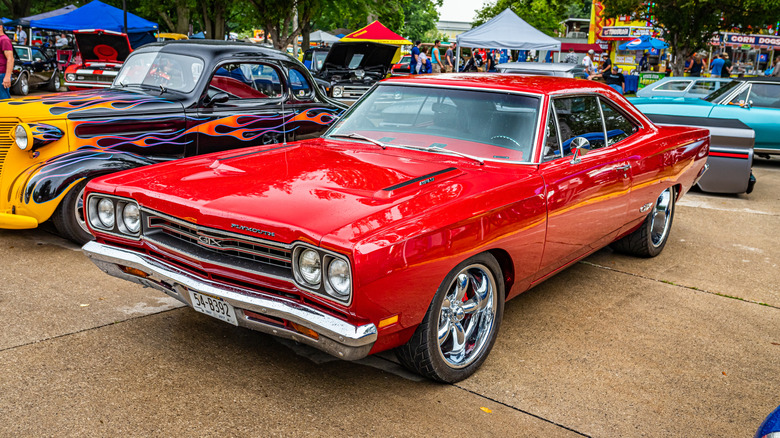
Something else of interest is that 1969 was the last year you could buy the GTX as a convertible. For 1970, the GTX was now a strict two-door Hardtop and received a "power bulge" hood, along with a few more styling upgrades, including a revised rear quarter panel with simulated air intakes. As 1971 dawned, the GTX got a substantial restyle, with the gentleman's hot rod wearing what enthusiasts called the "fuselage body." But as you may know, the decade wasn't kind to muscle cars in general, and the GTX was no exception. While the three-speed automatic and the optional four-speed manual remained, with reduced compression ratios and other emissions-related add-ons, at least two of the available engine options were now advertised with lower power figures — 370 horsepower for the base four-barrel and 385 hp (from 390) for the Six Pack, while the Hemi remained at 425.
GTXs are quite rare, especially the later ones. Production numbers are circa 7,700 and less than 3,000 for the 1970 and 1971 model years, respectively. For context, Porsche made more than 4,000 991.2-generation GT3 RSs, and if you compare a '71 GTX with the number of Dodge Demons out there, you would be in for a surprise. Although GTX officially became an option package in 1972, available on the Road Runner with a 440, and while the Six Pack and Hemi were discontinued by then, one Plymouth wearing the GTX moniker is known to have left the factory in '72 with a Six Pack. That car is part of a trio of 1972 V-codes that Chrysler claimed did not exist.