

While Blue Origin Is Hopeful New Glenn Will Fly Again This Year, Its Exploded Launchpad Is A Problem
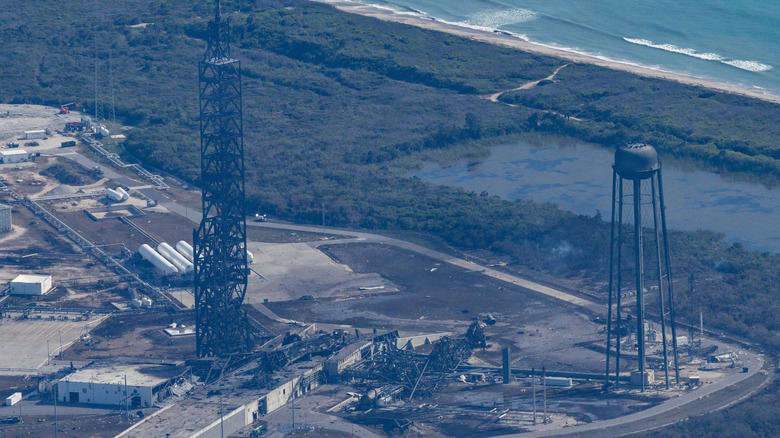
While the Blue Origin New Glenn rocket exploding during a routine engine test wasn't good news, it could have been a lot worse, with no one hurt and no satellites on board at the time. The questions now are how badly Launch Complex 36 was damaged in the explosion, how long it will take to repair, and how soon it can start launching rockets again. Blue Origin CEO Dave Limp made an optimistic assessment in a Twitter post:
Now that we've had access to the pad and integration facility we can share a bit of good news. The propellant farm, oxygen, liquid hydrogen and LNG tanks are all in good shape. This is good luck because these are very long lead items. The water tower is also good. The big support tower is damaged, but it can be repaired in place rather than torn down and replaced. The booster "Never Tell Me The Odds" and the three [second stage] GS-2s that were onsite in the integration facility also look good.
...
In addition, we had already been working for some time on eliminating our transporter-erector in favor of an alternative vertical conop, and we'll now go directly to that; so we don't need a new transporter-erector.We will fly again before the end of this year. Gradatim Ferociter.
This would mean that Blue Origin is still on track to begin launching equipment and lunar rovers to a future moon base over the next couple of years, as well as participate in next year's Artemis III mission to test lunar landers in Earth orbit. It's the best possible outcome, and it has to be if Blue Origin is going to stay on schedule with its moon base, lunar rover, and moon lander launches.
A tight timeline
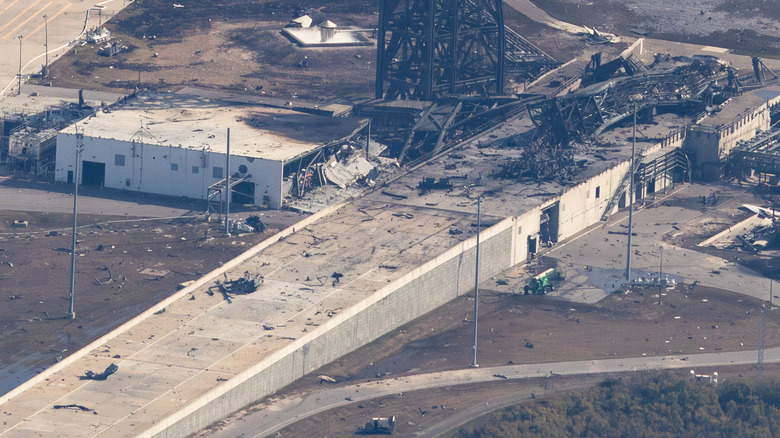
In an interview with CNBC, NASA Administrator Jared Isaacman said that it would "take some serious time" to repair the damage at Launch Complex 36, and that a 2028 timeframe is "within the realm" of possibility. Isaacman later clarified his comments in a Twitter post, noting that he was referring to the timing of moon base missions already scheduled for 2028, not a launch delay due to launch pad damage.
However, Blue Origin is still on the hook to launch an unmanned Blue Moon lander into Earth orbit for testing by the end of this year. New Glenn is the only rocket that can do this, and it can only be launched from Launch Complex 36. Until it is repaired, it can't launch any rockets, which are vital not only for a number of moon base missions over the next few years, but also for Amazon Leo satellites. Jeff Bezos owns both companies, and is no doubt eager to launch his competitor to Elon Musk's Starlink.
Isaacman remains optimistic and supportive of Blue Origin's efforts. "Blue Origin leadership has responded incredibly quickly, and NASA will do all we can to help with root cause analysis and accelerate pad recovery timeframes while staying extremely focused on progressing the lander," he said in his Twitter post.
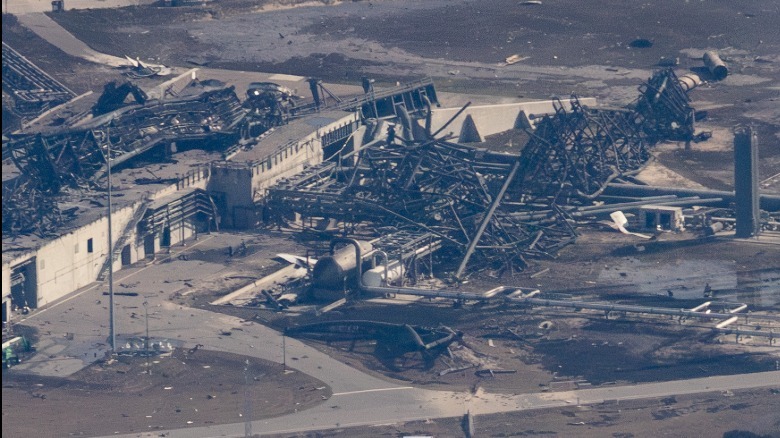
Asher B, a photographer for Launch Heaven Media, posted a number of aerial photos on Twitter showing the damage at Launch Complex 36, as well as his independent analysis. It closely matches Dave Limp's assessment, from the demolished transporter erector and lightning tower to the intact water tower and fuel tanks. The remaining support tower does look repairable, as long as it can be supported while the damaged section is replaced. Here's hoping the damage is as relatively minor as Blue Origin says and there are no more mishaps.