

The Reason Automakers Are Moving From Port Injection To Direct Injection
Until the early 1990s, many gasoline engine designs relied on carburetors to produce the fuel-air mixture needed to make the power that makes a car move. However, as the regulations around fuel efficiency and exhaust emissions became more stringent, carbureted engines had to be replaced by fuel-injected ones, with the 1994 Isuzu Pickup the last carbureted vehicle sold new in America.
With gasoline direct-injection systems yet to fully mature when the shift happened, automakers gravitated toward port fuel injection at first. In a port fuel-injection setup, injectors fire tiny droplets of fuel into the intake manifold before the inlet valve. The fuel vaporizes while sitting on the back of the warm intake valve and mixes with incoming air before entering the cylinder during the intake stroke, and being ignited by the spark plugs.
The electronic control unit determines the amount of fuel delivered to the engine, based on factors such as engine speed, temperature, and the amount of pressure on the accelerator pedal. This precise manner of fuel delivery brings better fuel economy and engine performance than the carburetor system.
We've witnessed increased use of direct-injection technology in modern engines, with around 73% of light-duty cars sold in 2023 having direct-injection engines, according to the U.S. Department of Energy. Which raises the question: Why is the shift happening? The short answer is that direct-injection engines provide higher precision in fuel delivery, helping to achieve better power, improved fuel economy, and lower carbon emissions.
Why is direct injection so popular?
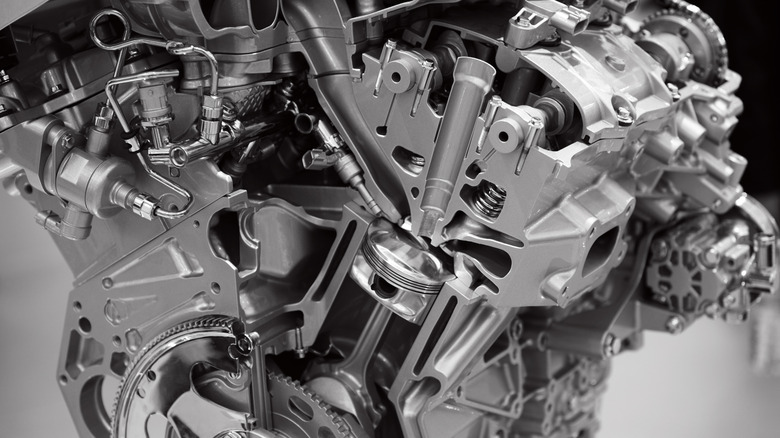
Isuzzu producted the first mainstream gasoline direct injection engines in the U.S. in 2004, and these power plants quickly became popular because of the benefits they offer over multi-point injection. While port fuel injection is efficient, its very nature means that fuel is lost along the intake tract, with some left on the intake port walls. Also, because port fuel-injection engines have lower compression ratios to prevent engine knock, they tend to have less performance and less efficiency than direct-injected engines.
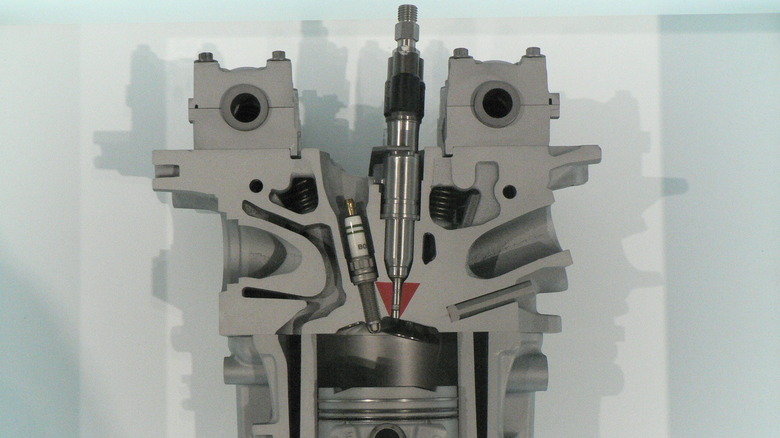
A key aspect of direct injection's appeal is that the injectors are positioned inside the cylinder and therefore shoot fuel at high pressure directly into the combustion chamber, bypassing the intake tract — so you can inject fuel quicker while having more precise control over the air-fuel mixture. This means you need less fuel for combustion, which ultimately translates into better fuel economy and lower emissions. In addition, direct injection creates a cooling effect in the combustion chamber, reducing the chance of knocking at higher speeds while enabling a higher compression ratio.
When you combine this with technologies like variable valve timing and turbocharging, a small-displacement engine can make power like a much bigger naturally aspirated engine. This is what Ford has been able to achieve with its EcoBoost engines, as direct injection lets automakers downsize engines and comply with emissions standards without compromising power, as was the case during the malaise era, the worst period in car design.
Are there any potential problems with direct injection engines?

Despite its benefits, direct injection isn't perfect. One issue with direct injection is that it may struggle to achieve an optimal fuel-air mixture quality at low rpm, leading to decreased efficiency at lower engine speeds. This is because fuel is injected so late in the combustion process that there isn't enough time for it to mix completely with air from the intake.
Another downside to a direct injection system is that since fuel is injected directly into the cylinder, it does not have a cleaning effect on the intake tract and back of the intake valves as with a port-injection setup. As a result, carbon, dirt, and other particles from the air intake and crankcase ventilation system can accumulate on intake valves and ports, hampering performance and efficiency.
While processes such as fuel injection service can help de-carbonize an engine, automakers are using both port injection and direct injection in an effort to solve the problem by combining the benefits of both systems. Toyota got the ball rolling in 2005 when it introduced its D-4S dual injection system in the 2GR-FSE engine, which powered the Lexus GS and IS, as well as the Toyota Crown. Manufacturers like Ford, Volkswagen, and Hyundai have since adopted the technology, too.