

Canada May Cap Low-Tariff Imports Of Chinese Cars
Happy Thursday! It's May 7, 2026, and this is The Morning Shift — your daily roundup of the top automotive headlines from around the world, in one place. This is where you'll find the most important stories that are shaping the way Americans drive and get around.
In this morning's edition, we're looking at Canadian rules for Chinese cars, and China ditching diesel. We'll also look at how the economy is hitting U.S. car sales, and the latest on U.S. tariff talks with Europe
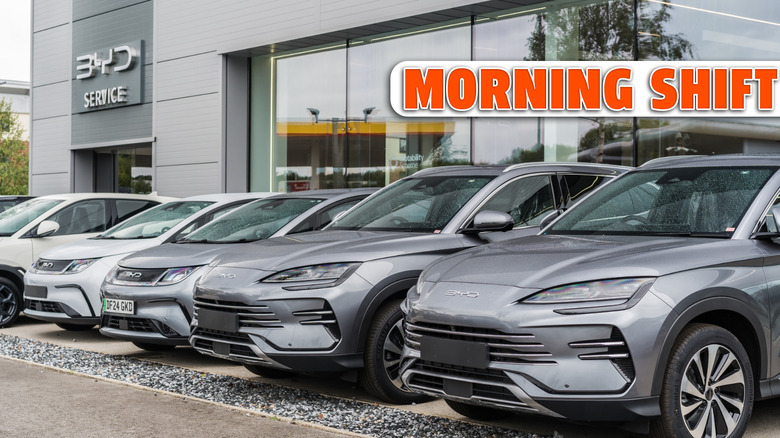
1st Gear: Canada will take low-tariff Chinese cars, but not many
Canada is trying to figure out what to do with Chinese-made cars. The country is now looking at allowing less than 50,000 cars from China into Canada every year at a lower tariff rate, but the plan seems far from finalized as officials continue to muck around with numbers. From Bloomberg:
Canadian government officials are debating how to divide up the new low-tariff quota for Chinese-made electric vehicles, including whether to cap how much space each company can use.
Prime Minister Mark Carney agreed in January that Canada plans to allow as many as 49,000 Chinese-made EVs into the country annually at a low tariff rate of 6.1%. That has created an opportunity for leading Chinese carmaker BYD Co., Chery Automobile Co. and other auto manufacturers in China to sell to Canadian consumers for the first time.
It also paves the way for Tesla Inc. and other automakers to export their Chinese-made vehicles to Canada.
But the government left unanswered the question of how the process would work. Officials are now discussing whether to give various Chinese manufacturers a specific allocation within the 49,000 vehicles — a quota within a quota — to ensure that no one player dominates.
Was this what the U.S. was like when Japanese cars started arriving? We threatened tariffs, sure, but were we this dumb about it? Probably, honestly.
2nd Gear: China is electrifying its heavy truck fleet as diesel prices climb
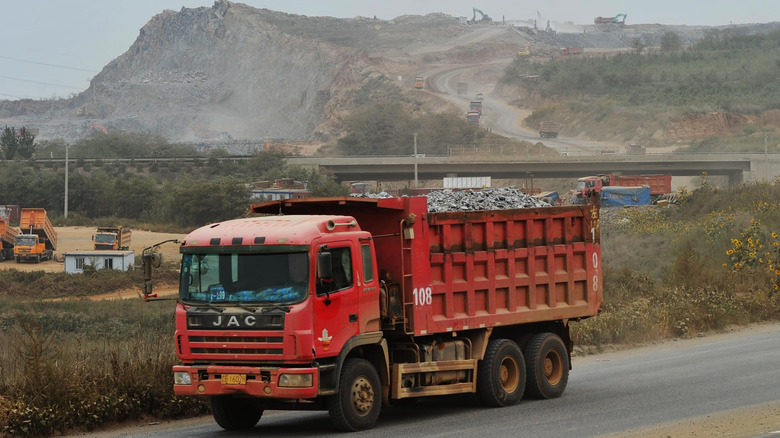
China has been electrifying its passenger car fleet for some time now, seemingly making better progress on the issue than we in the States are, and now it's turning its eye towards heavy trucks. The segment is already heavily electrified, but that's likely to grow — and decrease the country's dependence on foreign oil. From Reuters:
The jump in diesel prices triggered by the Iran war is expected to accelerate electrification of China's heavy truck fleet this year, analysts and automakers say, and speed a decline in fuel demand in the world's largest oil importer.
Electric heavy truck sales grew over the last two years from a niche market to nearly a third of new heavy truck purchases in 2025 thanks to government subsidies, cheap refuelling and expanding charging infrastructure. Last year's growth was particularly weighted in the fourth quarter because buyers also thought the trade-in subsidy programme would be ending soon.
New-energy heavy truck sales, which are mostly electric, began this year with the same kind of pop, growing 45% year-on-year to 44,000 units and accounting for more than a quarter of the segment, up from less than 20% of sales a year earlier, according to data provider CVWorld.cn.
This is great for China, from both an energy independence standpoint and the standpoint of climate change. It's worse for the countries that sell oil to China, but those nations clearly aren't thinking about the climate as much.
3rd Gear: High tariffs, expensive gas, and low wages are leading to low car sales
Breaking: The poorer people get, the less they buy expensive things. With costs rising across the board, and wages remaining flat, people in the U.S. are buying fewer cars. From Automotive News:
The U.S. light-vehicle market, as expected, came down to earth in April after buyers rushed to lock in pre-tariff prices a year earlier.
In a preliminary report, GlobalData estimated volume fell 6.7 percent, which would mark the fourth consecutive monthly decline.
April sales fell at each of the six automakers that report monthly: Toyota Motor Corp., Ford Motor Co., Honda Motor Co., Hyundai Motor Group, Subaru and Mazda, with double-digit declines at Ford and Mazda.
Honda and Genesis were the only brands to post April gains.
While job growth has rebounded and U.S. employment remains steady, analysts say the auto industry faces more hurdles: elevated prices and borrowing costs, rising gasoline prices and generally sour consumers.
...
GlobalData, citing lackluster consumer confidence, elevated gasoline prices and inflation and diminishing prospects for more interest rate cuts, reduced its forecast for 2026 light-vehicles sales to 16 million, down from 16.1 million. It was the firm's second cut this year.
Cars are too expensive, gas to put in those cars is too expensive, loans are too expensive, there's really no way in which right now feels like a good time to buy a car. Except for me, but I'm shopping for $1,400 minivans that I could theoretically sleep in if the economy gets too bad. I'm special.
4th Gear: Europe and the U.S. are approaching a tariff agreement, but we're not there yet
The U.S. is still negotiating tariffs with other countries and economic blocs after realizing the one-size-fits-all announcements the Trump administration initially made don't really make any sense. We're now coming closer to deals that almost work, but there's still plenty of room for further negotiation — at least, according to negotiators from the EU. From Reuters:
European lawmakers and governments are making good progress in negotiations to finalise a deal scrapping duties on U.S. imports but "there is still some way to go", the European Parliament's chief negotiator Bernd Lange said on Thursday.
The lawmakers and governments were aiming to finalise a deal under renewed pressure from U.S. President Donald Trump, with divisions over safeguards an overhang on the chances of a swift agreement.
"We have just concluded a constructive second trilogue during which we made good progress on the issue of the safeguard mechanism and the review and evaluation of the main regulation, but there is still some way to go", Lange said in a statement.
The negotiators will meet again on May 19 for the next round of talks.
Of course, no negotiator will tip their hand too early — saying "we're pretty much where we want to be" to Reuters at any point in the process means you lose your footing from which you're looking to push for better deals. Still, I believe Lange here. I can't imagine negotiating with this administration is fun.
Reverse: They're like plastics, but micro
As a Millennial who's lived my entire life in the U.S., I think I'm at least 40% microplastics by volume at this point.
The Fuel Up
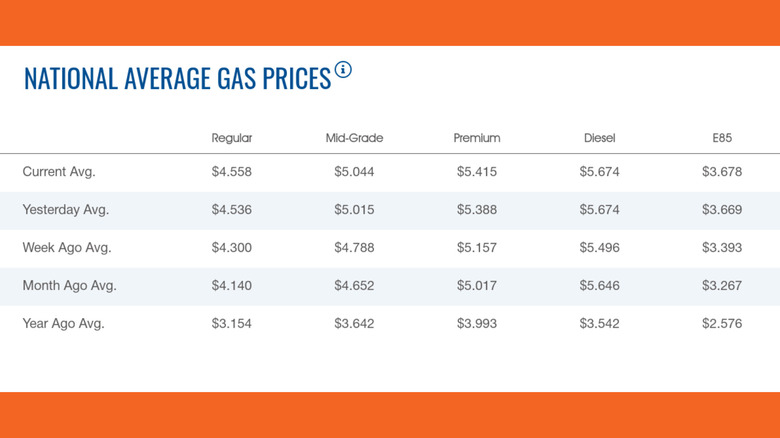
Remember when we were wondering if gas would ever break the $4 mark? Ah, how young and naive we were. The average price of a gallon of unleaded rose two cents over yesterday, despite both WTI Crude Oil Futures and Brent Crude dropping by around $4.50 each. Refinery woes are still keeping gas prices elevated across the midwest, however, so the average price of a gallon of regular unleaded continues to climb.
On The Radio: Chumbawamba - 'Tubthumping'
Miss me the last week or so? Well, I had Covid. Don't get Covid, kids, no matter how beautiful the asymptomatic woman offering you a drag of her cigarette is. Anyway, you're never gonna keep me down, and here I am back on the blogs.