

Trump Makes Good On Promise To Hike Tariffs On European Cars To 25%
Good morning! It's Monday, May 4, 2026, and this is The Morning Shift, your daily roundup of the top automotive headlines from around the world, in one place. This is where you'll find the most important stories that are shaping the way Americans drive and get around.
In this morning's edition, if you thought tariffs on European cars were settled business, you don't know Trump. Plus EU regulators are skeptical of Tesla's so-called "Full self-driving" software, Honda is keeping models around longer to help with its EV drawdown costs, and the rental car giant Avis is having a wild couple of weeks in the markets.
1st Gear: Trump tacks on 25% tariff to tied-up trade tiff
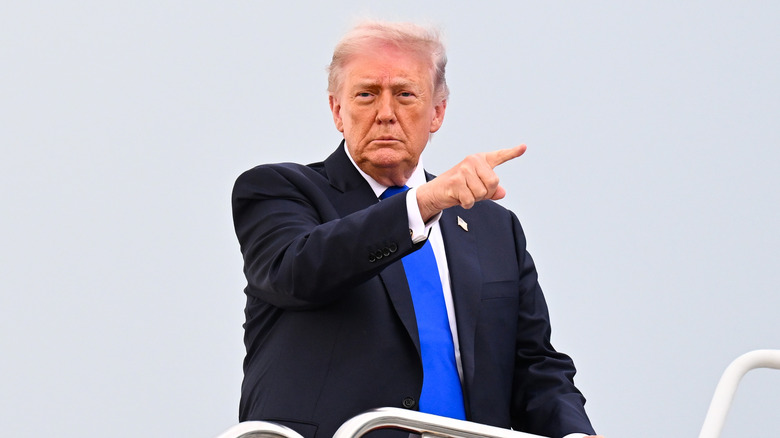
We told you on Monday that Trump was threatening a tariff rate hike on European cars, and here we are. Nothing is "official" official yet, but U.S. Trade Representative Jamieson Greer told Reuters the new 25% tariffs are going forward.
The hike is based on Trump accusing the EU of not complying with last year's trade deal, which the EU denies. There may be more to it than noncompliance of a trade agreement, as Trump's sudden shift seems more tied to Europe not running to the U.S. military machine's aid after we started yet another Middle East war with no plan, no clear end in sight, and no provocation, all while driving energy costs on the continent to astronomical rates. Imagine that. From Reuters:
Trump fired off the tariff post amid escalating tensions between the U.S. and the EU over the war in Iran and European countries' refusal to send navies to open the Strait of Hormuz. The White House said Friday it plans to remove 5,000 U.S. troops from Germany after German Chancellor Friedrich Merz said the U.S. was being "humiliated" by Iran in talks to end the conflict in the Middle East.
The Trump administration last year imposed a 25% tariff on global automotive imports under a national security trade law, but reached a separate deal with the EU in August to lower those duties to a net 15%, inclusive of prior duties.Shares in German carmakers slid on Monday following Trump's decision to hike U.S. tariffs on imported European cars to 25% from the 15% levy previously agreed, dealing a fresh blow to the already battered sector.
Shares for European automakers fell on the news. Automakers are already eating EV development costs in the billions thanks to U.S. policy's manic swings, and now this. Audi in particular is exposed to risk thanks to these shifts, as the VW subsidiary has no U.S. production but big U.S. plans. Audi already intends to slash its workforce to the tune of 7,500 jobs in the next three years, and that was under the 15% tariff plan. Yikes.
2nd Gear: European regulators still not so sure about Tesla's whole full self-driving (supervised) thing
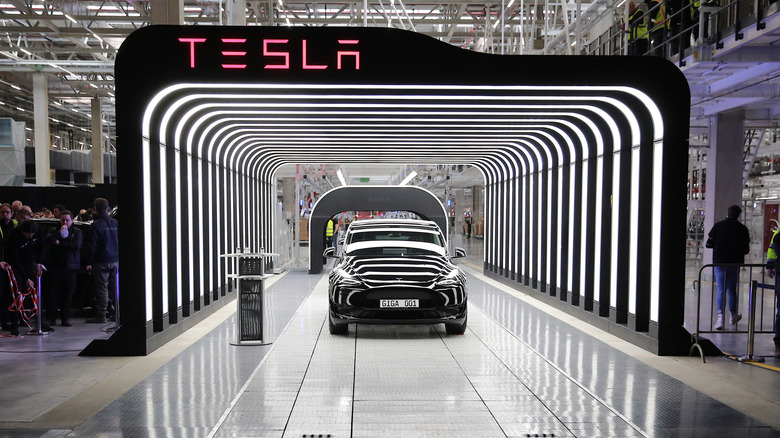
Europe fell out of love with Tesla over the last two years thanks to a stale lineup, cheaper Chinese options and Musk's far-right political machinations. The EV automaker lost 27% of its market share in 2025 and, while sales are climbing out of that hole, Tesla needs to offer something the cheaper alternatives in Europe do not; namely its advanced driver assistance system "Full Self-Driving (Supervised).
The Netherlands jumped on board early last month, and is seeking approval from the European Union; however new emails obtained by Reuters shows reluctance by the continent's safety regulators — including the early adopting Dutch — to sign on to sorta-self-driving Teslas:
But in previously unreported email correspondence, regulators in the Netherlands, Sweden, Finland, Denmark and Norway – who could prove critical to Musk's approval push – have raised a number of concerns over the technology.
Those include the system's tendency to speed, whether it is safe to use on icy roads and drivers' ability to circumvent features designed to prevent cell-phone use, according to the emails, which were seen by Reuters through public records requests.
They also expressed frustration with Tesla's strategy of publicly encouraging vehicle owners to pressure regulators to approve FSD.
Tesla itself is pushing hard for countries to adopt FSD, but if there's one thing Nordic countries do not like, it's unsafe cars. Norway, for instance, will charge drivers thousands for speeding and Finland assesses fines based on income, leading to an eye-watering $130,000 speeding ticket for one wealthy scofflaw. Having a robot car that is allowed to speed is just not going to fly in these places. Still, I feel for these European countries, being inundated by Tesla fans who don't care about public safety and just want their toys to perform the latest tricks is no fun. Ask me how I know.
3rd Gear: Honda to keep models around a little longer to make up for $15.8 billion in EV losses
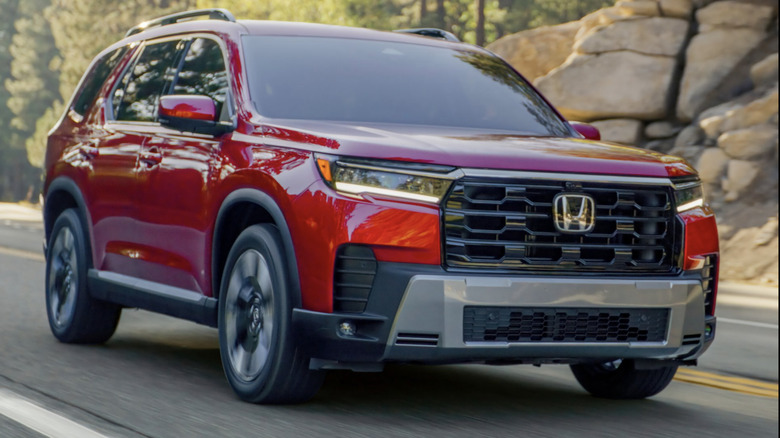
Traditional automakers took a bath on EVs in the U.S. following President Trump's murder of the EV tax credit, and Honda was no exception. Honda's cost? A cool $15.8 billion. The Japanese automaker has decided the best way to absorb those costs is to extend the lifecycle of the models it already has on sale. Honda went hard with EVs, and its now scrambling to bring hybrids to the U.S. after canceling three planned all-electric vehicles. From Automotive News:
The Japanese automaker is squeezing more cash from proven platforms while developing more efficient hybrid powertrains to drive future growth.
Honda, in a supplier memo reviewed by Automotive News, said it will extend production of the Odyssey, Accord and HR-V, as well as the Acura MDX and Integra.
Next-generation models of the nameplates won't arrive until the end of the decade at the earliest, according to the memo.
Acura is taking a similar game plan, with the current Integra getting three more years in the line-up, with no future product in the works. The MDX crossover will have been on sale for a decade by the time a new one shows up. As you can imagine, dealers do not find this plan very cash-money.
4th Gear: Rental car giant Avis Loses 70% Of Its Value In 2 Days
Rental cars are a big business, but as we saw during Covid, it's can be hard to keep everything on track. Avis has been having difficulties keeping the tires on the road as its stock bounced up some 600%, along with stock short buys.
A worse-than-expected quarterly loss this week mixed with its largest stock owner selling a big chunk of its shares sent the stock price tumbling again. Analysis thought Avis would lose $6.87 a share, but it actually lost $8.01 per share. Wouldn't you know, all of this chaos might be tied to a private equity firm. From Bloomberg:
The heavily shorted shares fell as much as 15% after the markets opened in New York before paring the decline to 7.6% at 9:47 a.m., putting them on pace for the sixth straight daily drop. The stock has been on a wild ride over roughly the past six weeks, soaring more than 600% driven by a short squeeze before crashing in recent days.
In a two-day span last week, Avis lost about 70% of its value. One of Avis' largest shareholders, Pentwater Capital Management LP, sold 4.3 million shares recently at prices that ranged between about $250 and $700, according to regulatory filings late Tuesday. The hedge fund is now the second largest holder with 17.5% of the stock.
It missed its per share earnings target despite per-day revenue being up and a record amount of its fleet being rented out. Rising used car prices also helped Avis out, as it saw reduce depreciation across its fleet. Take the wins where you can get them, I guess.
Reverse: He's a rocketman
USA! USA! Alan Shepard was nipping at the heels of Yuri Gagarin, who beat Shepard to the skies by a little less than a month. It may have only been 15 minutes of sub-orbital flight, but it still counts.
The Fuel Up
Apparently, oil prices fell back a little bit this morning before the bell despite some shooting going on between the U.S. and Iran yesterday in the Strait of Hormuz. WTI Crude Oil Futures and Brent Crude are still a bit higher this morning than yesterday morning though, at $103.28 and $112.17 respectively. A gallon of regular unleaded shot up three cents over yesterday's average price.
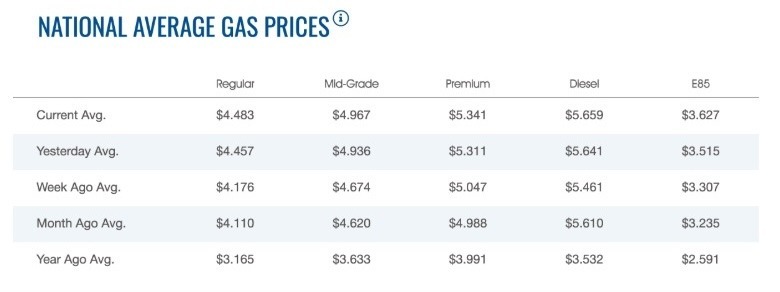 AAA
AAA
Apparently there's a ceasefire in the strait right now, despite the U.S. sinking six small boats that supposedly attacked two American merchant ships. The United Arab Emirates, a close U.S. ally, also came under attack for the first time since the war began, the Associated Press reports, so who knows what oil prices will look like by the end of the day.
On The Radio: Florence + The Machine - 'Sympathy Magic'
The tragedy of my life is that I am more machine than Florence: born to writhe around in a pretty dress across the moors, forced to blog.