

Why The Datsun 510 Earned The Poor Man's BMW Title
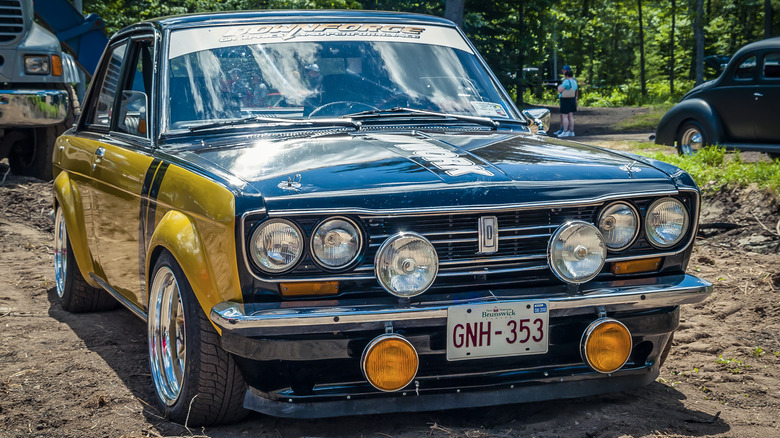
Back in the day, Nissan was a much cooler car company. Anyone who knows a thing or two about cars knows how beloved the Datsun 240Z is within the community, and the many GT-Rs that followed elevated the Nissan experience to levels never seen before. However, it was this unassuming little commuter, the Datsun 510, that redefined how people saw Japanese cars. The 510 was so good that it quickly earned the reputation for being the "Poor Man's BMW."
For context, the Datsun 510 had four-wheel independent suspension (in the U.S. and certain other markets), a potent single overhead cam (SOHC) inline-four engine, and a lightweight unibody, all combined in what became a classic rear-wheel-drive fun machine. The hardware on offer was similar to that of BMW's Neue Klasse had (not the new Vision Neue Klasse Concept, obviously). Mind you, this was during the '60s, when a certain Nissan representative saw the Neue Klasse's success and wanted the Japanese brand to make a proper driver's car. Essentially, you got the sophistication of a BMW without spending BMW money. In 1968, you could've bought a 510 for less than $2,000, when the Neue Klasse 1600 carried a price premium of 30% or more.
That Nissan representative, who goes by the name of Yutaka Katayama, was also responsible for leading the Datsun 240Z project, and we all know what a legend that turned out to be. It's worth pointing out that in other parts of the world, you may also find the 510 dubbed the Datsun 1600 or the Bluebird, available in body styles ranging from two- and four-door sedans to station wagons and two-door coupes.
Breaking down the Datsun 510's engine and chassis specs
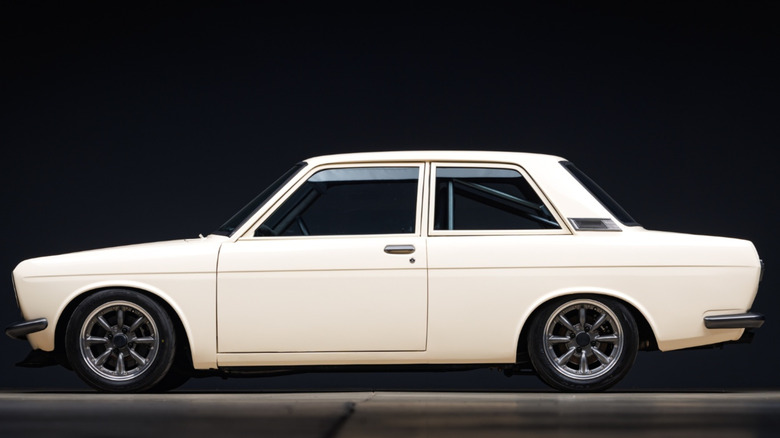
The Datsun 510 sold in the U.S. came with a 1.6-liter four-pot rated at 96 horsepower. This was mated to a four-speed synchromesh manual in a chassis that weighed a touch over 1,900 pounds. Later down the line, the 510 also received a more potent 1600 engine with different cam profiles and twin side-draft Hitachi carburetors, pushing total output to 105 horsepower. On the suspension side of things, Nissan played its cards differently, as it offered the independent front and rear setup for Western markets, where the "driver's car" ethos was to be projected, while other markets made do with the fairly utilitarian leaf spring and live axle combo.
The 510's independent suspension was similar to what BMW offered in the Neue Klasse, with a MacPherson strut front suspension and a trailing arm coil spring setup at the rear. The engine and chassis combo proved so competent that the Datsun 510 won its class in 1971 and 1972 racing the Trans-Am series. All told, the Datsun 510/1600 was a no-nonsense car built for the masses by a leadership that understood what driving stood for. The excitement is evident even today, with used 510s witnessing a lot of demand. Albeit perhaps not as much as the venerable 240Z.