

U.S.-Israeli War With Iran Is Making Life Hard For Automakers Around The Globe
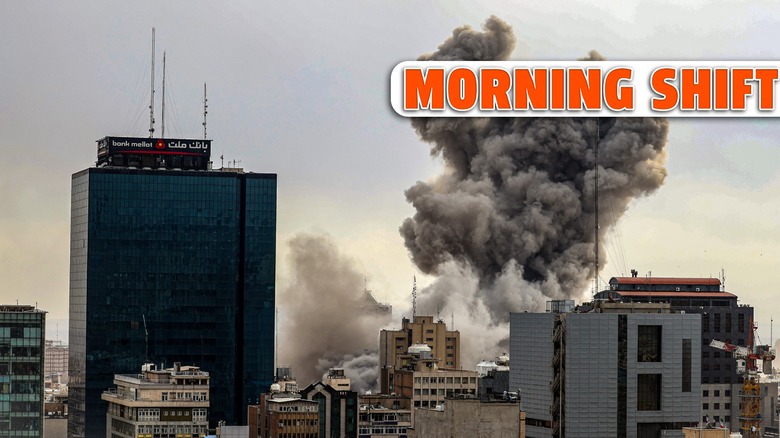
Good morning! It's Friday, March 6, 2026, and this is The Morning Shift, your daily roundup of the top automotive headlines from around the world, in one place. This is where you'll find the most important stories that are shaping the way Americans drive and get around.
In this morning's edition, automakers are struggling to deal with the fallout of the U.S. and Israel's war with Iran, Dodge's CEO is taking over Chrysler and Alfa Romeo as well, Mercedes-Benz's CEO think's the EU's electrification goals are going to be a disaster and Volvo is still reeling from U.S. tariff issues. Oh, also, gas prices are up a lot.
At least it's Friday.
1st Gear: War with Iran could start hurting automakers, not that it really matters
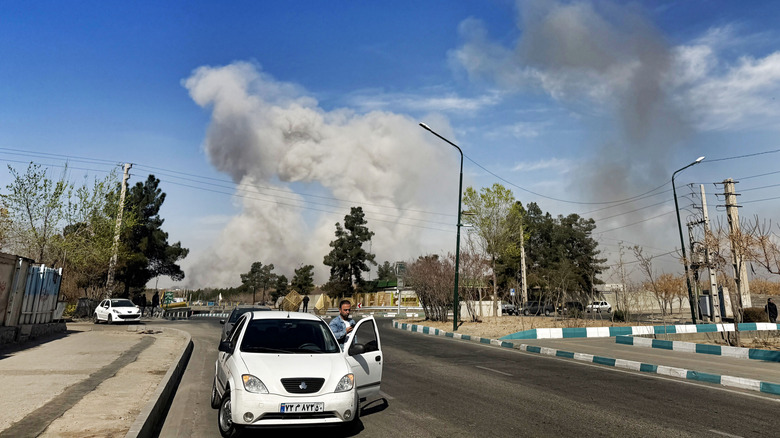
Automakers from around the world like Toyota, Hyundai, Stellantis and a handful of Chinese OEMs are being forced to deal with the mounting issues of a prolonged U.S.-Israeli war with Iran that could disrupt shipments, raise oil prices and threaten to crater vehicle sales far beyond the Middle East. Of course, these issues pale in comparison to the human toll this war has taken on people who live in and around Iran, as well as troops in the area, but I guess you've gotta feel for these multi-billion-dollar multi-national corporations as well.
At the very least, global operations for many of these carmakers hasn't been greatly impacted thus far. However, Bernstein equity research says that Asian brands have have a substantial presence in the Middle East, so if the war goes on for a while, they're certainly going to feel it. From Automotive News:
Toyota accounts for 17 percent of Middle East regional sales, Hyundai for 10 percent and Chery for 5 percent, according to Bernstein's March 4 analysis. Inside Iran, Chinese players including Chery, Jianghuai, Hainan Automobile and Changan are the main international players.
Established global brands are mostly absent from Iran, due to sanctions. Iran is the biggest automotive market in the region, accounting for about 38 percent of its 3 million sales last year.
Among European automakers, Stellantis faces heavy impact from the conflict, Bernstein said. Its pain point stems mostly from the threat of rising gasoline prices, due to curtailed oil shipments.
There are three overall impacts on the automotive industry, and they vary by manufacturer.
There is direct disruption to sales inside Iran. There is disruption to vehicle deliveries throughout the region, affecting wider shipments and sales at international players.
Big regional sellers such as Toyota or Hyundai could feel this pinch. So might producers of exotics and high-end sports cars, such as Ferrari.
Finally, there is disruption from rising pump prices, due to interrupted oil tanker movement through the Strait of Hormuz. Higher crude prices could negatively affect automakers such as Stellantis, which are heavily invested in internal combustion powertrains.
Things are even tougher for Iran's domestic manufacturers like Khodro and SAIPA, and Chinese companies are expected to feel the biggest squeeze from the fighting.
Zoom out, and international players face potential sales impact in neighboring markets such as Saudi Arabia, the United Arab Emirates, Israel, Kuwait and beyond. Business there could be crimped by shipping disruption. Toyota, Hyundai and Nissan have big regional volumes.
Toyota will cut output by 40,000 vehicles to account for possible logistic disruptions in shipments to the Middle East, Japan's Nikkei newspaper reported.
Affected nameplates include the Land Cruiser and other SUVs, it said.
[...]
The region accounted for 17 percent of Chinese passenger vehicle exports in 2025, according to Bernstein. The country's automakers shipped about 500,000 vehicles last year.
It's not looking like this war is going to end anytime soon. Initially, President Trump said the war would only last a month or so, now Central Command is reportedly saying it could last well into the fall, according to NewsNation. I wouldn't be surprised (and neither would historians) if it goes on much, much longer than that.
2nd Gear: Man gets two new jobs
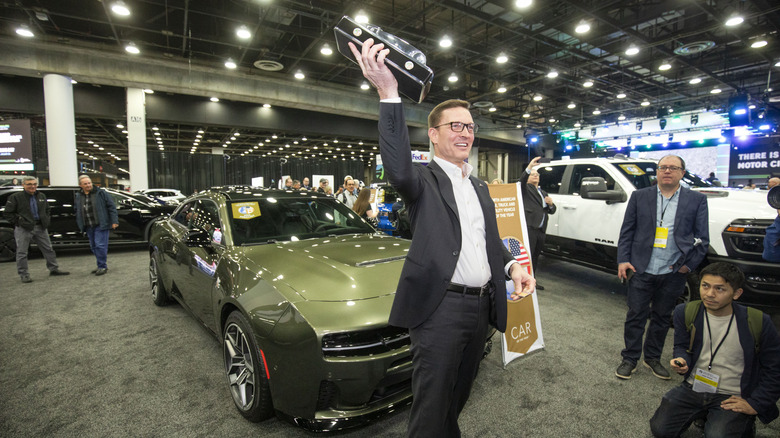
Stellantis is doing everything it can to right the ship, including a reshuffle of who is in charge. Now, Matt McAlear, the current CEO of Dodge, is putting two more nameplates under his belt: Chrysler and Alfa Romeo North America. The move follows the departure of Chris Feuell, who once led both brands.
McAlear has worked with the automaker for 13 years and apparently has all the Chrysler experience one could need: he was responsible for the launch of the Pacifica back in 2016. Considering that's the only car it makes right now, he should feel right at home. Most recently, McAlear led the launch of the new Charger Sixpack and Daytona. From the Detroit Free Press:
He is absorbing the roles previously held by Feuell, who the company said "elected to leave the company for personal reasons." Feuell previously oversaw Chrysler as CEO while simultaneously directing the North American operations of Alfa Romeo.
Feuell told the Detroit Free Press she is leaving the company with "immense gratitude," saying she left to spend more time with her family.
"My decision to leave Stellantis was not easy but I needed to step away to focus on my family," Feuell wrote in a message. "I leave with immense gratitude and complete confidence in the talented team that I had the privilege to build and work alongside."
Just three weeks ago, Stellantis celebrated Feuell on the company's LinkedIn page, congratulating her for winning an award for leading women in the automotive industry at the Chicago Auto Show.
Chrysler sold about 126,373 vehicles in 2025, a 1% increase over the previous year. Alfa Romeo sold 5,652 cars in 2025, 36% fewer than the previous year's total of 8,865.
I cannot speak for how McAlear will do in these new roles, but I will say this: he's got an excellent poker face. On March 3 I was sitting directly next to him at dinner while on a press trip for the Charger Sixpack R/T (more on that on Monday at 10 a.m.) and he didn't say a goddamn word about this or even hint that changes were coming to Stellantis leadership. Impressive.
3rd Gear: Mercedes CEO isn't a fan of EU's EV target
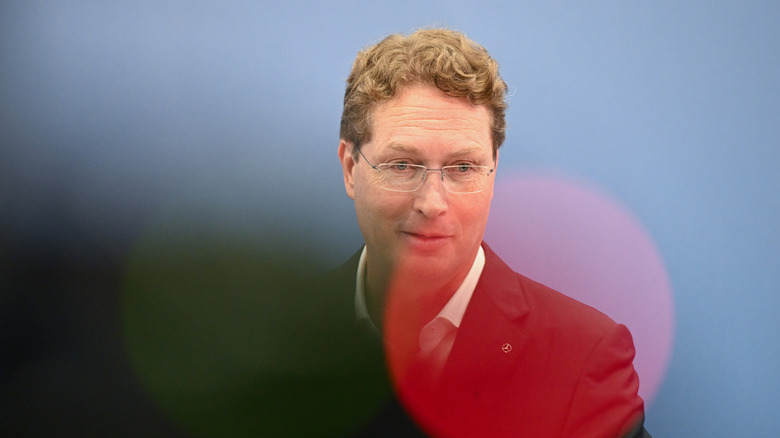
McAlear isn't the only CEO with a lot going on today. Merceds-Benz CEO Ola Kallenius spent the morning warning reporters that the European Union's proposed overall of vehicle emissions rules risked turning the region's auto market upside down. He urged regulators to revise the plan that he says could effectively impose a full ban on combustion-engine vehicles by 2035, even if that isn't its intended purpose. From Automotive News:
Speaking to reporters in Brussels, Kallenius, who also serves as president of the ACEA, the European automakers lobby group, criticized elements of the EU's Automotive Package designed to soften the bloc's planned phaseout of gasoline and diesel cars.
"Ninety percent must not turn into a hidden 100 percent," he said.
Under a proposal presented by the European Commission in December, automakers would be required to ensure that 90 percent of new vehicles sold from 2035 are zero-emission, rather than the previously planned 100 percent. The remaining emissions would have to be offset through measures such as the use of low-carbon steel and synthetic fuels.
Kallenius said the system of offsets effectively restores the full 100 percent requirement in practice.
[...]
Kallenius said policymakers should consider broader mechanisms to reduce emissions, including measures that target the EU's existing fleet of 250 million vehicles.
Even a small increase in the use of synthetic fuels in today's cars could deliver meaningful climate benefits, he said. "We are not debating whether to pursue decarbonization and electrification," Kallenius said. "The debate is about how to achieve it."
Kallenius also called for regulators to give automakers more time to comply with tightening CO2 limits.
Recently, the European Commission extended the compliance window for upcoming C02 targets. They now allow automakers to meet them based on an average of 2025-2027, rather than just the end of 2025 alone. However, Kallenius wants a bit more, saying it should be five years, rather than three.
4th Gear: Volvo is still getting killed by tariffs
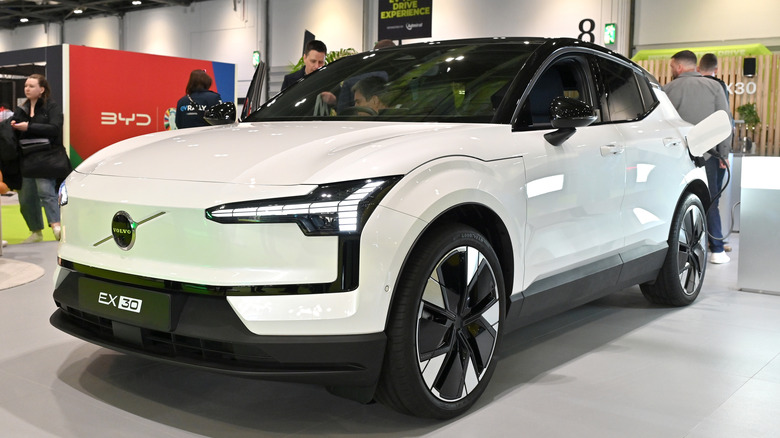
Volvo isn't having a super awesome spectacular good time right now as sales volume fell 10% in the three months through February. It has tariffs and other market headwinds to thank for the downturn, but there's at least one bright spot: electric vehicle sales are up. I suppose that's something if you're a glass-half-full type of guy. From Reuters:
Volvo Cars, majority-owned by China's Geely Holding, said in a statement it sold 156,965 cars in the period. Volumes for fully electric models increased 18% to account for 25% of all cars sold.
Sales for the period were weighed down by tough market conditions, "impacted by tariffs and unfavourable regulatory developments especially in the United States. The prolonged new year holiday period in China further affected our performance," it said in a statement.
"However, we are pleased to see steady growth in the sales of our fully electric cars."
Sales volumes of electrified cars as a whole, also including plug-in hybrids, were down 2% to account for 49% of total volumes.
Volvo Cars said earlier it would increase production of its new fully electric EX60 SUV, production of which is due to start in Sweden during spring, to meet strong demand in key markets such as Germany.
[...]
U.S. President Donald Trump initially hiked import tariffs on cars from the European Union to 27.5% from 2.5% during last year's push to reset Washington's global trade relations. That was later reduced to 15%, applied retroactively to August 1.
In February, Volvo reported a 68% dive in fourth-quarter profits as it adjusted prices as a way to boost demand. It also forecasted some year-over-year growth for 2026, but hedged a bit by saying it was facing a "persistently tough external environment."
Reverse: You guys remember this?
 History.com
I actually got the chance to visit the Alamo during some downtime on the absolutely exhilarating VW Taos press trip I went on at the end of 2024. Unfortunately, try as I might, I couldn't find the basement. I'll need to go back and look so more. On a more serious note, if you want to learn more about the Battle of the Alamo, head over to History.com.
The Fuel Up
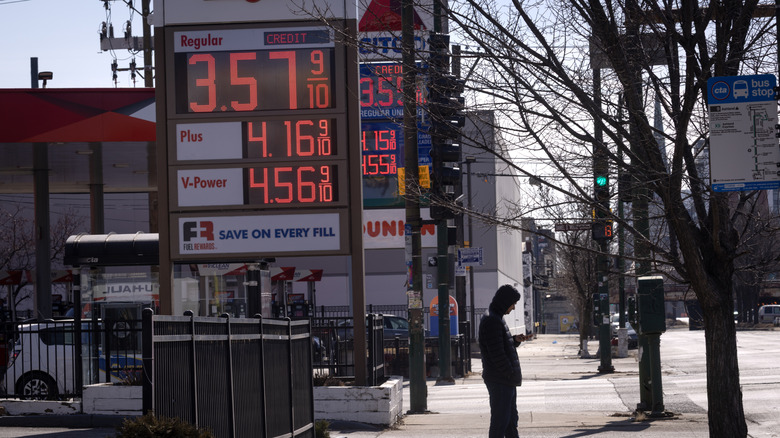
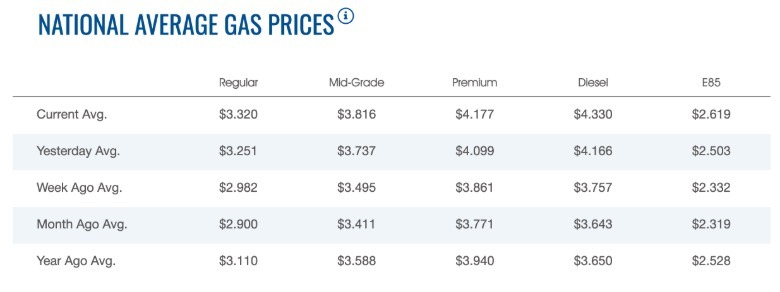
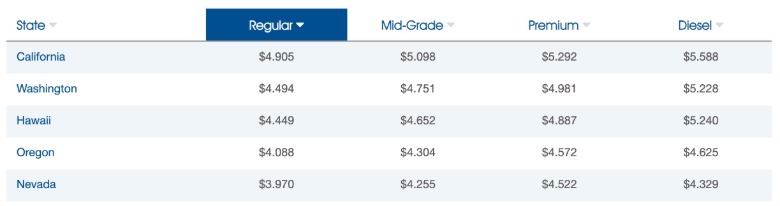
The U.S.-Israeli war with Iran is jacking up gas prices across the globe, and while that's happening, we're going to be tracking them for you. Overnight, the national average price for a gallon of regular gas looks to have increased another 7 cents. Overall, the average price of a gallon of regular has gone up 34 cents from when it cost $2.98 on February 26.
Here's where national prices stand on the eighth day of this conflict, which started on February 28, according to AAA:
 AAA
AAA
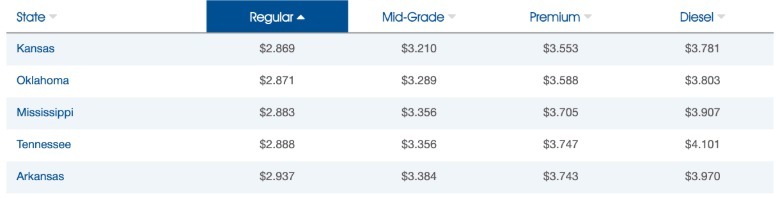
These five states have the cheapest gas in the country:
 AAA
AAA
These five states have the most expensive gas in the country:
 AAA
AAA
On the radio: Huey Lewis & The News - Hip To Be Square
I recently started the "American Psycho" novel, and I've gotta say, it might actually be even better than the movie. I feel like the fact the movie is so amazing really drowned out the book, but if you see it at your local bookstore, you should really pick it up. It's a fun and deeply haunting read. I highly recommend it.