

5 Popular Car Brands That Build Cars In Canada
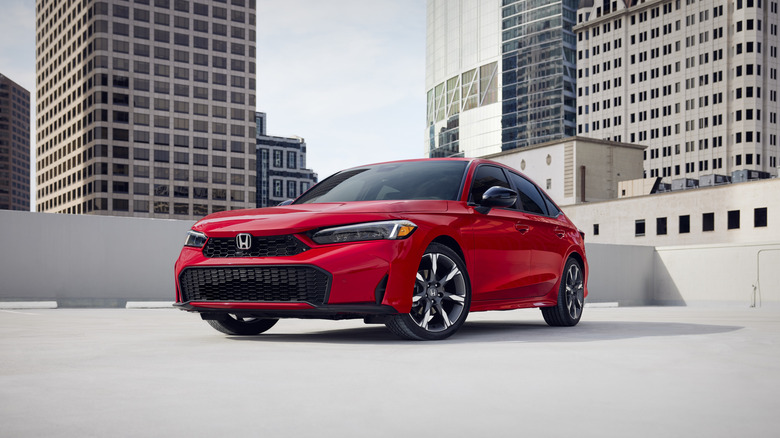
The website of the Canadian Vehicle Manufacturers' Association (CVMA) makes the bold claim that "the North American automotive industry was born in Canada," since the Walkerville Wagon Works factory built 117 Ford Model C cars in 1904. For the record, though, Ford's Mack Avenue factory in Detroit built more than 1,000 Model A cars beginning in the summer of 1903. Still, Canada was definitely in the game right from the beginning, and for a time, it was the second-largest producer of cars on the planet.
Some carmakers were Canadian-born rather than being U.S. companies. One such manufacturer was the McLaughlin Motor Car Company, which eventually became the genesis of General Motors of Canada. This brand started as the McLaughlin Carriage Company in rural Ontario before switching to building cars in 1907. Initially, it used Buick engines before GM acquired McLaughlin's assets in 1918 and transformed it into GM Canada. Most of its brands would be familiar in the U.S., but it also sold Canada-only marques such as Acadian and Beaumont.
Honda became the first Japanese brand to build cars in Canada when it opened a factory in Alliston, Ontario. The first vehicle rolled off its assembly line in 1986, launching a new era for the Canadian car industry. Now, as of January 2026, there are talks between the Canadian government and South Korea aimed at bringing Korean vehicle factories to Canada. Tariff issues threaten some Canadian auto production, although moving Canadian car production stateside is much easier said than done. For now, here are the major car manufacturers in Canada and the brands they build there.
Ford builds Ford Super Duty pickup trucks
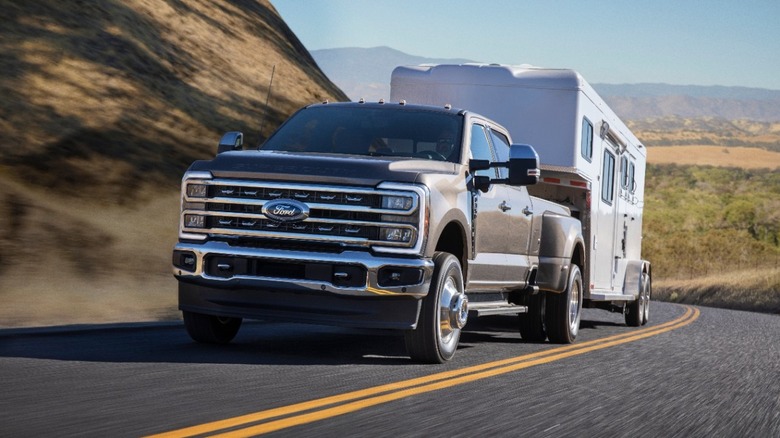
As we saw above, Ford's manufacturing presence in Canada dates back to 1904. Today, the Blue Oval operates three major production facilities in Canada: the Oakville Assembly Complex, the Windsor Engine Plant, and the Essex Engine Plant. In 2023, the Ford Motor Company of Canada built more than 160,000 vehicles and 277,000 engines, employing a total of 7,000 workers in these facilities, along with 18,000 more at Ford and Lincoln dealerships around the country.
Ford built its midsize Edge SUV at the Oakville Assembly Plant for 18 years, but production ceased when the Edge was discontinued after the 2024 model year. The Lincoln Nautilus, the Edge's upscale cousin, was also built there until production shifted to China in 2023. Initially, Ford planned to build EVs in Oakville, with assembly set to begin in 2027 after an extensive retooling of the factory. However, those plans fell through in mid-2024, after which the company decided to build its F-Series Super Duty pickup there instead, with Ford investing $3 billion in new truck production.
The Windsor Engine Plant in Windsor, Ontario, opened in 1923, making it Ford's oldest operating facility in Canada. This 2.1-million-square-foot facility sits on a 149-acre site and employs approximately 670 people. The current building, dating to 1994, houses a production line that builds the 6.8-liter Triton V10 for the Ford E-Series chassis cab vehicle. Nearby in Windsor is the Essex Engine Plant, opened in 1981. The Essex facility has manufactured engines and parts during its history, and it currently produces the 5.0-liter Coyote V8, the 7.3-liter Godzilla V8, and the 6.7-liter Power Stroke diesel V8.
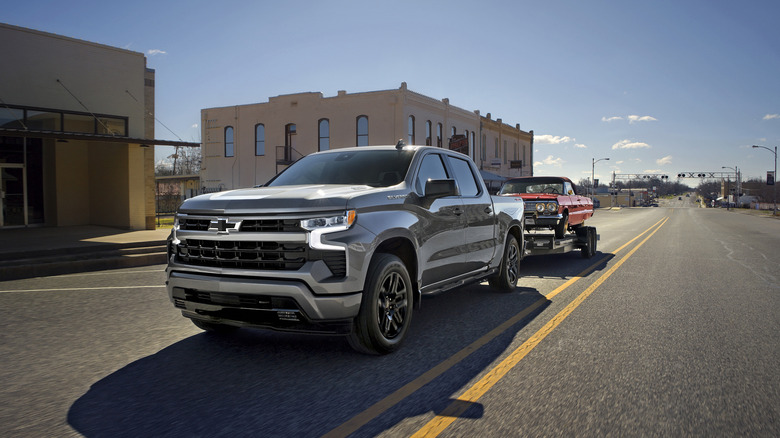
General Motors builds Chevrolet pickup trucks
GM has nearly a dozen major facilities around Canada, ranging from full assembly plants to centers for research, design, and testing. Major assembly plants include Oshawa Assembly, St. Catharine's Propulsion Plant, and, until very recently, the CAMI Assembly Plant. At the present time, the only active GM plant assembling complete vehicles is the Oshawa Assembly Plant in Oshawa, Ontario, although engines are produced elsewhere, while the Canadian Technical Centre operates several research and engineering facilities and the McLaughlin Advanced Technology Track.
The Oshawa Assembly Plant sits on the site of GM of Canada's original factory, where McLaughlin-Buicks were produced in 1907, and where carriages had been built before that. The Oshawa plant closed for 2 years from December 2019 to November 2021, after which it reopened to produce light-duty and heavy-duty Chevrolet Silverados, the only Chevy vehicles made in Canada and, currently, the only GM vehicles assembled in the country. GM recently eliminated the third shift at Oshawa but also announced that it will invest $63 million to upgrade the plant's stamping operations.
GM dropped the BrightDrop electric van, the only other vehicle it assembled in Canada. With that, it idled the CAMI Assembly Plant in Ingersoll, Ontario, where the van was built. The move resulted from slower electric vehicle sales than expected, partly due to the changing regulatory and tax environment in the U.S. With no obvious replacement for the BrightDrop, due to the complex tariff situation, GM may sell the CAMI plant to a Belgian consortium interested in producing the BrightDrop for the European market.
Honda builds Honda-branded vehicles
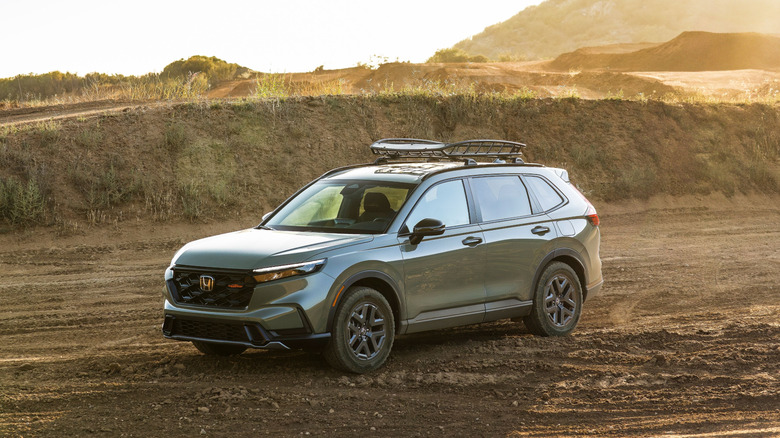
Honda of Canada Manufacturing's campus in Alliston, Ontario, features two main production facilities, prosaically named Plant 1 and Plant 2. The first vehicle Honda built in Alliston was an Accord that rolled off the assembly line in 1986. Since then, Alliston has become one of Honda's premier assembly plants in the world, producing 400,000 vehicles per year and employing more than 4,000 people. The facility currently builds Civics in Plant 1 and CR-Vs in Plant 2 for the U.S. and Canadian markets.
Plant 1 has built Civics since 1988, and it currently builds the Civic Sedan, Civic Coupe, and Civic Si models. More than 5 million of them have rolled out the factory's doors. Plant 2 has had a more varied output over the decades, having produced the Odyssey minivan, the Pilot SUV, and the Ridgeline pickup truck, along with the Acura MDX and ZDX SUVs. In 2012, production switched over completely to the CR-V, one of the most spacious and comfortable compact SUVs.
In May 2025, Honda announced that some CR-V production would move from Alliston to Honda's U.S. factories in response to tariffs. Somewhat confusingly, the company announced that there would be no reduction of either the workforce or production in Alliston, although it's difficult to see how building CR-Vs for the Canadian market only could support the same volume of production. In that same month, Honda also announced that it was delaying an $11 billion plan to build an EV production hub in Alliston.
Stellantis builds Chrysler and Dodge vehicles
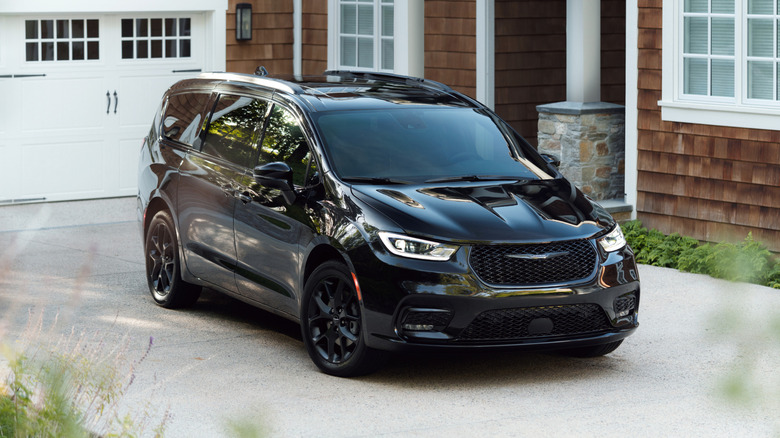
Stellantis' main Canadian production facilities are the Windsor Assembly Plant, the Etobicoke Casting Plant, and the Brampton Assembly Plant, which is currently idle. Chrysler's production history in Canada dates back a century to the establishment of a factory in Windsor, Ontario in 1925. The Chrysler Corporation of Canada soon produced models for its Plymouth, DeSoto, and Dodge divisions, as well as Graham Brothers trucks. The original 280,000-square-foot Windsor plant has grown into the modern production facility.
With Chrysler being absorbed into the trans-Atlantic conglomerate known as Stellantis in 2021, Stellantis is the current owner of the Windsor Assembly Plant. Windsor builds the Chrysler Pacifica, the plug-in hybrid Pacifica, the Chrysler Voyager, the Canada-only Chrysler Grand Caravan, and the gas-powered Dodge Charger, with the new Charger SIXPACK going into production in December 2025. Stellantis closed the factory in response to tariffs in early April of 2025 but reopened it on April 22.
The Brampton Assembly Plant in Ontario had been producing the Jeep Compass until 2025, when Stellantis moved production to the U.S. in response to tariffs, prompting threats of legal action from the Canadian government. As of February 2026, Stellantis is holding discussions with the Canadian government about restarting production at Brampton and re-employing its 3,000 idled workers. In the meantime, some of the Brampton workers have been transferred to a new third shift at the Windsor plant.
Toyota builds Toyota and Lexus vehicles
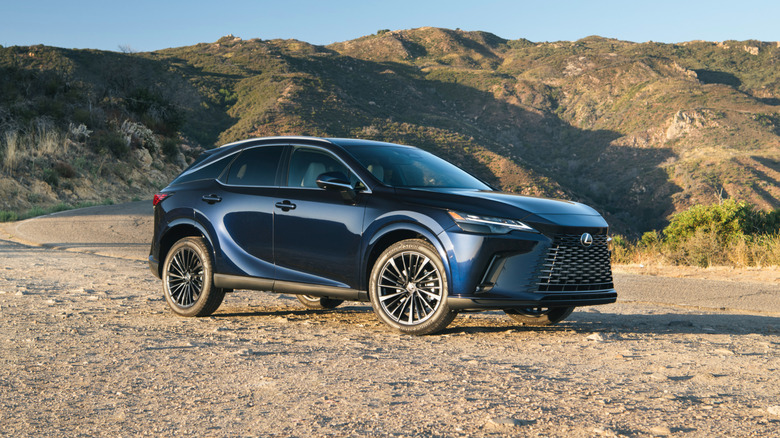
Toyota Motor Manufacturing Canada, Inc. (TMMC) operates three plants in Canada: the North and South Plants in Cambridge, Ontario, and the West plant in Woodstock, Ontario. Toyota's manufacturing in Cambridge commenced in 1988 with the production of Corollas. All three plants use the Toyota Production System or TPS, which is designed to eliminate waste and shorten the time to delivery of each vehicle. TPS became influential in manufacturing worldwide across many industries. Quality remains high, with TMMC winning its 23rd JD Power Plant Quality Award in 2025.
The TMMC South Plant is the original factory on the Cambridge site. In its first year, it experienced growing pains, producing just 153 Corollas. Today, the plant produces more than 110,000 vehicles per year. In 2000, it became the first Toyota plant outside Japan entrusted with building Lexus models, and today it focuses exclusively on Lexus, producing the RX 350, RX 350h, and RX500h. In 1997, the North Plant opened on the same site, producing the Corolla before switching to the best-selling RAV4. It also produces the Lexus NX.
Approximately 40 minutes to the west of the original Cambridge manufacturing center, Toyota opened the appropriately-named West Plant in Woodstock. Production of the RAV4 commenced here in 2009, followed by the RAV4 Hybrid in 2019. The West Plant converted to the Toyota New Global Architecture (TNGA) in 2018, followed by the North Plant the next year. Toyota's website describes TNGA as "a program of structural innovation, starting with changing the basic architecture of vehicles." It's a philosophy that's designed to make both the vehicles and the manufacturing process smarter.