

Mars Rover Finally Gets Martian GPS (Sort Of), One Step Closer To Autonomous Planetary Exploration
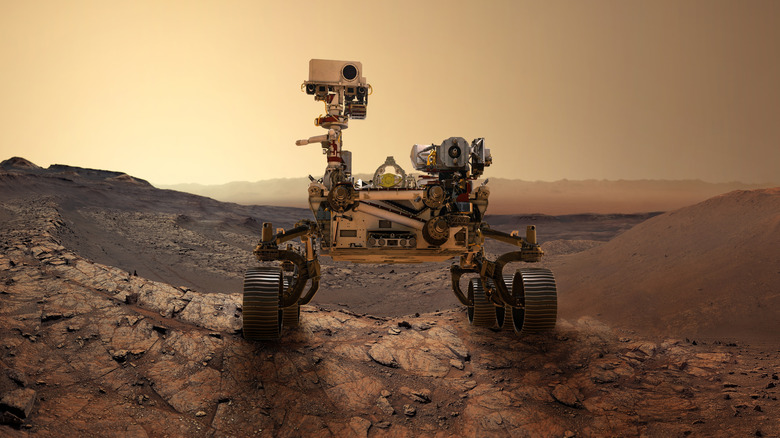
Ever lose connection to GPS? Sometimes you're in a tunnel, sometimes your phone is acting up, and sometimes you're a robotic explorer on another planet hundreds of millions of miles away from the nearest positioning satellite. Yes, NASA's Mars rovers, triumphs of engineering and technology, have no idea where they are. While their on-board computers are smart enough to navigate around terrain and obstacles, they don't know where exactly they've ended up after a day of driving. But now, thanks to a little Ingenuity (literally), NASA's Jet Propulsion Laboratory has figured out how to get the Perseverance rover to understand where on Mars it is. It's Martian GPS, sort of, and it's called Mars Global Localization.
It's all about navigating by landmarks. NASA has mapped every inch of Mars, so positioning consists of the rover looking for geologic features and then comparing that to the distance that the rover has traveled. Older rovers had to stop and process this information, but the Perseverance rover could do so on the move with a system called AutoNav. But as NASA explains, this method isn't perfect, and over the course of a day the rover becomes less and less certain that it understands its location. Eventually, the nervous little rover gets so uncertain that it goes into "ask for help" mode, halting in place and calling Mom, or in this case JPL. Along with its plea, it sends a panoramic image, which JPL engineers use to pinpoint an exact location. They send that information back to the rover, which can now continue on.
Over years and even decades, that phone-tag can slow exploration down a lot. Much better would be if the rover could actually think for itself. So just like a teenager needs to eventually learn to figure out their own problems, JPL wanted to find a way to get the rover to self-orient. They ended up finding one from something that hadn't been designed for it.
There are no failures, only new chances
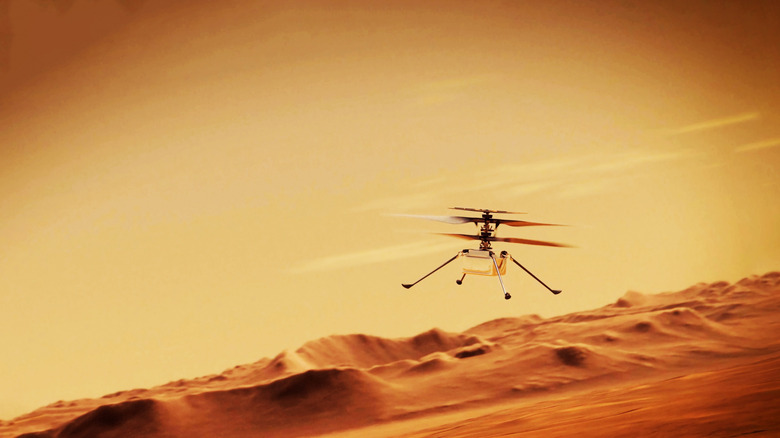
When the Perseverance rover landed on Mars in 2021, it brought a little friend with it. Its pal was a helicopter drone named Ingenuity, which could fly around and snap a few pictures. Though it was a plucky little lad, it was really meant as more of a demonstration for future science missions. But much like its big rover friend, it persevered, blowing past its expectation of five flights to achieve a full 72 over three years. In the end, however, what goes up must come down, and Ingenuity damaged one of its rotors. It's still in contact with NASA, but it can't move anymore.
So, a success (helicopter drone on Mars!) that was a failure (it broke its rotor!) that was still a success (72 missions!). But in its failure, Ingenuity has inadvertently opened the door to yet another success. You see, Mars is a hostile environment, constantly blasted by solar radiation. So the microchips that constitute Perseverance's brain have to be hardened, which is an engineering feat unto itself. That in turn means that those chips are pretty old, since it takes a long time to figure out how to harden them. As in, Perseverance is running on chips from 1997. Don't worry buddy, soon you could get Windows 98!
Here's the trick: Perseverance needed a separate chip to talk to Ingenuity. And since Ingenuity was supposedly only going to make it five flights anyway, why bother with a hardened chip? So for that, the rover had a Qualcomm Snapdragon 801 SoC, a chip made primarily for smartphones that was first released in 2013. That might seem like an old processor, but it's not 1997 old. Someone over at JPL finally realized that, hey, that's a lot of computing power that Perseverance just isn't using now that the Ingenuity isn't flying. Why not use it to, you know, think?
Pathfinding on other worlds
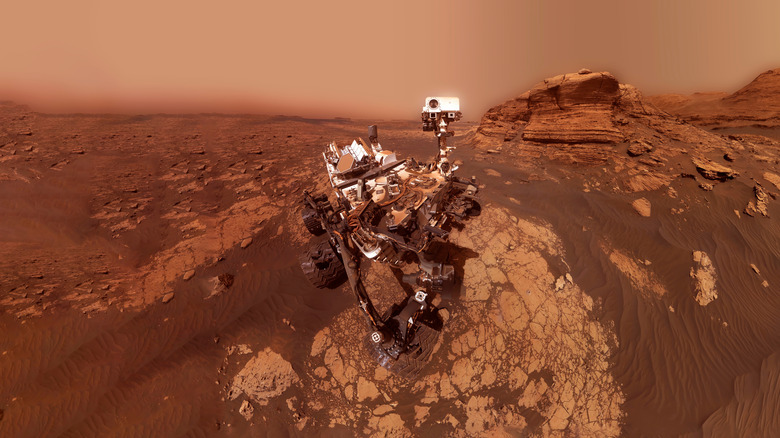
Just like the Scarecrow of Oz, it turns out the rover was smart all along, it just didn't realize! Now that the wizards of JPL have taught it to use its Snapdragon, Perseverance can analyze its panoramic images itself, thank you very much. No need to phone home — if it realizes that AutoNav had drifted off-course, it can just stop, think for a minute, figure out where it is, and then move on with confidence. That's an enormous step towards fully autonomous robotic exploration.
Of course, this un-hardened chip may not last forever. Such is NASA's level of precision that, through careful analysis, it determined that the Snapdragon had already taken damage to 25 of its processing bits. Personally, if 25 of my bits were damaged, I would be very upset. But Perseverance lived up to its name, isolated the damage, and carried on navigating. Over time, however, expect the damage to increase.
This is all still new, but this ought to open up some exciting new routes for NASA and other rover operators in the future. If more modern chips can be installed in them, rovers will be able to go much farther under their own direction, requiring less and less direct oversight from human engineers on Earth. That will be a key technology for any Moon bases that might be popping up in the near future.