

NASA Will Let Artemis Astronauts Bring Smartphones To Take Moon Selfies
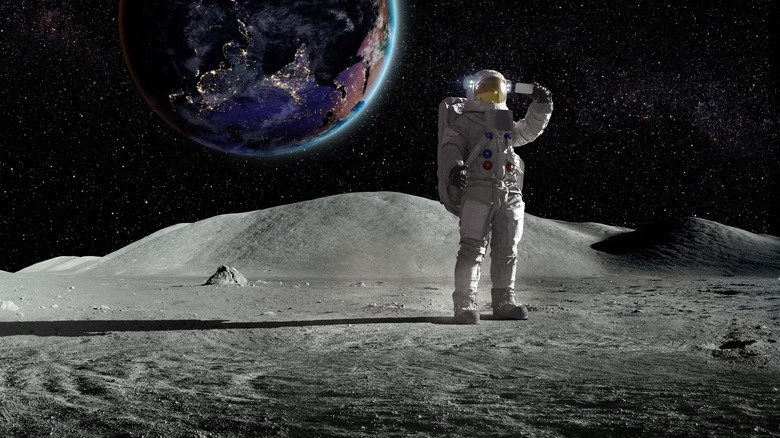
Ever see something really cool, reach for your phone to take a video, and realize you left it at home? And then realized that home was 250,000 miles away, because you're in lunar orbit? Never fear: NASA is allowing the astronauts of the SpaceX Crew-12 mission to the ISS and the Artemis II mission to the Moon to bring their phones along. This is actually a big deal, since getting approval to take equipment into space is a long, laborious process that takes years. The fact that current-generation smartphones have been greenlit is a shift in how NASA operates, with potential long-term consequences. And also, it means Moon selfies, which is the priority, obviously.
The reason that equipment approval is so cumbersome is because NASA doesn't want something to blow up, leak, shatter, or otherwise destroy itself in space, as Ars Technica lays out. Over the decades, however, these requirements have piled up on top of themselves to the point that new NASA Administrator Jared Isaacman wants to take a hard look at what's still important and what can be removed. As he said on X, "We challenged long-standing processes and qualified modern hardware for spaceflight on an expedited timeline. That operational urgency will serve NASA well as we pursue the highest-value science and research in orbit and on the lunar surface." This will sound great if the phones work, and less great if something does go wrong. Speed vs safety, meet space.
But will they have signal?
Prior to this announcement, the cameras that would have gone on the Artemis II around the Moon would have been a 2016 Nikon DSLR and years-old GoPros. But smartphones have been in space before, including on Isaacman's own privately funded Polaris flights. If it's good enough for the administrator, it's good enough for the rest of the astronauts, apparently.
Isaacman has said that he wants to modernize the agency by integrating it more with the commercial space industry, which he says will bring down costs and allow NASA to do more with the budget it has. To pretty much everyone's surprise, that budget turned out to be the biggest one since 1998, adjusting for inflation. So in the best case scenario, Isaacman can reorient the agency towards modern best practices, which includes faster approvals and leveraging all the new private-sector space activity. In the worst case scenario, well, going fast will break stuff. Maybe starting with a phone.
But none of this addresses the real issues: What smartphones do the astronauts actually use? Are these Android users or Apple stans? Does night photography work when you are literally inside of the night itself? Don't wait for the astronauts to text: they won't have signal out there. Although the way satellite telecommunications are going, they might sooner than you think.