

Why Your Tire Keeps Losing Air – Even Without A Puncture
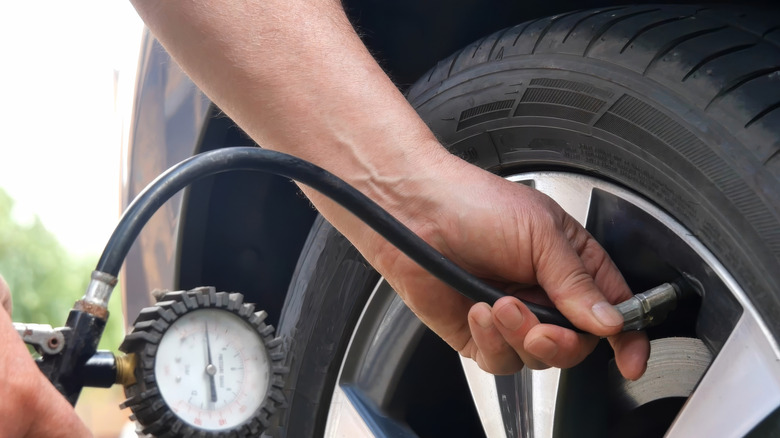
A tire can lose air even if it doesn't have a hole or puncture. This is because rubber is not completely impermeable to air and slowly lets it escape through the tire's inner liner over time. This process affects every tire irrespective of brand or condition. That is why you are always being advised to check the tire pressure routinely because failure to do so may leave the tire under-inflated even if there's no damage.
This natural air loss is accelerated due to temperature changes. Sixth-grade physics has taught us that with falling temperatures, air pressure also has a tendency to drop. A cold snap may drop tire pressures enough to fire off a TPMS (tire pressure monitoring system) warning (although it's the most useless warning light) and make you suspect there's a puncture.
Valves are another of the most common culprits for tire pressure loss. Valve components, including valve cores and stems, wear out with age and use. Cracks, corrosion, or any build-up in these components can compromise the seal and cause a leak to develop gradually. Even the absence of a valve cap contributes to air loss by allowing dirt to interfere with the valve core.
Sometimes, the blame could lie with the wheel itself. When the rim corrodes or rusts over time, or even receives just a few minor scratches, this compromises the seal between the tire bead and the wheel. This leads to constant pressure loss as air leaks through the rim instead of through the tread.
Loss of air without a puncture doesn't usually happen overnight
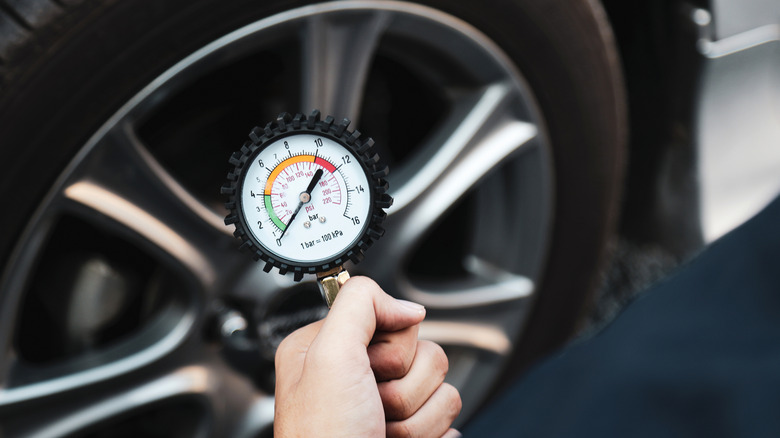
A loss of air without a puncture rarely announces itself quickly. It develops over time, often merely as one tire needing air more frequently than the other tires. The tire still looks fine upon casual inspection, and the car drives normally, so it is an easy thing to miss or ignore.
Over time, as the problem persists, certain patterns start to develop: The same tire consistently reads lower during pressure checks or triggers a TPMS warning more frequently. In most cases, the pressure loss becomes more noticeable immediately after driving when the heat and the forces inside the tire increase. All this behavior can make the problem seem inconsistent, even though the root cause is the same.
The age of the tire is another major contributor to air loss. Tires are made of rubber, which hardens over time and deteriorates in a process known as dry rot, characterized by small cracks. These will render the tire unable to hold air, even if it has a fairly good tread depth. And in cases where the tire tread has worn away, it can even be toxic to the environment, as well as reducing grip and the tire's ability to retain air pressure.
If you drive with underinflated tires, there's a strong chance of damaging the tire structure. With very low pressure, the tire is susceptible to excessive movement of the sidewalls, which generates heat and weakens the tire internally. This damage is not always apparent, but it increases the likelihood of ongoing air loss and eventual failure.
What to do when a tire keeps losing air
If a tire constantly needs to be topped with air, then that's a clear warning sign. Simple observations will not be enough and tire pressure monitoring systems only go off when the pressure drops below a certain level. The only sure way of detecting a leak is actual pressure checks.
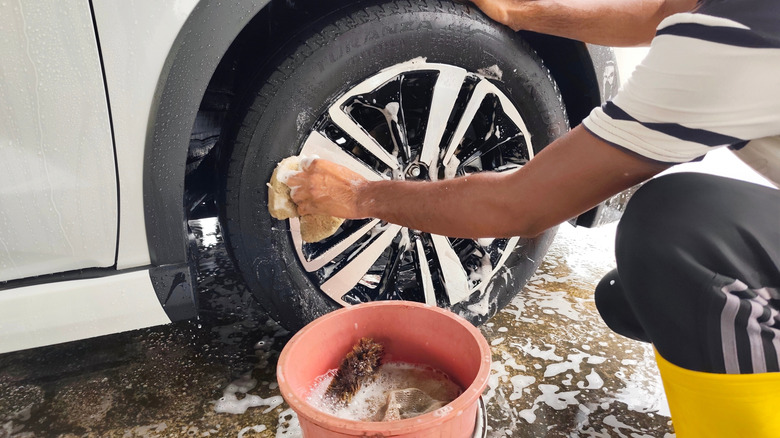
To spot the leak, inflate the tire with the suggested air pressure and then apply soapy water to all parts of the tire, including the valve, bead, sidewall, and tread. The leaky parts will be detected by the formation of bubbles where air is escaping. Some leaks only appear when the tire is fully inflated, which is why it's important to first fill the tire with air and then check for any leaks.
Using the tire while it initially leaks air is dangerous. The tire with less air wears unevenly, gets poor gas mileage, and provides poor braking and control. In addition, the tire could experience sudden failure, especially if the sidewall gets damaged. Minor tread punctures can be easily fixed, but bigger issues with valve components, bead sealing, and corrosion on the wheel need parts replacement or bigger fixes, while rubber deterioration typically means the tire needs replacing. Early attention prevents further damage and will reduce the likelihood of more serious problems later on.