

Most Speedometers Are Inaccurate, But Is GPS Any Better?
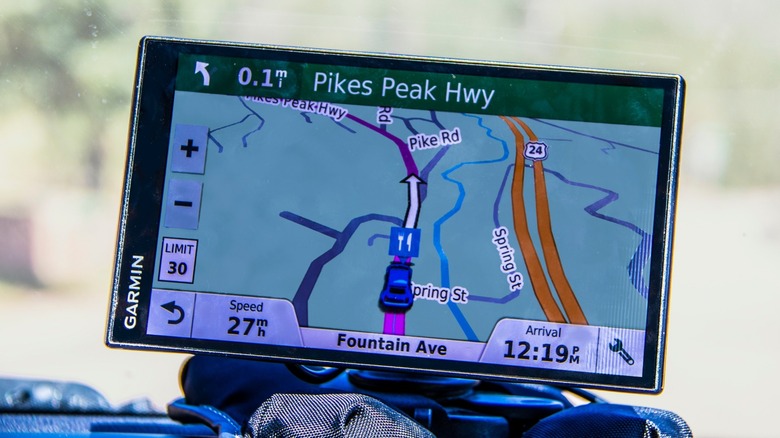
Built-in speedometers have been the standard method for measuring our driving speed since the early 20th century. These devices have seen some changes in the time since, including transitioning from a reliance on magnets to going completely electric toward the end of the last millennium, though the core purpose remains the same. However, these days, modern technology allows us to monitor our speed using various tools, including GPS.
GPS, short for Global Positioning System, uses a network of more than 30 satellites, allowing the GPS receiver in your phone or car to pinpoint its position on the Earth's surface in three dimensions. Your GPS receiver calculates changes in distance over time to determine your speed across the landscape. That's great, but it can also lead to slightly unsettling observations — namely, many drivers note that their GPS shows a different speed than their car's speedometer. Naturally, that leads to questions about whether the built-in speedometer is truly accurate or not, and if it isn't, whether the GPS is actually any better.
The truth is that your vehicle's speedometer is not 100% accurate, and for good reason. We'll dive into the reasons why speedometers aren't completely accurate shortly, but the revelation leads us back to the question about whether GPS is better. In short, yes, GPS is technically more accurate than a vehicle's speedometer, but only in certain situations. Because GPS relies on a clear path between you and a network of satellites, its accuracy can be thrown off by things like dense vegetation, tunnels, and tall buildings. That means that while there may be times during which you can rely on your GPS to be more accurate than your speedometer, you shouldn't treat it as infallible or use it as an excuse to drive faster.
Why are speedometers slightly inaccurate, and when is GPS better?
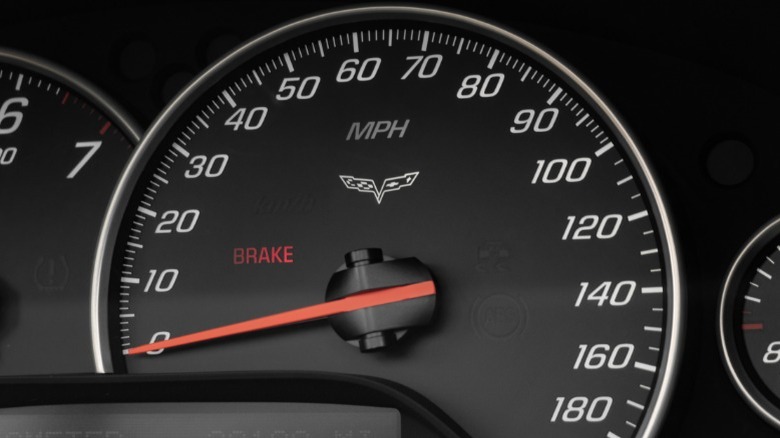
Speedometers rely on wheel circumference and driveline rotation to measure your traveling speed. However, those aren't the only factors at play, and the effective circumference of your car's wheels changes constantly. Tire pressure can fluctuate after a cold snap, upgrading your wheels can change the base circumference before you even mount the shoes, cargo weight can squish the tires, and tread can wear down over time or increase with new rubber. This leads to a virtually infinite number of different circumferences, and manufacturers cannot account for all of these possibilities when designing speedometers. So, they set them up to read speed based on new stock tires.
Obviously, this opens the door for inaccuracy down the road. To account for this in the safest way possible, engineers design speedometers to read slightly higher speeds. That helps prevent drivers from speeding inadvertently. However, it also leads to the aforementioned discrepancies between speedometers and GPS, and it begs the question about whether GPS is any better.
As mentioned, GPS is generally more accurate than a car's speedometer. However, that statement comes with caveats. For example, GPS isn't great at measuring speed precisely when you travel up or down a steep incline, thanks to the slight change in distance between you and the GPS satellites. This technology also can't measure speed accurately when the path between the receiver and the satellites is obstructed. What does that mean in the context of our question? GPS is more accurate than a speedometer when you're traveling on a relatively level road. However, if you're in a dense urban environment with tall buildings, traversing a mountainous grade, or driving through a tunnel or thick forest, then GPS is unlikely to be much more accurate than the speedometer.
Why does any of this matter?
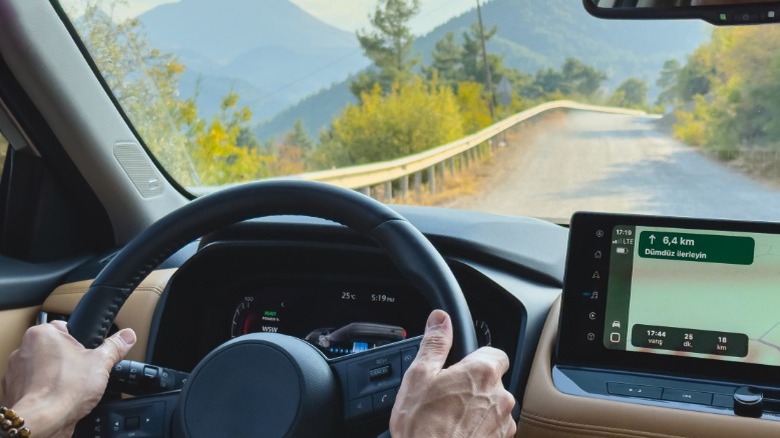
Why should you care about any of this? Well, if you avoid bad driver habits, regularly stay at or below the posted speed limit, and your car's speedometer is relatively new and undamaged, you don't really have to worry about it. However, if you want to compensate for your speedometer's innate inaccuracy and are hoping to drive slightly faster without running afoul of local law enforcement, then you should be cautious about relying on GPS.
While it's true that GPS is more accurate than a speedometer, that's only the case in ideal geographic conditions. As mentioned above, tall buildings, dense vegetation, tunnels, and steep grades can all reduce a GPS' accuracy when it comes to measuring speed. So, if you spend most of your time driving on the highway in Kansas, you may be fine relying on your GPS to track your speed. But if you ever venture into the big city or take a road trip to the Great Smoky Mountains, your GPS is likely to be less reliable for numerous chunks of the journey.
In practice, that means that you shouldn't try to cheat the system by traveling a few mph faster. Studies show that small increases in speed are basically irrelevant when it comes to getting to your destination any quicker, and all it does is increase the risk of an accident or traffic violation.