

How Old Is Too Old For Your Kid To Use A Car Seat Safely? Here's What Experts Say
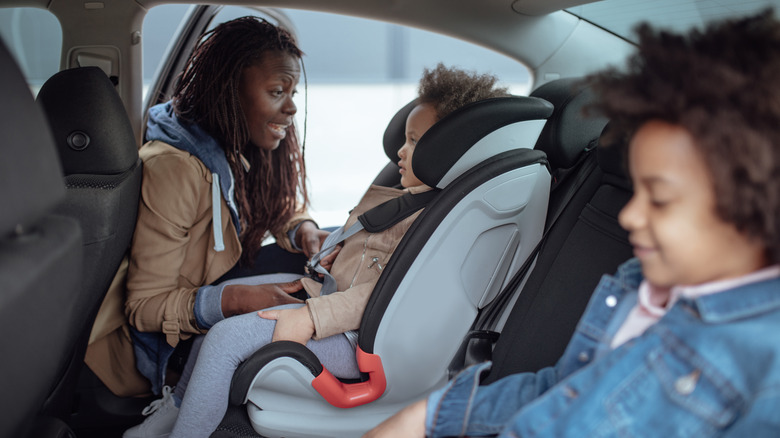
Volvo did the world a solid when it invented the three-point seat belt in 1959 and shared the design with automakers for the grand sum of zero dollars. In 1968, the United States required seat belts in all new cars, and in 1971, the National Highway Traffic Safety Administration (NHTSA) set its first standards for seat belt-secured child seats.
Remarkably, it wasn't until 1985 that all 50 states finally had child restraint usage laws in place — just one year after New York's 1984 move as the first state to mandate that passengers buckle up. The NHTSA estimates that over 11,000 kids under 5 years old have been saved by child restraints since 1975. Now Volvo offers models with built-in boosters, and we're shopping for cars that can easily fit three car seats. The question at hand isn't whether to start using them, but how old is "too old" for your kid to safely use a car seat?
The answer is: It varies. The NHTSA has federal guidelines through age 12, but actual child restraint laws are left to the states, which can contribute to the confusion. Experts at the American Academy of Pediatrics (AAP) stress that car seat safety isn't just a matter of age — it also depends on your child's size and needs, and whether they're ready to use an adult safety belt.
Car seat manufacturer safety limits

Car seat decisions would be a lot easier if we humans all came in the same size and shape, and developed at the same rate — but we don't. This is part of why there's a dizzying array of options on the market. Maybe you have a 5-year-old who's tall for their age, or an 8-year-old who's on the smaller side. If you're wondering whether the seat is suitable, the first thing to look for, and keep in mind as your child develops, is the information printed on the federally mandated car seat safety label. Vanderbilt University Medical Center notes: "Child safety seat labels will provide the weight and height limits of the seat and any limitations that may need to be considered. It is always important to locate this information to be sure the car seat is appropriate for your child."
What's conspicuously absent from that statement? Age. The AAP's car seat guidelines focus on broader developmental stages and age groups, such as "School-aged children," versus a strict age stipulation. Henry Ford Health in Michigan provides car seat safety recommendations by age, but says "these ages are approximations, as children grow at different rates and the car seat they use is dependent upon their height and weight."
When it comes to how long to safely use a car seat — whether it's rear- or forward-facing — the AAP says "as long as possible until they reach the highest weight or height allowed by their car safety seat manufacturer." Nationwide Children's Hospital in Columbus, Ohio uses the same general guidance, and offers additional considerations, including why sticking with a rear-facing seat can be beneficial for children with special needs.
Boosters and safe-sized for seat belts
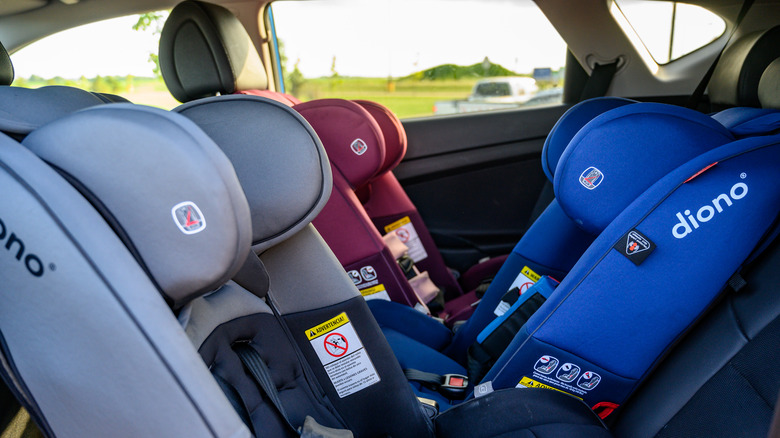
Assuming your child has outgrown the safety limits of a standard car seat, the prevailing AAP guideline is to keep them in a booster until they reach 4 feet 9 inches tall, typically between 8 and 12 years old. That's a broad spectrum of development during which boosters are designed to help correctly position the lap and shoulder straps of a three-point seat belt — specifically, across the upper thighs, and the chest and shoulder, respectively.
Booster seats also come with height and weight limitations to help you determine if you're within the specified safety window for a particular model, so once again, it's best to consult the safety label or owner's manual. It's also a good idea to familiarize yourself with the 5-Step Test to see if your child is really ready for a seat belt. The University of California Davis Children's Hospital shows us how it's done:
Some other things to keep in mind: Car seat laws vary by state and are in a constant state of flux. Consult the Insurance Institute for Highway Safety for your area, or the area you're traveling to, for specifics. And car seats have a 7- to 10-year shelf life — so that seat you're trying to stick with may have already outlived its safety limits.
Above all, buckle up and drive safely. Remember that life is precious, and time flies. One day, they're arguing with you about being in a booster seat; the next, they're wondering if you should hang up the keys.