

These Are The Differences Between The Toyota C-HR And The Subaru Uncharted
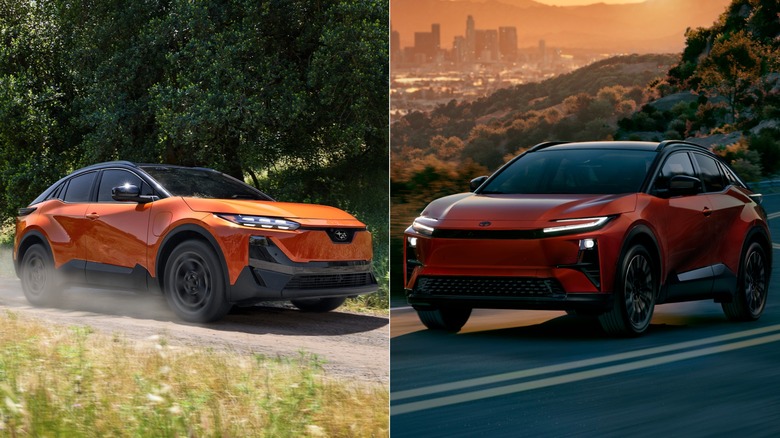
The C-HR and Uncharted are the latest products to come out of the Toyota-Subaru team-up. The popular Japanese brands have worked together since the release of their initial co-developed cars, the GR86 (formerly GT86/FR-S) and BRZ sports cars, back in 2012. Their next collaborative effort produced Subaru's first fully electric car in the form of the Solterra and its cousin, the Toyota bZ4X in 2023. Now, it's time for the C-HR and the Uncharted. The C-HR was originally sold in the U.S. for a single generation between 2018 and 2022. It was powered by an internal combustion inline four-cylinder engine that produced 144-horsepower.
Cut to 2026, and the C-HR has been given the electric treatment, using the same underpinnings as the brand-new Subaru Uncharted. This naturally means that the small electric crossovers have a lot in common, including a 74.7-kWh underfloor battery and Toyota's e-TNGA platform. Despite their shared platform, there are also many unique characteristics that separate the two.
Externally, the Toyota and Subaru use different designs, both front and rear. The difference is more pronounced up front, where the C-HR sports Toyota's hammerhead design with slim C-shaped LED headlights adorning the front fascia. This gives the Toyota a different look from the Subaru, which has a slightly beefier bumper that underscores its rugged persona, along with a six-element horizontal headlight that pays homage to the six stars in the Subaru logo. And while the two have near identical dimensions, the Subaru offers a higher ground clearance at 8.2 inches, compared with about 7.3 inches for the C-HR. The chassis and suspension tuning between the subcompact crossover SUVs is also different.
The biggest differences between the two
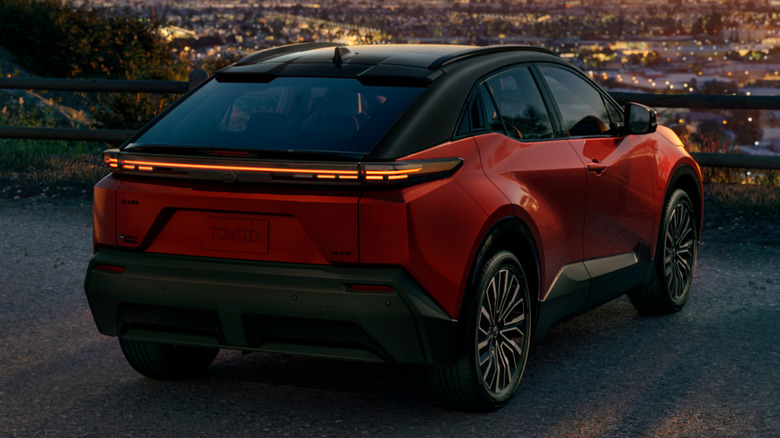
Though they share the same battery pack, powertrains are among the key differences between the Toyota CH-R and the all-new Subaru Uncharted EV. The C-HR is only available with a dual-motor setup, putting out 338 horsepower, with all-wheel drive as standard. Toyota claims it can get from 0 to 60 mph in around 5.0 seconds. The C-HR comes standard with NACS (North American Charging Standard) charge port and can fill its 74.7-kWh battery at speeds up to 150 kW, on Level 3 DC fast charging, meaning a 10 to 80% charge will take about 30 minutes. Toyota estimates that owners of the revived C-HR can cover about 290 miles from a fully-charged battery.
The Subaru Uncharted, meanwhile, can be had with either a single- or dual-motor setup. Single-motor Subaru Uncharted models produce 221 horsepower, while dual-motor models are good for 338 horses. Subaru claims the Uncharted's 74.7-kWh battery will do a fast charge of 10 to 80% in 28 minutes, making it a smidge faster than the C-HR. The Subaru also uses an NACS charge port. Choose the front-wheel-drive-only Premium trim, and you'll get around 300 miles of driving range, according to Subaru; the range for the all-wheel drive versions is 285 miles. As is the case with the facelifted 2026 Subaru Solterra, the Uncharted features a battery preconditioning system. In colder climates, it uses power from its charging source to warm up the battery before operation. Getting the battery to optimum temperature in colder climates preserves the cells and, over time, can help maintain battery life and range.
They look remarkably similar inside
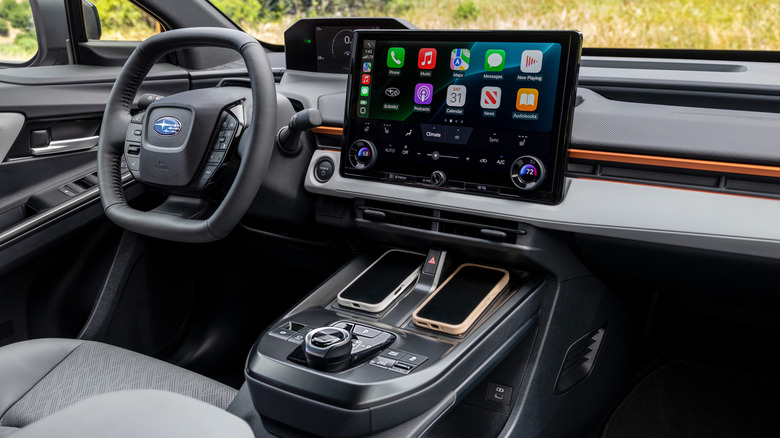
Despite efforts to make each of the vehicles appear unique, the Uncharted and C-HR look very similar on the inside. The two cars share similar seat designs, center console, dashboard layouts, 14.0-inch infotainment screens, and physical controls. However, Subaru went with a squared-off steering wheel, as opposed to the round one found in the C-HR.
Moving back to their commonalities, the two electric SUVs share quite a lot internally, as we've stated, and that translates to a similar cargo space of 25.4 cubic feet behind the second row seats. That is about the same amount of space you get with the second-generation Hyundai Kona Electric, which has 25.5 cubic feet of cargo space.
Buyers intending to purchase either car will find that the Uncharted has three trim levels to choose from: The budget-friendly Premium FWD, midrange Sport, and range-topping GT. The C-HR comes in two trim levels: SE and XSE. Toyota hasn't released official pricing info for the redesigned C-HR, but Subaru confirmed prices for the Uncharted will start at $34,995 (before a destination charge of $1,450 to $1,600 is applied) when it goes on sale. The midrange Uncharted Sport trim will have an MSRP of $39,795, with the range-topping GT model billed to begin at $43,795.