

What Actually Happens To Tire Tread When It Wears Away, And Is It Harmful?
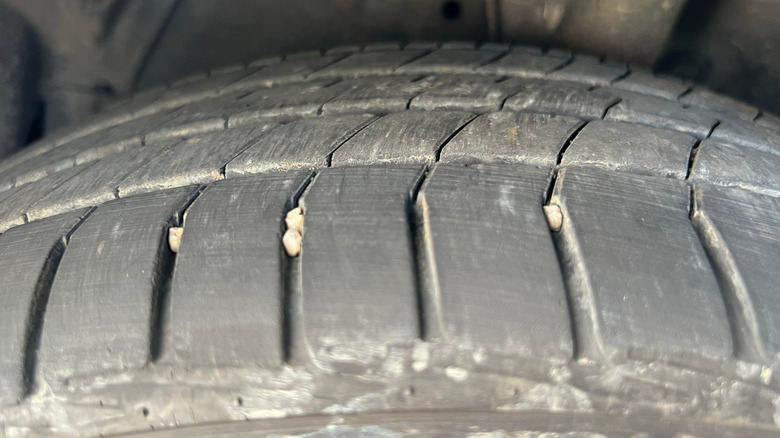
Many people tout EVs as great ways to reduce tailpipe emissions — since they don't produce any — but it turns out that the advent of electric vehicles is bringing a new focus on a different kind of pollution — the kind that comes from your tires. As you drive any car, the relatively soft rubber of your tires breaks down against the hard pavement of the road, shedding microscopic particles into the air and water. From there, they can follow an easy path into the animals and plants that live in that environment, including human beings.
Now, this is a growing area of study, so the amount of harm produced by these particles is still being debated, but the early data doesn't look good. For example, a recent review published in the journal Toxics found that research indicates tire pollution can lead to "significant or detrimental adverse effects on the organisms studied."
There's a lot of it, too, and — as mentioned — EVs are responsible for more than their fair share. The average passenger car tire can lose some 6 to 9 pounds of rubber during its lifetime, and that lifetime is drastically shortened by the heavy weight of electric vehicles. Some folks have said Rivian tires are lasting as little as 6,000 miles before they need to be replaced. The potential for those adverse effects, on the other hand, can last much longer.
What makes tires toxic?
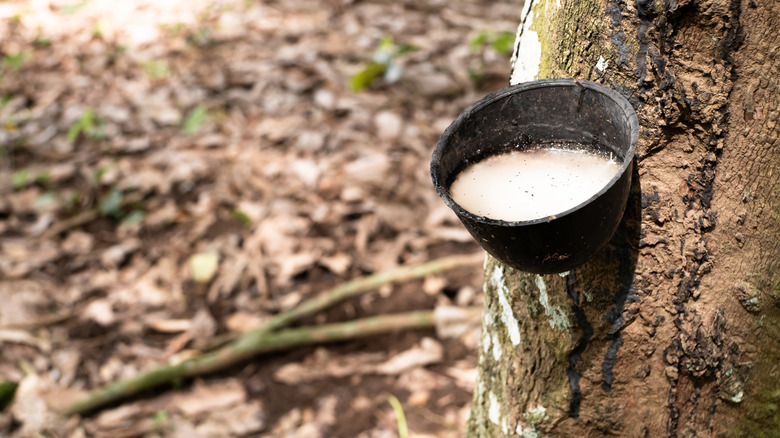
Natural rubber is derived from the sap of certain trees and is considered both biodegradable and compostable. Yet the rubber in today's tires is 40% natural and 60% synthetic, the latter being made, ultimately, from petroleum. So it contains hydrocarbons that, when released with tire particulates, are toxic to plant and animal life and have been shown to cause cancer and birth defects. Also, as an FYI, the petroleum/hydrocarbon connection means tire-particulate matter is a huge source of microplastics. And according to an article published in the Journal of Environmental Management, tire particulates represent up to 90% of the microplastics washed off of roads by rainy weather, and — looking at microplastics in the soil and water — some 45% could have come from tire pollution. By the way, your car's cabin is a hotspot for microplastics as well.
A further report published in Environmental Research found an incredible 2,456 chemical compounds when tire rubber was investigated. One of the most dangerous was a hydrocarbon called 6PPD; when it's released into the atmosphere by tires, it can combine with the ozone in the air, causing a chemical reaction that creates 6PPD-quinone — which has proven deadly to salmon and is now being connected to neurological issues in humans. PAHs (Polycyclic Aromatic Hydrocarbons) are among the other nasty ingredients in tires, and those pose a "significant danger to human health and the well-being of humans," as reported in Chemosphere.
Are some tires worse polluters than others?
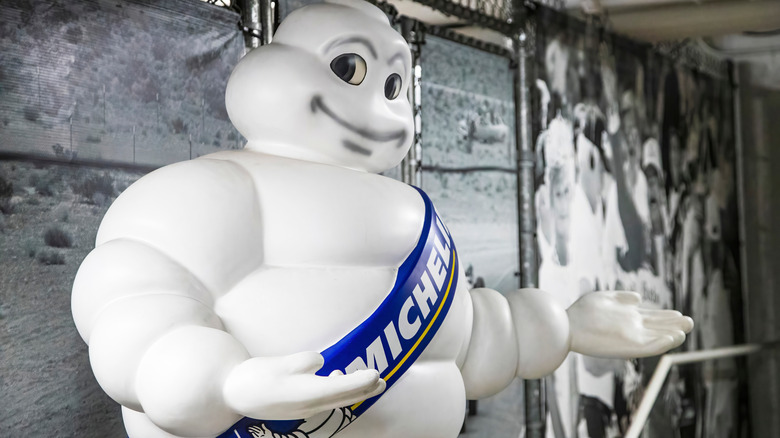
Tire companies are becoming well aware of the issue, and many — like Michelin — are doing something about it. A recent study by the German automobile association ADAC put the French brand's products into a 160-tire comparison test only to discover that, on average, Michelins emitted 28% fewer particles than the competition. It's the result of a new, sharper focus on abrasion mitigation, although you may not find this on every tire brand owned by Michelin. Continental is another company that's investing in ways to reduce tire abrasion, claiming its tires lose 11% fewer particles than its rivals. On the other hand, some of the materials used to reduce tire wear can introduce their own harmful chemicals.
Complicating matters is that tires don't emit particles at the same rate throughout their lifetimes. Data compiled by the Swedish automotive technology company Nira Dynamics suggests that brand-new tires begin by emitting pretty high levels of particles as they wear through the outermost layer of rubber that's left over from the manufacturing process. The particle level gradually gets lower until roughly 40% of the tread is gone and remains fairly consistent until about 60% of a tire's lifespan is over. Once 70% of a tire's tread is gone, the particulate levels start to climb and can increase by 200 to 300%. Worse, since the particulates from older tires are smaller, they're more dangerous because it's easier for them to get farther into the human body. It's no wonder scientists call tire dust the "DDT of our generation."