

Should You Be Changing All Your Brake Pads Together, Or Is That Overkill?
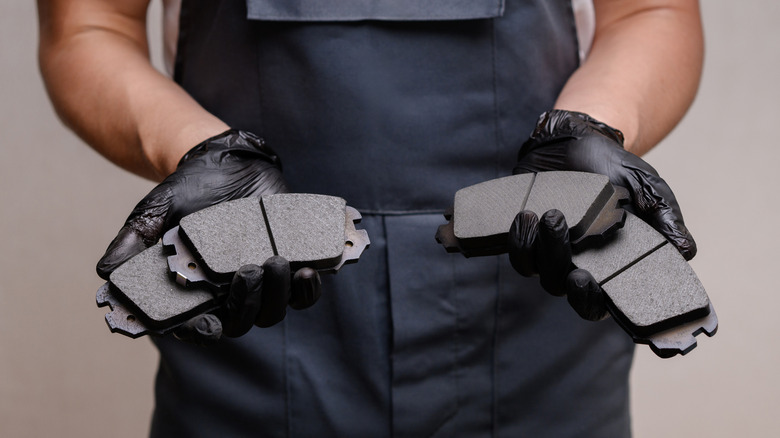
You approach a traffic light, tap the brakes, hear a shriek that sounds like a screaming fox, and suddenly your day gets interesting. The shop says you need new pads at all four wheels. You're probably thinking, "Do I really have to?"
Disc brakes aren't complicated in theory. Hydraulic pressure causes brake pads to clamp onto rotors, friction slows you down, and, ideally, you stop before you roll into someone's bumper. But those little friction slabs do a huge amount of work, which is why shops often recommend replacing all four sets of pads at once. It's not a scam — the key reasons for replacing them all together are about balanced braking, convenience, and keeping wear patterns consistent across the car. It may also be more economical in the long run to replace all four sets at one time. As several shops point out, full-set replacements ensure your stopping power performance is achieved.
But here's the plot twist: Replacing all four at once isn't always necessary. Most cars naturally wear their front pads faster, thanks to weight transfer under braking. Many mechanics agree that swapping just the front pair or just the rear pair is perfectly fine, as long as you replace all pads per axle to maintain symmetry. Unless you enjoy erratic braking action and surprise lane changes, that is, which you won't. If the rear axle still has plenty of meat left and the front is tired, replacing only the pads (either two or four, depending on your hardware) saves money without compromising safety.
When do you actually need new brake pads
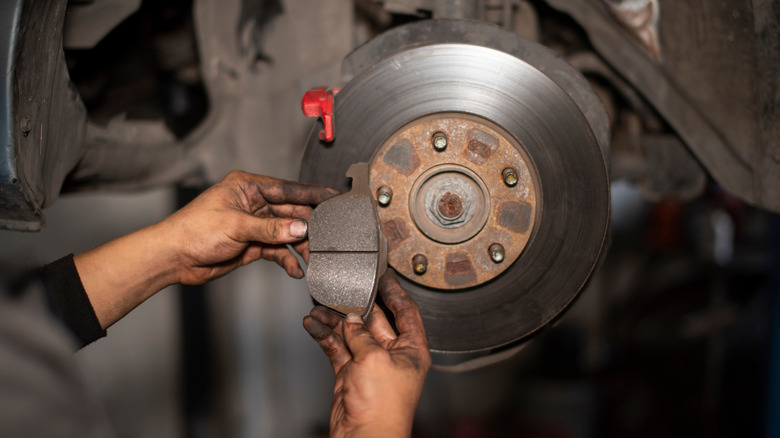
Before you decide on two sets of pads or four, you need to figure out whether your pads are still good. You can diagnose some brake problems just by listening, as squealing and grinding noises often indicate it's time for brake work. Other common signs of brake trouble include longer stopping distances, pedal and steering vibrations, and a brake warning light on the dash.
Most shops follow the 80% rule, meaning that once your pads are down to their last 20% of friction material, it's time to replace them before they chew into the rotors. Generally, brake pads typically last anywhere from 30,000 to 70,000 miles (specifically, 30,000 to 40,000 miles for organic pads and 50,000 to 70,000 miles for ceramic brake pads), though aggressive driving and stop-and-go traffic pushes them toward the shorter end of those ranges.
Driving with worn pads isn't just a noise problem, it's also dangerous. Worn pads can cause overheating that ends in cooked brake parts, including glazed brake pads. That can lead to reduced friction, which increases stopping distances. A delayed brake response can be catastrophic when you need to stop abruptly in an emergency. Ignore worn-out brakes, and you could enter metal-on-metal territory, which can transform your rotors and other parts into scrap metal and turn a cheap pad job into a four-figure repair bill. Yikes.
Whether you need just front pads or front and rear depends on wear patterns, but ignoring worn pads is never the right answer. Safety wins every time.