

Leather Vs. Leatherette Upholstery: The Pros And Cons Explained

Variety truly is the spice of life, and fortunately, when buying a car, we are blessed with a wide variety of different choices. The biggest decisions to make when buying a car include how big it should be, whether gas or electric is better suited for our needs, and how efficient or comfortable the car is. These decisions are generally quite easy to make, but the smaller choices can take some deliberation. For instance, what material should the seats be covered in, leather or leatherette?
While cloth seats are generally offered in cheaper cars and entry-level trims, leather and leatherette are the choices presented in more premium models. They look and feel very similar, but there are differences between the two. These differences might seem trivial at first, but they can actually be quite important. In a nutshell, the various pros and cons of both materials cover aspects such as pricing, environmental effects, durability, and day-to-day comfort. Understanding these points can help you make an informed decision when choosing your next car.
Cost
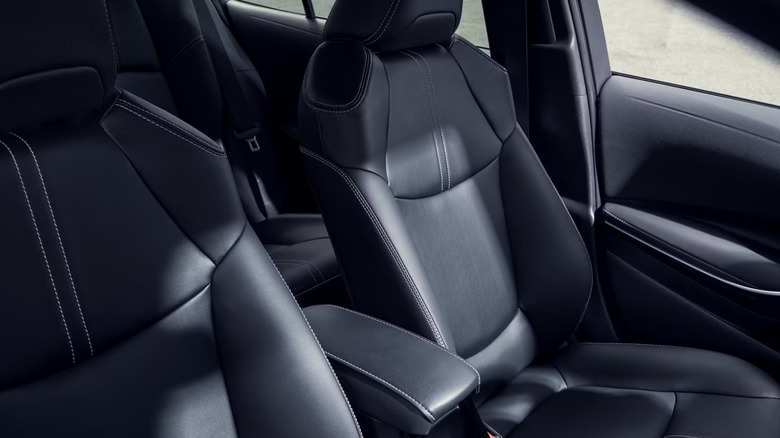
The average price of a new car has crossed the $50,000 threshold. These higher prices also mean that customers are demanding more and more from cars these days, and premium features are high up on the nation's "want" list. Features such as wireless charging pads, moonroofs, and heated and ventilated front seats are now almost expected. Quality materials, like leather, are slowly becoming a requirement as well.
Unfortunately, leather comes at a cost, which is where leatherette steps in. As a synthetic material, leatherette is much easier to mass-produce. It seems like a win-win, really, as automakers get to save money and consumers still get that premium look and feel of a high-class leather interior. While many high-end automakers still provide the choice of leather seats as an upgrade, many are content enough to only offer a leatherette finish on certain models, which suggests that both automakers and buyers simply see the authentic, real-deal material as an unnecessary extra expense.
On the other hand, the extra expense of leather can also be seen as a pro, in certain lights at least. An immaculately trimmed cabin of a Rolls-Royce, Bentley, or similar luxury car will feature huge amounts of real leather, instead of the cheaper synthetic material. This luxurious finish lets the high-paying customers see exactly where their money is being spent and is a clear indicator of quality and opulence.
Environmental pros and cons

One of the more obvious downsides of real leather is that it is, of course, animal-based. So, anyone who has a particular penchant for the animal kingdom will no doubt prefer to opt out of commuting within a leather-furnished cabin, instead choosing to own something that sports the synthetic alternative. However, there are some serious environmental downsides to using leatherette, too.
Whereas leather is animal-based, leatherette uses plastics that are produced from petroleum, so it's hardly brilliant as an environmentally friendly alternative. Fortunately, there are environmentally friendly alternatives to both of these materials, such as good ol' fashioned cloth, or even recycled materials, the likes of which we have already seen in the revolutionary BMW i3, Ford's intriguing and recyclable Model U concept from the early '00s, or even the Polestar Precept that features interiors made from reclaimed plastics.
Ultimately, from an environmental point of view, there are pros and cons to both leather and leatherette. One is full of petroleum-based plastics, and the other is a pure animal product — pick your poison, or opt for one of the greener alternatives.
Care, maintenance, and durability
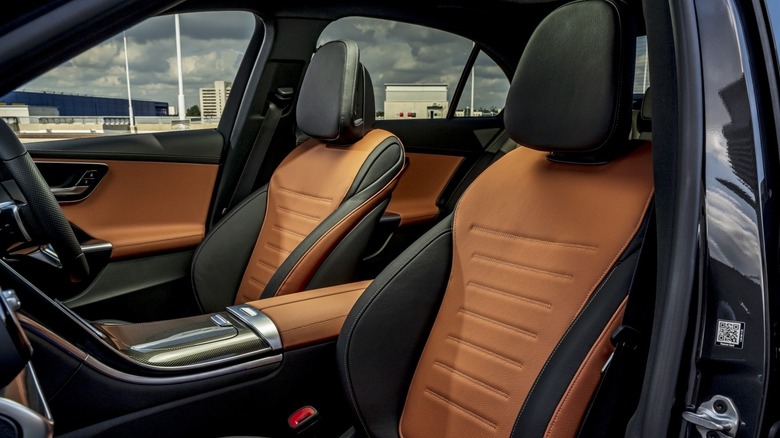
When it comes to taking care of your upholstery, leatherette is the easier option. The synthetic material is super easy to clean, which means food and coffee spills can quickly be dealt with, as can marks from muddy boots and paw prints. There is a wide range of cleaners out there — from cleaning sprays to wipes — which have been specifically developed for cleaning leatherette upholstery, and they're generally just as affordable as the material itself. The same can be said for products aimed at cleaning leather seats, although there are conditioners to consider, too, if you want to keep the leather's finish in top condition.
Another benefit of leatherette is that it's highly resistant to stains, which cannot be said of natural leather. Also, real leather can easily be scuffed and scratched, whereas leatherette is a little tougher in this regard. It can crack or peel, though, whereas leather stands up better over long periods of time. While real leather certainly can crack as well, conditioning it regularly will help prevent this, thus preserving the factory finish for a long time.
Quality and comfort
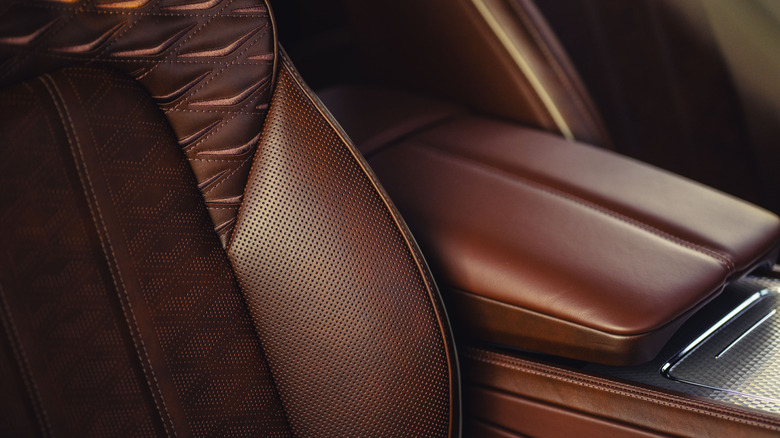
If quality is what you're after, then there really is no substitute for real leather. Leatherette might provide a similar aesthetic, but up close, the real deal is much more supple, has less of a cloth-like texture, and smells fantastic, too. Anyone who has ever owned or been driven in a car with a high-quality leather interior will know that smell; it's difficult to describe or replicate, so don't go thinking that a cheap leather-scented air freshener will fool people into thinking that your leatherette-equipped car is trimmed in the genuine article.
Some of the best car interiors of all time are cloaked in leather, and that's unlikely to change any time soon. While some automakers like Mini are moving away from leather, luxury brands are continuing to feature it heavily, as there really is no substitute at this level.
Furthermore, leather regulates its temperature quite well. Sure, it will be cold in the winter, and perhaps a little uncomfortable after sitting in the sun, too, but leatherette's properties are worse for this. The plastic-based material can get really rather hot in the summer, which can lead to some pretty uncomfortable drives, especially if you're in shorts or a skirt — we've all been there.