

These Are 5 Of The Most Reliable Turbocharged Engines You Can Get Today
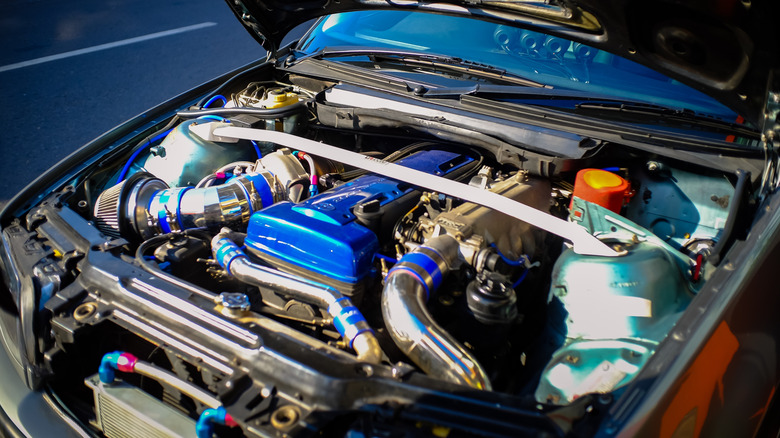
While some unreliable cars are worth the headache, reliability will always be an important factor for most buyers. This is especially relevant when it comes to turbocharged engines. Known for their performance and tuning potential, they don't have the best reputation in terms of reliability, mainly due to their high running temperatures and complex build. But there are exceptions to this generalization, with a handful of turbocharged engines that deliver on both reliability and performance.
Most of these engines come from Japanese automakers, though the Germans know a thing or two about making reliable turbocharged cars as well. Some of the most reliable turbocharged engines include Honda's K20C1, Porsche's 3.0-liter twin-turbocharged flat-six, and Volkswagen's EA888. They are available in new cars such as the Honda Civic Type R, Porsche 911 Carrera S, and Volkswagen Golf R. Then there are engines like the 2JZ-GTE and RB26DETT. They are no longer in production — having been used in cars like the Toyota Supra Mark IV and the Nissan Skyline R32, R33, and R34 GT-R — but remain sought-after and available on the used market.
Honda K20C1
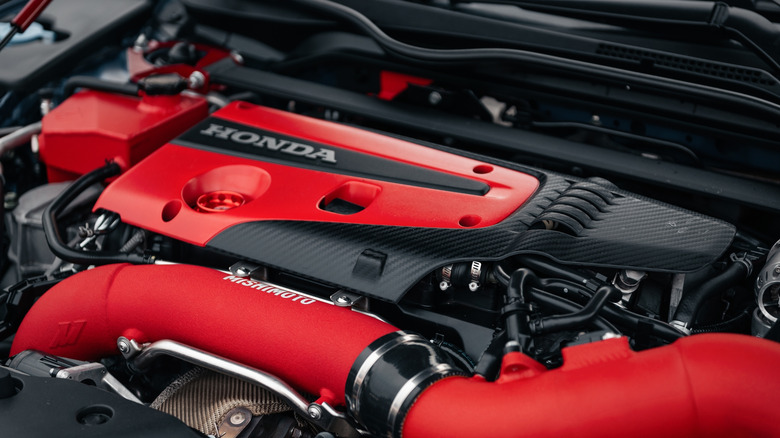
The Honda K20C1 is a 2.0-liter turbocharged inline-four engine seen in cars such as the Honda Civic Type R, Acura Integra Type S, and even the Ariel Atom. It is also available as a crate engine for racing teams.
The motor has an aluminum cylinder block with a forged steel crankshaft, reinforced connecting rods, and pistons capable of withstanding consistent high boost pressure. It uses a single scroll turbocharger pushing 306 horsepower and 295 lb-ft of torque in stock form. One cool touch is the use of sodium-filled exhaust valves, which help keep exhaust temperatures down. Another is the offset crankshaft, which reduces engine wear and thrust load on the cylinder walls.
The Honda K20C1's integrated exhaust manifold helps reduce turbo lag and manage heat. It is supported by a high-flow cooling system, designed to be low maintenance, and many owners vouch for its reliability. It can easily cross 100,000 miles with regular oil changes and basic maintenance, remains reliable with mild performance upgrades, and can handle big power outputs — there are instances of tuners pushing 1,200 hp on the stock engine block.
Porsche 9A2
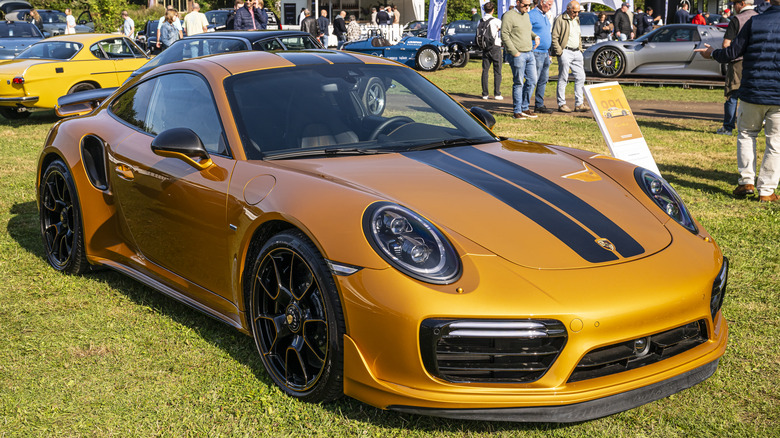
While Porsche did have its share of reliable and legendary turbo engines in the form of the Mezger twin turbos, in the context of modern Porsches that title goes to the 3.0-liter flat-six turbo (internally known as 9A2) seen in the 911.2 generation Carrera and Carrera GTS and the current 992 models. This engine made the 911 arguably one of the most reliable high-performance sports cars out there. It was also one of the driving forces behind Porsche's pivotal shift from the base 911's naturally aspirated engines to turbocharging.
What makes the 3.0 flat-six turbo so reliable is that it was completely redesigned to accommodate turbocharging, rather than being adapted from an older engine layout. It uses an aluminum block with a closed deck design, which provides exceptional rigidity and prevents cylinder distortion under high boost. The Porsche 9A2 engine enjoys widespread respect among enthusiasts, while owners consistently praise its durability and reliability when properly maintained.
Volkswagen EA888
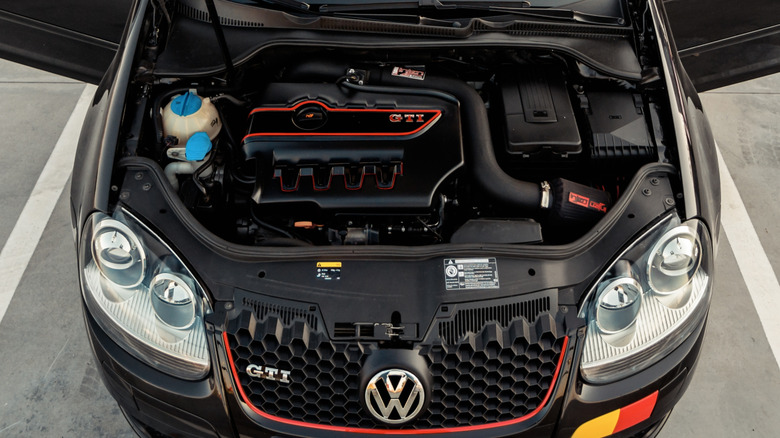
The later versions of the EA888, in 2.0-liter inline-four form, are found across the Volkswagen Group in the Golf GTI, Audi A3, S3, and A4, as well as numerous Skoda and Seat models. The Gen 1 and Gen 2 EA888 had oil consumption issues (due to faulty piston ring design) and timing chain failures. Both problems were addressed in the Gen 3 engine.
The Gen 3 engine's reliability comes from its robust cast iron closed-deck engine block paired with an aluminum cylinder head that has an integrated exhaust manifold for better efficiency. The engine uses direct injection, which can lead to carbon build up over time. To keep this in check, Volkswagen introduced dual injection (direct and port), with the port injectors spraying fuel over the intake valves to keep them clean. Variable valve timing and valve lift technology help the turbocharger spool up more quickly and, paired with the injection system, offer efficient combustion under varying loads.
With the right care, the EA888 can easily reach 200,000 miles — impressive for an engine delivering 200 to 300 hp in stock form. As for tunability, you can get substantial performance gains with a simple stage-one tune with minimal impact on reliability.
Toyota 2JZ-GTE
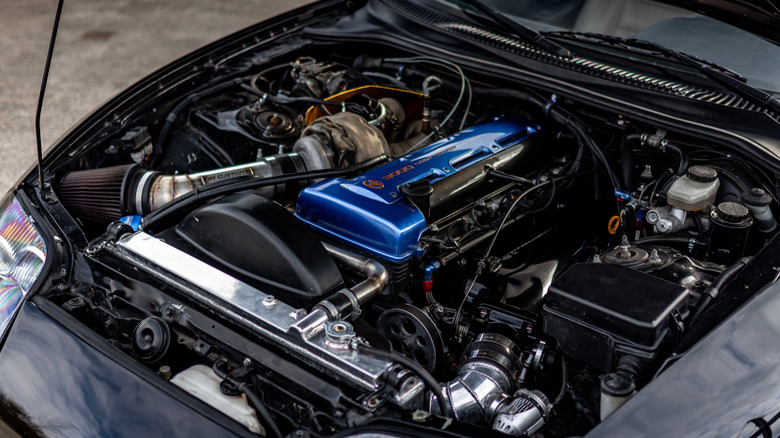
The 2JZ-GTE — iconic engine behind the "Is that a Supra?" meme – is the stuff of automotive legends. If you were to create a list of indestructible engines, this 3.0-liter twin-turbocharged straight-six engine would likely be near the very top. Built in the 1990s, the 2JZ was developed to handle a lot more than its stock output and was used in the Toyota Supra Mark IV from 1993 to 2002. It was also seen under the hood of the Japanese Domestic Market (JDM) cars like the Toyota Aristo.
The secret to the 2JZ-GTE's famed reliability lay in its cast iron block, which provided exceptional structural rigidity and thermal stability — necessary traits for handling high turbo boost pressures. The engine was also heavily over-engineered, using seven main bearings to support a forged steel crankshaft and forged steel connecting rods. It even featured a closed deck design, which not just provided extra reinforcement to the cylinders but also reduced the likelihood of head gasket failures under high boost.
With precise Japanese tolerances and overengineered lubrication and cooling systems, the 2JZ-GTE is known to run past 300,000 miles. The engine was so well engineered that tuners could push it to 700 hp with basic bolt-on upgrades.
Nissan RB26DETT
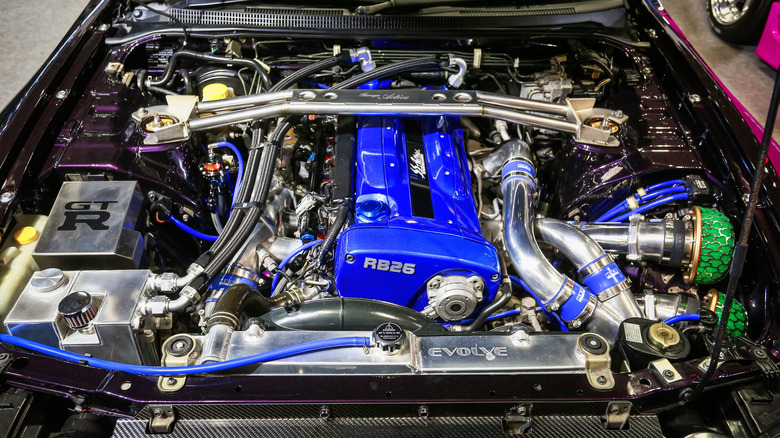
Nissan's answer to the 2JZ, the RB26DETT, was just as well engineered and offered immense durability and tuning potential. The 2.6-liter twin-turbo inline-six was the signature engine of the 1990s Nissan Skyline GT-R models — the R32, R33, and R34 — and also appeared in the Nissan Stagea 260RS. The engine was developed to meet homologation requirements for the Group A Touring Car Championship, which meant it was over-engineered for the 276-hp rating under the Japanese Gentlemen's Agreement.
The RB26DETT engine — coupled with Nissan's Advanced Total Traction Engineering System for All-Terrain with Electronic Torque Split (ATTESA E-TS) all-wheel-drive setup — helped the Skyline GT-R dominate Touring Car championships and earn its famous "Godzilla" nickname. In fact, Nissan GT-Rs were so dominant that the Australian Touring Car Championship series effectively banned them from competing.
The RB26DETT's bulletproof nature came from its cast iron cylinder block. It used an oversquare layout with an 86 mm bore and 73.7 mm stroke, which ensured a higher rev ceiling. You could double the power output without sacrificing reliability, which makes the RB26DETT one of the most reliable and tunable engines for creating mad horsepower.