

Are Aluminum Pistons Better Than Cast Iron? Here's What You Need To Know
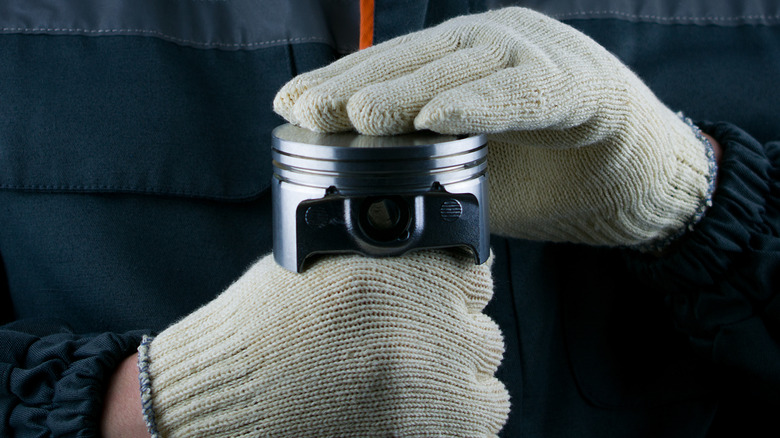
The combustion engine has been around since the 19th century, thought up by the brilliant minds of engineers like Nikolaus Otto and Rudolf Diesel. Over the years, advancements in automotive technology have perfected things under the hood, with the average internal combustion engine comprised of approximately 200 parts.
Some critical components of an engine are the pistons, which transform combustion into rotational energy. While these are often constructed with aluminum, there are also other metals used, such as cast iron. These materials were chosen for various reasons, including their ability to withstand heat and their lengthy reliability. Other options have been the subject of experimentation, with one enthusiast even making pistons out of plastic. While those pistons functioned for longer than you might think, they still failed within a couple of days.
However, in terms of aluminum versus cast iron pistons, the better choice is completely dependent on the scenario. Both metals offer solid performance for engine pistons, but that performance isn't universal. Depending on how it's made, aluminum is ideal for most vehicles, including performance models. Meanwhile, cast iron is at home in large diesel power plants running heavy-duty machinery.
Aluminum vs. cast iron: advantages and disadvantages
Aluminum offers some advantages over cast iron, including a reduced weight. Heavier cars will need more force for acceleration than lighter cars with similar specs. It would be counterproductive to fit a high-performance sports car with carbon fiber body work to reduce its weight, only to have heavy cast iron pistons under the hood. That's partially why forged aluminum pistons are used in some 4-cylinder engines that make power you'd expect from a V8, like the Mercedes-AMG M 139. On top of usually being lighter then cast iron, aluminum also conducts heat well, making it a good choice for a lot of engines. Considering the inside of a gas engine can heat things up to temperatures greater than 600 degrees Fahrenheit, good thermal conductivity is a vital asset.
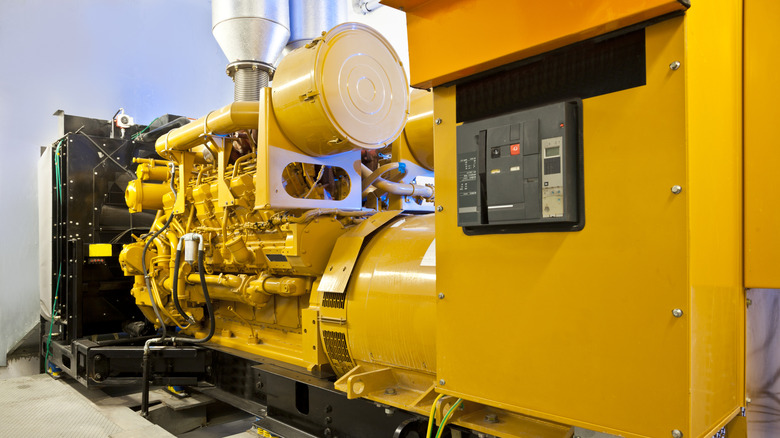
On the flip side, cast iron pistons are known for their immense strength, durability, and service life. These can withstand tremendous stress, which is required for the high compression ratios of these heavy-duty engines. Diesels don't have spark plugs like a gas engine does. Instead, they use compression ignition, which is a result of greater compression and significantly hotter cylinder temperatures — with peak pressure often reaching 2,700 psi or more. Under these conditions, aluminum pistons could be a liability, as they are more prone to expansion when exposed to high heat. Cast iron, on the other hand, isn't as vulnerable to temperature expansion, which is required for industrial equipment running under load for extended periods of time.
It also matters how the aluminum pistons are made
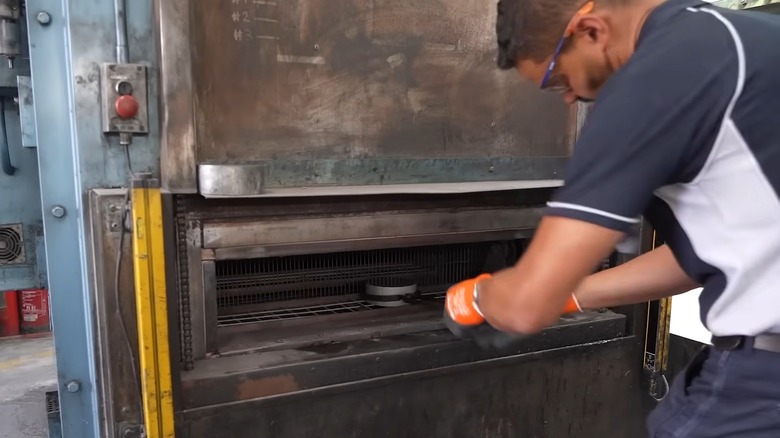
There are a few different methods used to manufacture aluminum pistons, such as casting and forging. The approach used can dramatically change the characteristics and performance levels of said pistons. For instance, casting is the most cost-effective way, performed by pouring molten aluminum into a premade piston mold. This simplistic approach translates well to mass production operations, and it suits engines that aren't designed for demanding or high-performance applications. However, this form of aluminum piston has nowhere near the resilience of the cast iron variety, and if placed in a large industrial diesel engine, it would likely fail under prolonged load.
A far more rigorous version of the aluminum piston can be made by forging it instead of casting it. This process involves heating an aluminum billet and then pressing it into the desired piston shape. The combination of high temperatures and extreme compression create a much stronger engine part, as the grain of the metal is aligned in one direction. Cast aluminum pistons don't have this alignment because they're made from a mixture of molten metal.
The forged method transforms an aluminum piston into something capable of handling high rpms and the stresses of racing. For instance, F1 engines don't last long, and replacing one isn't cheap, but engineers utilize forged aluminum for the pistons under the hood. Even so, forged aluminum pistons wouldn't be an ideal replacement for cast iron in a massive stationary diesel engine, as they still expand under intense heat. In the end, cast iron pistons, while not as suitable for racing, can still stand up better to immense work loads without deforming or wearing quickly.