

Every Dodge That Came With A 426 HEMI Engine
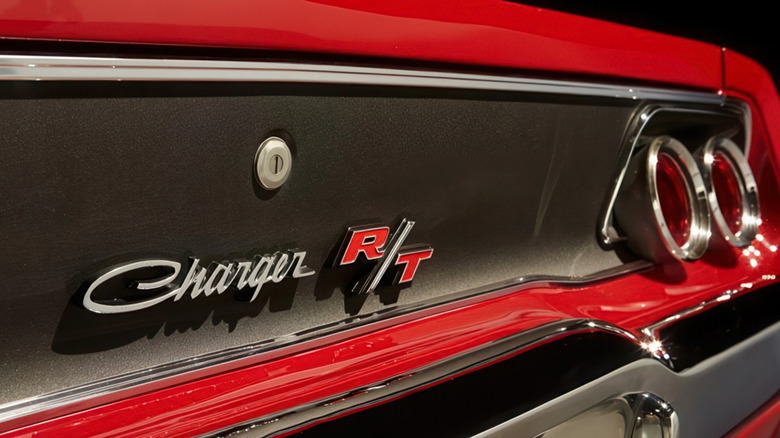
Fear. That's probably what Chrysler's 426 HEMI "Elephant" engine instilled into its competitors when it first appeared as a racing engine in 1964, and that fear was warranted. With a 1-2-3 finish, Plymouth dominated the 1964 Daytona 500 with a 426-HEMI-equipped racecar, showcasing the potential of an engine with hemispherical combustion chambers. It even prompted Ford to get back to the drawing board and create a hemi-engine of its own – the legendary 427 SOHC (7.0-liter) V8 Cammer.
The 426 HEMI was so powerful, in fact, that NASCAR banned it in 1965. Chrysler soon started offering a barrage of performance cars equipped with the 426 HEMI for general customers. The production-spec 425-hp engine was an option on many Dodge and Plymouth vehicles in 1966, allowing the Chrysler Corporation to compete in — and win — the 1966 Daytona 500.
For Dodge and Plymouth customers, this meant they could have a taste of race-derived Mopar thunder. Dodge, in particular, was zealous with incorporating the NASCAR beast into as many models as possible. Coupes. Fastback coupes. Compact cars. Sure, other potent small-block and big-block V8s were also available on these models, but the HEMI sat at the pinnacle. So, without further ado, let's have a chronological look at every Dodge that came with the 426 HEMI engine!
Dodge Charger (First Gen, 1966 to 1967)
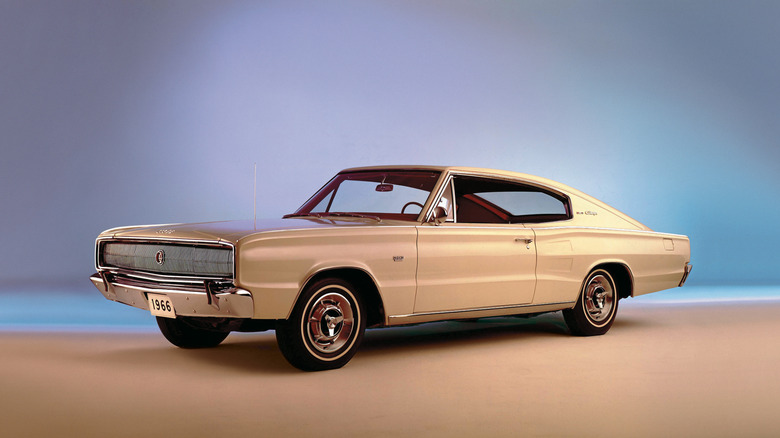
Two years after Ford took the world by storm with its first-gen Mustang, Dodge answered the muscle-car call with its own first-gen Charger. The fastback-shaped form quickly attracted attention, though not everybody was on board with the design. From today's perspective, though, it's a stunner. With its long, elegant body shape, hidden headlights, and super-wide rear light bar with the "CHARGER" name imprinted, the first-gen Charger a truly unique appearance.
But, of course, what really mattered was the muscle under the hood. And the base 318-cid (5.2-liter) V8 certainly didn't fit that bill. You could opt for the four-barrel 383-cid (6.3-liter) V8, which produced healthy 325 hp. Better, but far from a performance option. Still, the real fun only arrived with the big-block V8s — the 440-cid (7.2-liter) and 426-cid (7.0-liter). The 440-cid engine brought a nice 50 hp bump over the 383-cid option, but the smaller 426-cid HEMI stole the show. The race-derived engine produced 425 hp and 490 lb-ft of torque, enough for a 0-60 time in the five-second range when equipped with the four-speed manual transmission.
Although the 426 HEMI was by far the most powerful in the range, only 468 of the 37,344 buyers opted for this engine in 1966. The $880 (almost $9,000 in today's money) surcharge was expensive, although it also brought stiffened suspension. The real hurdle, though, was the short 1-year/12,000-mile warranty on the 426 HEMI engine; all other Charger V8s came with a 5-year/50,000-mile warranty.
Dodge Coronet 500 (Fifth Gen, 1966)
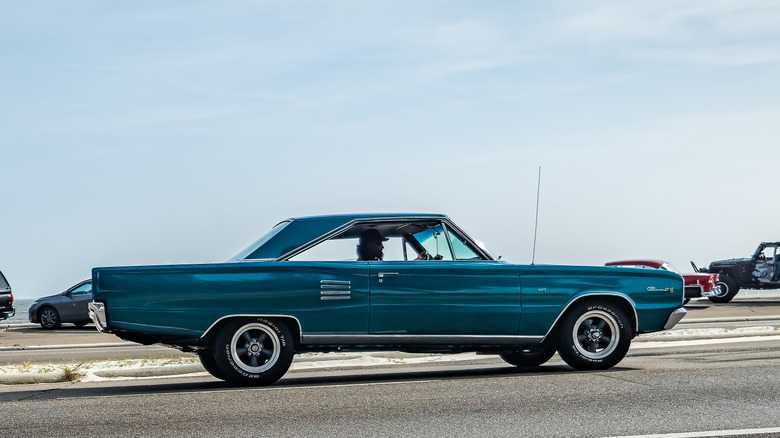
Since the first-gen Charger shared many of its components with the Coronet, the regular coupe also received the 426 HEMI engine as an option. Sure, the Coronet didn't look as refined as the sporty fastback Charger, but that made it more of a sleeper. The 7.0-liter monster inside the Coronet 500 also produced 425 hp paired with the ancient three-speed TorqueFlite automatic transmission.
Did that transmission make you squint for a second? Don't worry, Dodge also offered the Coronet with a four-speed manual. Besides, the 727 TorqueFlite is one of the most durable transmissions in automotive history, so it might even be a better choice for those looking to get a classic Coronet HEMI. The Coronet 500 also had factory-installed options that distinguished it from other models. The Sure Grip differential on the back axle ensured higher traction using a cone clutch, and bucket seats ensured your backside didn't move much during cornering. The Coronet 500 was also available in coupe and convertible body styles, adding to its attractiveness.
Elsewhere, the Coronet 500 was par-for-the-course in the 1960s. The front/rear drum brakes and bias-ply tires weren't particularly assuring, while the recirculating-ball steering wasn't exactly direct. Not to mention, it had rear leaf springs that are only used in trucks today. But there is no denying the straight-line superiority — the Coronet 500 did the quarter-mile in the 14-second range. Without a doubt, the Dodge Coronet deserves another chance today, particularly with a HEMI under the bonnet.
Dodge LO23 Hemi Dart Super Stock (Fourth Gen, 1968)
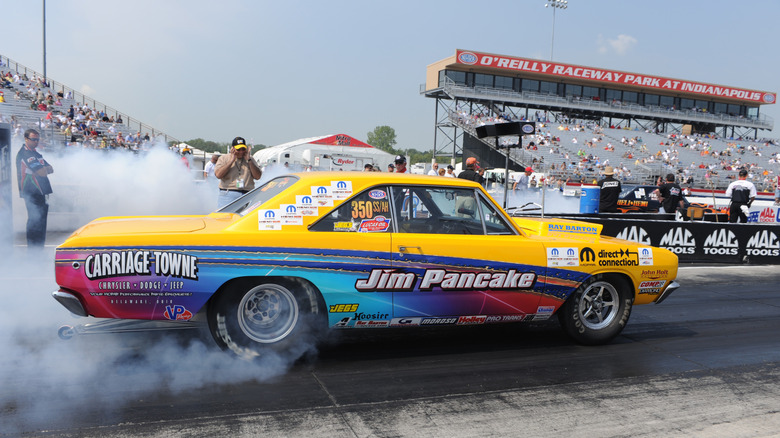
Chasing the meanest HEMI Dodge ever built? You probably won't catch it, as the LO23 Hemi Dart is a mid-10 car on the drag strip. Before you jump out of your seat, the Hemi Dart was a NHRA Super Stock model developed specifically for drag racing. In other words, it wasn't a street legal vehicle. Still, you could buy it directly from Dodge as a factory-built racecar.
But what made the LO23 HEMI Dart so fast over the quarter mile? Well, to begin with, it's the smallest car ever fitted with the 426 HEMI engine. The compact Dart otherwise carried small-block engines; the entry-level model had a 273-cid V8 while the largest option was the 383-cid V8. The few models equipped with the big block 440-cid V8 mainly had it for drag racing purposes.
In other words, the Dart was already at an advantage over other HEMI-equipped Dodge models. However, further weight reduction was necessary to achieve a 10-second quarter-mile time. So, Dodge engineers employed fiberglass on the fenders and hood, acid-dipped the doors, and removed the window mechanisms. The windows themselves were also thinner, and the HEMI Dart was turned strictly into a two-seater. A limited-slip differential and special Super Stock leaf springs ensured better traction off the line, while a special K-member held the 426 HEMI in place.
Buyers could go even further and choose the high-compression 12.5:1 pistons from the 426 HEMI race engine. Both the four-speed manual and three-speed TorqueFlite automatic were available.
Dodge Coronet R/T (Fifth Gen Refresh, 1968 to 1970)
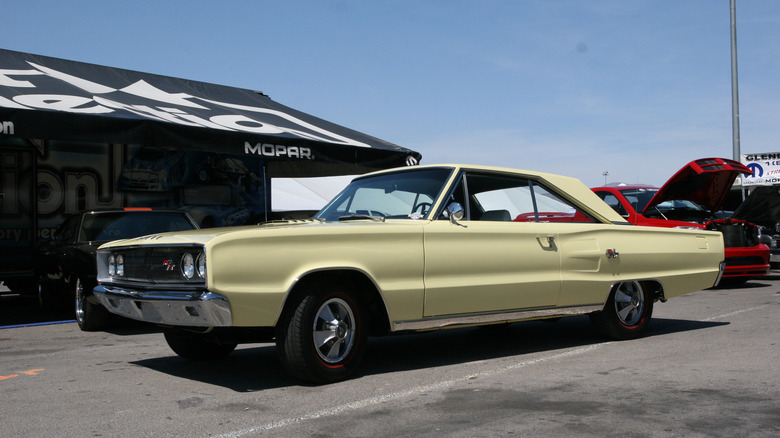
Dodge introduced a refreshed Coronet two years after the launch of the tire-shredding 500. This time, though, the mid-size model made its predecessor look tame by comparison. The sharper, more aggressive front end and chiseled sides brought the much-needed muscle to Coronet's appearance.
Unlike the previous model, the 426 HEMI engine was offered exclusively in the R/T and Super Bee trims. It was a smart choice; R/T stands for "Road and Track," meaning performance enhancements went past the engine. Notably, the sporty model was equipped with Dodge's Special Handling Suspension System, which came with several upgrades like heavy-duty shock absorbers, larger torsion bars and sway bars, and wider wheels. Oh, and the Coronet R/T also had one extra leaf in the right rear spring! The reason? To handle the standard 440-cid V8's engine immense torque. The massive 7.2-liter big-block engine now produced 390 hp, thanks to three two-barrel Holley carburetors. Dodge even enhanced its sound with dual exhaust and gave buyers the option of a four-speed manual and a three-speed automatic gearbox. Crucially, front discs were optional on the Coronet R/T.
But of course, the 426 HEMI remained as the top-tier option, again tuned to 425 hp. The race-derived engine was also equipped with dual exhausts and an unsilenced air cleaner that brought the hemispherical-chamber sound closer to the driver's ears. Other options included a tachometer, air-con, an electrically-adjustable outside rearview mirror, power windows, and even cruise control.
Dodge Charger R/T (Second Gen, 1968 to 1970)
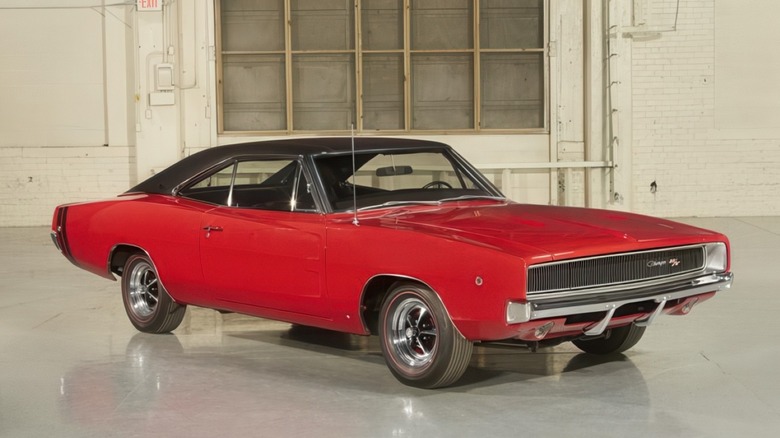
For most, the second-gen model is where the Charger story truly begins. Look at it and you'll agree. The famous Coke bottle profile gave the Charger a predatory stance, yet it also had finesse that was absent from the predecessor. The hidden headlights remained a core feature, but the voluptuous body turned it into probably the most attractive muscle car on sale at that time.
And, yeah, the R/T model with the rear Bumble Bee racing stripes and Red Streak tires was the best-looking of the bunch. Crucially, though, it brought some important performance upgrades, like the ones found in the Coronet R/T. As standard, the sporty model came with the 440-cid Magnum V8, but the 426 HEMI was optional. Both were equipped with an unsilenced air cleaner and dual exhaust for eargasm purposes. Inside, bucket seats hugged the driver in corners while the three-spoke steering wheel added to the sporty ambiance. The special R/T Handling Package came with heavy-duty shocks, torsion bars, extra-heavy-duty rear springs, and a sway bar to ensure tighter handling.
But, as Jalopnik previously explained, the 1968 Dodge Charger R/T taught us what classic American cars are all about: burning rubber, being the first to a quarter mile, enjoying the V8s fantastic rumble, and cruising for hours on largely straight roads. And, let's face it, twisty roads don't belong to that picture. The Charger R/T might've brought performance improvements over the regular model, but Máté wasn't impressed by the handling. Maybe if he experienced the optional 426 HEMI, he would've forgotten about the wobbly suspension and suspicious brakes.
Dodge Coronet Super Bee (Fifth-Gen Refresh, 1968 to 1970)
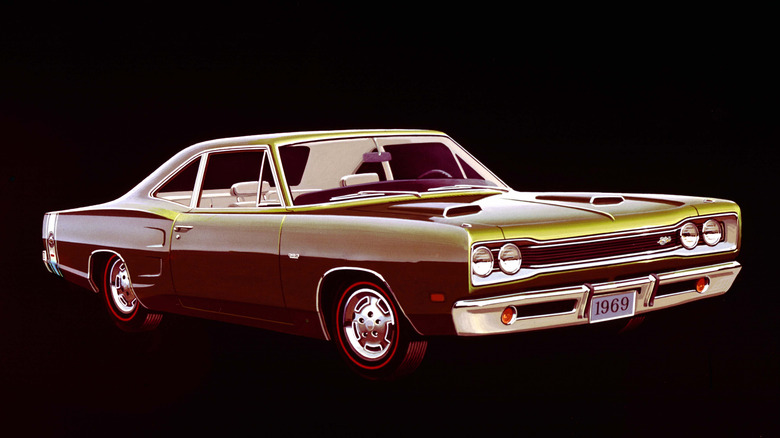
While the R/T served as the pinnacle performance trim in Dodge's muscle car lineup, it still had luxury niceties to appeal to a wider audience. Real enthusiasts opted for the Super Bee, which was a more stripped-down version. The Super Bee had all the R/T's performance upgrades — minus the premium bits. Oh, and it came standard with the smaller 383-cid V8. Still, the 426 HEMI was optional on the Super Bee alongside the big-block 440-cid Magnum V8. The latter was a much more popular option on the Super Bee trim, with only 166 buyers opting for the HEMI engine in 1969. All other model years sold even fewer trims equipped with the HEMI. But that shouldn't be a surprise. The Super Bee was a budget trim, after all.
Fortunately, the suspension bits were mostly the same as the R/T's. The heavy-duty shocks, upgraded brakes, and wider tires ensured the Coronet Super Bee handled the increased power efficiently. On the outside, the car had a special "Super Bee" decal in the back. Buyers could choose between the standard four-speed Hurst competition shifter and the optional three-speed TorqueFlite automatic. To bring the cost down, though, Dodge had to cut some corners. Instead of bucket seats, the Super Bee had a front bench and vinyl interior upholstery. Also, the Sure Grip rear axle was optional.
Dodge Charger Daytona (Second Gen, 1969)
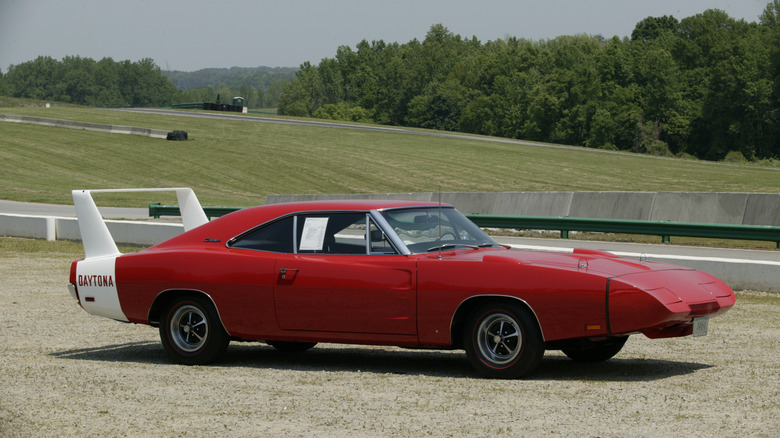
Few American cars — if any — can compete with the madness of the 1969 Charger Daytona. See, Dodge didn't build this car because it wanted to appease enthusiasts. The sole reason for its existence was to win at NASCAR. And in 1968, the Dodge was handily beaten by Ford in the championship, prompting big upgrades for the model.
The 426 HEMI wasn't part of the overhaul, as it could already create more wheel spin than a Las Vegas roulette table. Instead, Dodge focused on aerodynamics. The Charger needed to get more slippery, so a brand-new, pointy front end was added, which increased the top speed by 5 mph. Meanwhile, to make the rear end more stable at speed, a rear-deck stabilizer with two fins and a massive spoiler was also added. As a result, the Charger Daytona became the first-ever NASCAR racer to reach 200 mph.
Okay, but what's the street model's role in all this? Well, to be allowed to compete, Dodge needed to build a homologation version. The street-legal model had all the aerodynamic upgrades of the NASCAR stock racer and was available with either the 440-cid Magnum V8 or the 426 HEMI engine. The Daytona started at $4,600 with the larger engine — significantly higher than the base $3,575 Charger R/T. Due to the higher price, dealers couldn't sell all Daytonas, and a few were supposedly even converted back to regular Chargers. Sacrilege, for sure, especially since Dodge made only 503 units — and only 70 of them carried the HEMI engine.
Dodge Charger 500 (Second Gen, 1969)
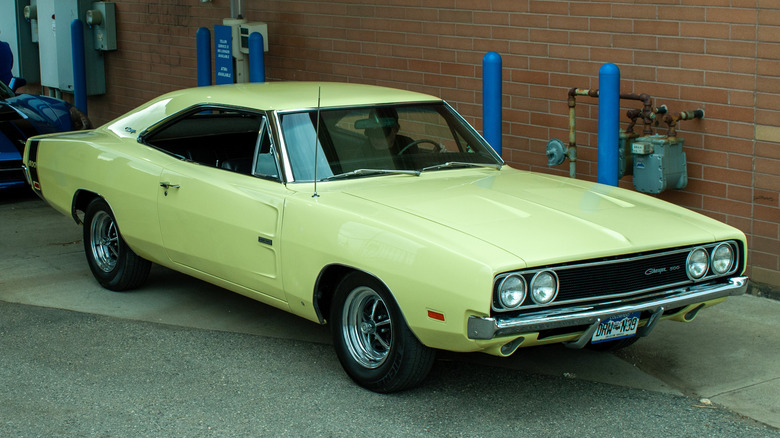
Much like the Daytona, the Charger 500 employed aerodynamic improvements to allow Dodge higher fortunes at NASCAR races. Still, they weren't nearly as elaborate. The 1969 Charger 500 received the Coronet front grille and a flush rear window to reduce lift. Nothing more, nothing less. Of course, these weren't enough for the Charger to be competitive. So it comes as no surprise that Dodge produced only 392 models and quickly moved to the Charger Daytona, even though 500s were required for homologation.
Like most high-performance Dodge muscle cars, the Charger 500 came standard with the 440 Magnum V8 while the 426 HEMI was optional. The HEMI was super rare, though; only 67 units were produced, and just 15 of those models were equipped with a four-speed manual transmission. Not to mention, a HEMI-equipped Charger 500 commands a ridiculous $200,000+ nowadays. You can buy a 1970 Charger 500 instead, but that model isn't nearly as special, coming without the '69 version's aerodynamic improvements. Still, it's a nice classic muscle car, especially when equipped with the 440 Six-Pack V8.
Dodge Challenger R/T (First-Gen, 1970 to 1971)
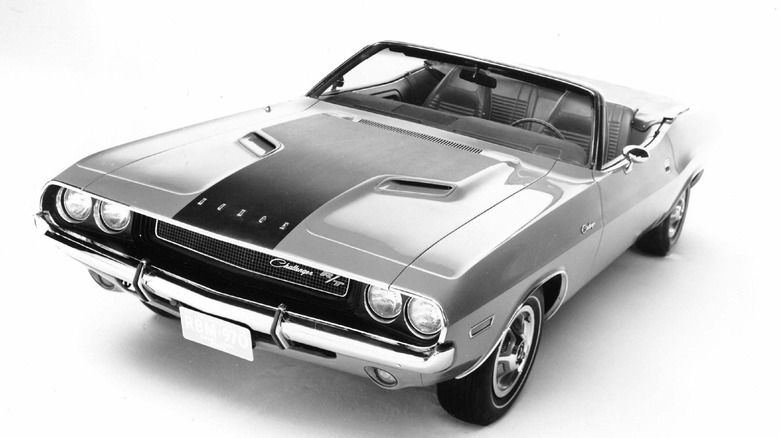
While Dodge had used its high-performance cars to combat plenty of rivals, it also wanted to go up against higher-priced models in the realm of pony cars. The company ended up doing just that in 1970 with the fittingly-named Challenger. With eight optional V8 engines — apart from the entry-level 225-cid slant-six and 318-cid V8 — the Challenger was a formidable foe for its competitors.
To demonstrate its commitment to performance, Dodge also offered the 426 HEMI as an option in the R/T model — one of the best-looking Challengers ever built. The race-derived engine had a maximum performance fuel pump, a special 3/8-inch fuel line, and hydraulic valve lifters. Crucially, with 425 hp and 490 lb-ft of torque on tap, it had an easier job moving the lighter Challenger, resulting in a 0-60 time in the low 5s. The 426 HEMI also came standard with wider F60 x 15-inch tires for better traction.
The Challenger R/T included 340-cid, 383-cid, and 440-cid V8 engines in its lineup, as well. Each model came with larger drum brakes and optional front and rear disc brakes. Inside, the R/T had a higher-quality interior with a simulated wood finish on the dashboard, while a Special Edition package brought leather/vinyl bucket seats to the table.
As expected, the 426 HEMI was the most expensive option, therefore making it the rarest today. As a model, the Challenger wasn't as successful as Dodge hoped, with the 1973 oil crisis playing a big role in its demise. Still, the Dodge Challenger 426 is a legendary street racer and one of the best road-going cars with the HEMI engine.
Dodge Charger R/T (Third Gen, 1971)
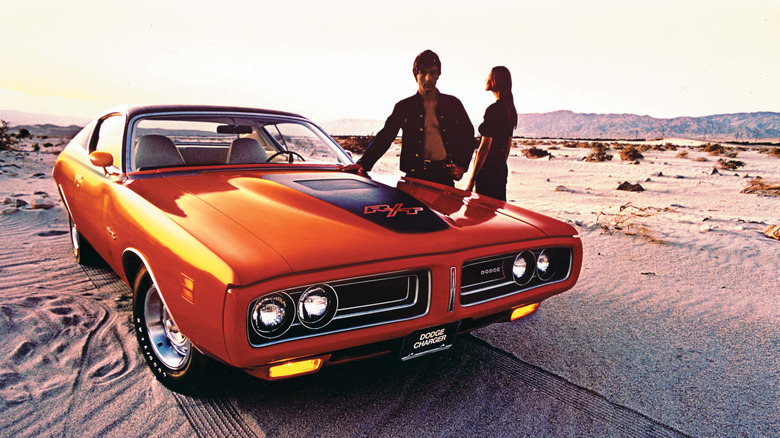
Much like the Challenger, Dodge gave the Charger one last HEMI dance in 1971. Now in its third generation, the Charger toned down the Coke bottle styling, incorporating a clunkier fuselage body design. It wasn't to everyone's liking, as it made the muscle car appear bulkier. However, the third-gen Charger also had a significantly wider track — 3.2 inches at the rear and 2.5 inches at the front — so it was, in fact, more voluminous. At the same time, the two-door coupe and convertible models had a smaller 115-inch wheelbase than the sedan/wagon versions and were shorter overall than the previous-gen two-door Charger.
Once again, the fabled HEMI engine was available as an option with the R/T trim. The base 440-cid wedge-head V8 produced 370 hp, though a Six Pack upgrade brought the output to 385 hp — which was the same as the previous-gen Charger. These were the most popular option, because the HEMI was an expensive upgrade. In fact, only 63 models even had the 426 HEMI engine, making it a truly rare item.
As expected, the high-end R/T trim brought other upgrades to the table. To cope with the big-block engines, the Charger R/T was equipped with heavy-duty 0.92-inch torsion bars and shock absorbers on both axles. Stiffer leaf springs were also onboard alongside a chunkier 0.88-inch sway bar. Crucially, larger brakes ensured good stopping power. Still, the HEMI itself came with unique standard features like heavy-duty stick-shift, automatic gearboxes, Dana 60 differential housing, and a Ramcharger hood scoop.
Dodge Charger Super Bee (Third Gen, 1971)
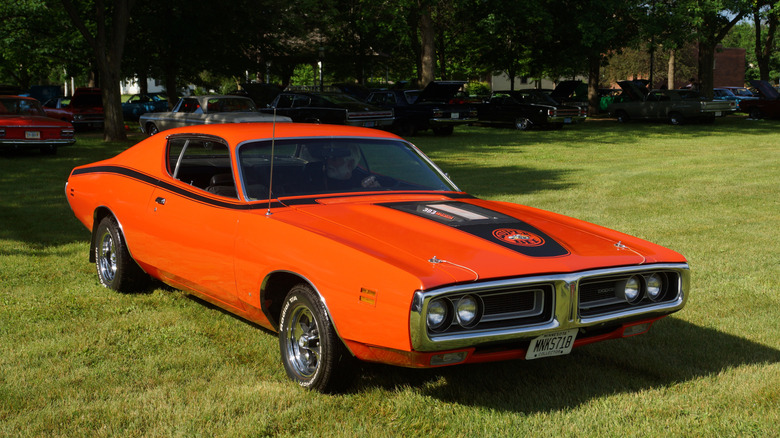
To appeal to budget-minded buyers, Dodge once again offered the 426 HEMI engine with the barebones Super Bee trim. However, only nine models boasted this engine out of the 4,144 Charger Super Bees produced in 1971. Hardly surprising, as everyone that had the money to spend on a HEMI also opted for the more premium R/T trim. After all, the base motor in the Super Bee was the 383-cid Magnum V8, equipped with heads from the 440-cid Magnum for higher performance — not a 440-cid block like the R/T. Thus, the 426 HEMI added a more significant 33% to the base Charger Super Bee price.
Still, the Super Bee was the more focused sports car. It still had wider tires, heavy-duty suspension, larger brakes, Mopar 8-3/4 housing with Sure-Grip limited-slip differential, and special Rallye stamped steel wheels inside. However, like in the Coronet Super Bee, there was a bench-type front seat — not the buckets from the R/T. Yup, slippin' and slidin' were pretty much guaranteed in the corners. As for options, buyers could add a Ramcharger hood, A34 Super Track Pak rear differential, spoilers, and rally wheels. The HEMI, meanwhile, came standard with either a four-speed A-833 manual with a Hurst shifter or the three-speed TorqueFlite automatic.
Unfortunately, the 426 HEMI ended its five-year production span with the 1971 Challenger R/T, Charger R/T, and Charger Super Bee. It was a great run that was sadly interrupted by the EPA's more stringent 1972 emissions regulations, and ultimately the 1973 oil crisis.