

2025 BMW X3 30 xDrive Should Be So Much Better Than It Is
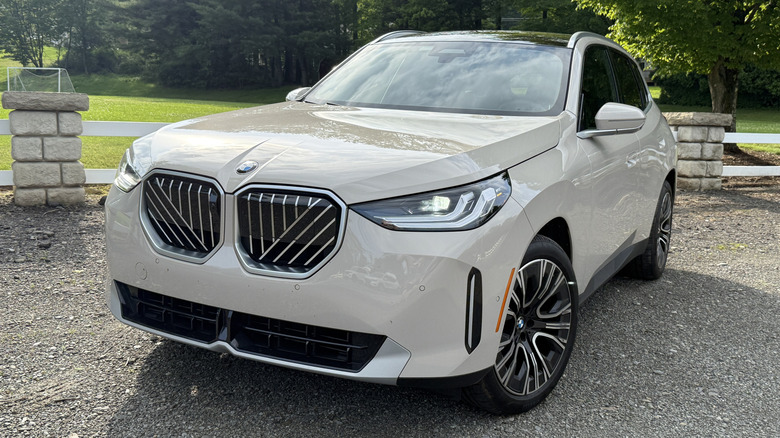
I've spent a lot of time with BMW X3s. My mother has a 2014 xDrive30i. My partner's parents have a 2014 and a 2021, and her brother drives a 2020. I've also tested a 2022 X3 M Competition. I'm basically surrounded by Bimmer's compact crossover, and I know the prior two generations inside and out. Because of that, I can say with my chest fully out that the new G45 generation of the X3 is a huge step backwards when it comes to styling, materials, build quality and features.
Sure, there are some things the fourth-generation X3 does better than before, like engine and suspension refinement, but it's not enough to get over the fact that I banged my knee on hard plastic on the upper door card and there's no longer a sunscreen over the panoramic roof. It also doesn't help that the styling is, well, controversial. All of this is especially puzzling when looking at the newly released BMW iX3. That new EV shows BMW knows how to make a really compelling compact crossover — it just didn't this time.
Full Disclosure: BMW was kind enough to lend me a 2025 X3 with a full tank of gas to test out for a week.
The cheapening
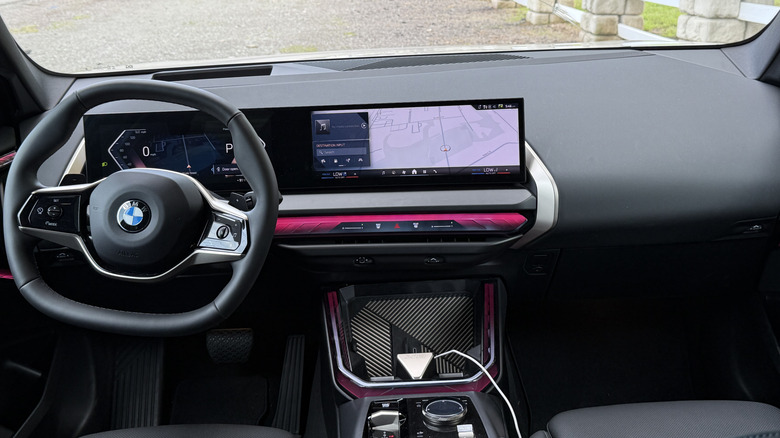
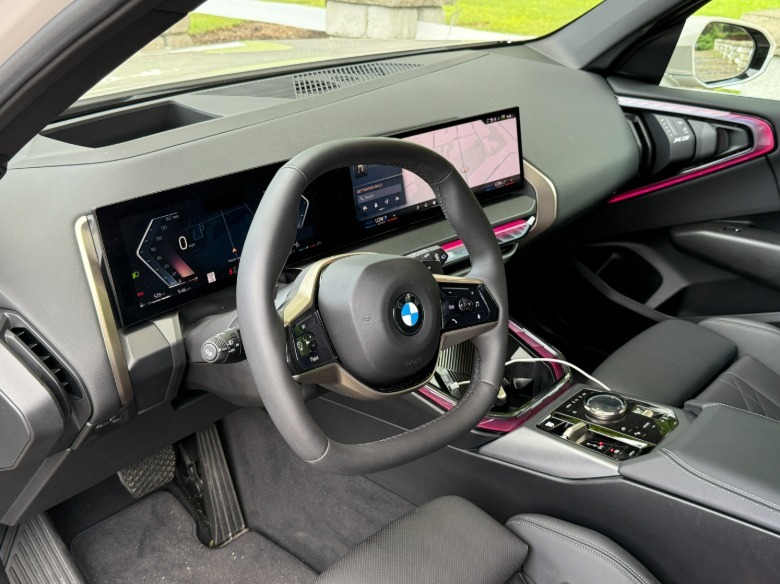
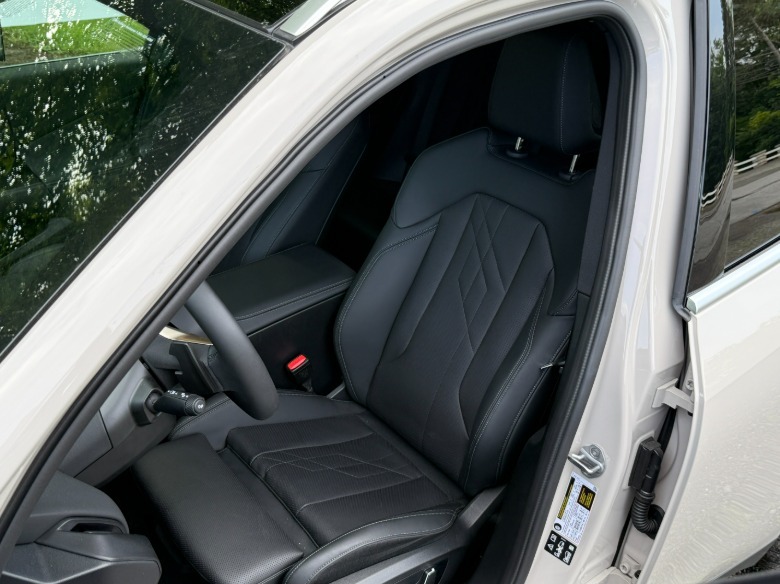
I understand that building cars is a costly endeavor, and sometimes automakers need to make some sacrifices on material quality and design to hit a certain price point, but good lord. The interior of the X3 is a bleak place to be. Well, the slightly-above-entry-level xDrive30 I tested felt like a very black hole of leatherette, rubber, and cheap, hard plastic. I know it's a common cliché to talk about how they don't build BMW interiors like they used to, but c'mon. Look at it. I'm troubled by what's going on here.
 Andy Kalmowitz / Jalopnik
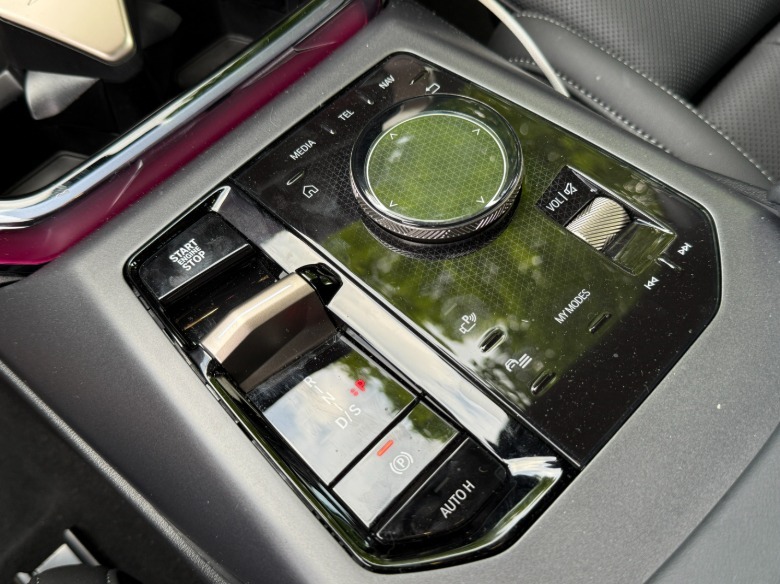
Sure, BMW added in some satin silver accents and a ton of highly customizable ambient lighting hidden in the black plastic trim, which does add a bit of flair. I suppose there are also some vaguely interesting geometric shapes, the glass iDrive knob is a neat touch, and the two-spoke steering wheel will make you say, "huh, that's cool, I guess," but none of it is really enough to distract from how bleh the rest of the interior is.
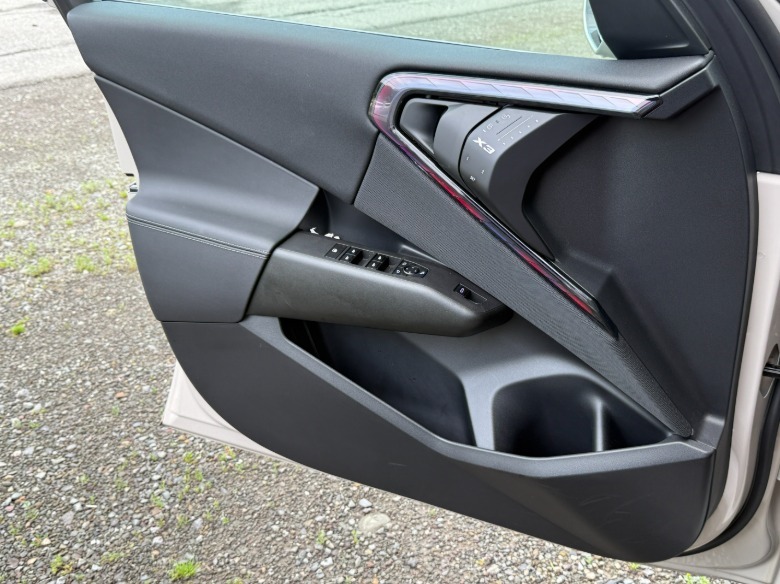
Aside from how it looks on the inside, it just doesn't feel particularly nice, either. There's so much hard plastic for a car that costs nearly $60,000, especially on the door cards and center console. Since my knees rested in both those areas, I found this particularly annoying. There's also the matter of BMW replacing the X3's door locks and memory seat controls with capacitive touch buttons on a bizarre loosey-goosey panel near the door handle. It's a bizarre decision that I cannot really wrap my head around. Hell, the Germans even dropped the aluminum paddle shifters of the old X3 for plastic units that actually bend when pressed too hard. It's really a shame, because the ZF-sourced eight-speed automatic transmission is fun to use.
 Andy Kalmowitz / Jalopnik
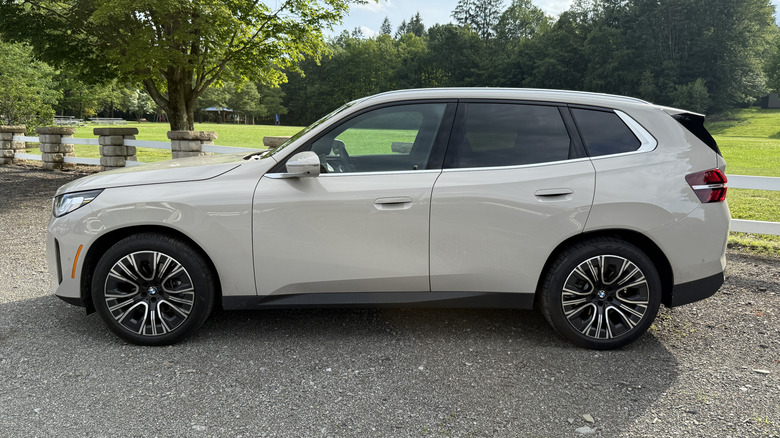
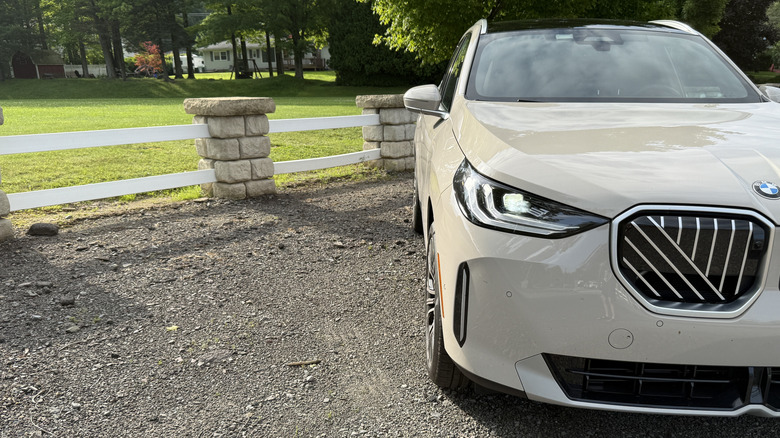
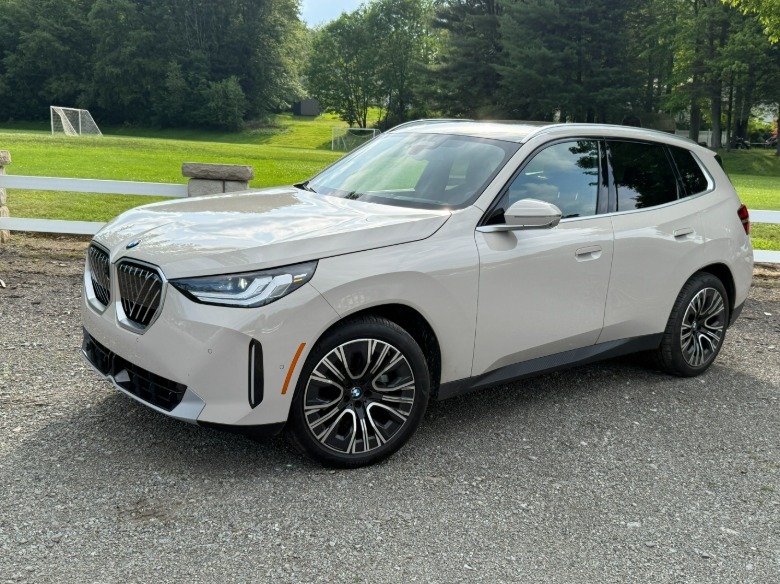
While not necessarily cheaper, the exterior also feels like a bit of a downgrade to me. You can formulate your own opinions since styling is subjective, but it just doesn't have the same sort of premium look that the old car had, and it certainly doesn't have the presence of the iX3. I love that thing, man. There's just something not right about the design of the kidney grilles up front and the flush-mounted bumper in the rear. I also must say I'm not a huge fan of the Dune Grey paint my test car was finished in. It's a bit hearing aid.
Some wins
Luckily, there are some upsides to the interior. Well, okay. There are two upsides: the tech and the space. Like almost all new BMWs, the X3 has a 14.9-inch center iDrive infotainment display that handles most of the car's core functions. With iDrive 9, it's as customizable and comprehensive as ever, so once you figure out where everything is, navigating it is a breeze. However, for those who are a bit less tech-inclined, there's a bit of a learning curve. That being said, if I can figure it out, so can anyone. Sitting in front of the driver is a 12.3-inch fully digital gauge cluster that's not quite as customizable as I would like. I think it would be great if BMW weren't so rigid with the overall curved pillar gauge design it has stuck with for years now, but there's still plenty of information that can be displayed. You can throw up stuff like an old-fashioned trip computer or gas mileage indicator, or you can get Apple Maps or a full list of the music you're listening to. However, the only way to get a tach is by putting the transmission in sport mode, which is as annoying as the baby crying next to me on the plane as I write this. I want a tach, dammit. I don't care about an efficiency gauge.
 Andy Kalmowitz / Jalopnik
The tech highlights continue with BMW's excellent driver-assistance and safety suite that works together to help you flow down the road effortlessly and safely. It's some of the best Level 2 adaptive cruise control and lane centering in the business, outside of companies like GM, Ford and Mercedes-Benz. It'll do all the cutting-edge stuff, like automatically switching lanes, monitoring your eye movements and making sure you don't careen into the person hogging the left lane in front of you. While it cannot go completely hands-free like GM's Super Cruise, it's still a damn good system.
 Andy Kalmowitz / Jalopnik
Space is also a big plus for the X3, especially when it comes to the rear occupants and everyone's cargo. BMW says the X3 has 36.3 inches of rear legroom, which is somehow actually 0.1 inches less than the prior model (Goddamn, this car cannot catch a break), but don't worry. My 6-foot-1 frame had plenty of room behind my driving position, and while three of me across would be a bit snug, it would certainly be doable on shorter trips. It also comes with 31.5 cubic feet of cargo room with the rear seats up. Drop 'em, and that expands to a cavernous 67.1 cubic feet. Both of those numbers are sizable increases of 2.8 cubic feet and 4.4 cubic feet, respectively. If you've got too much stuff for it to be able to fit in there, I suggest you reevaluate your life.
Float like a butterfly... and that's it
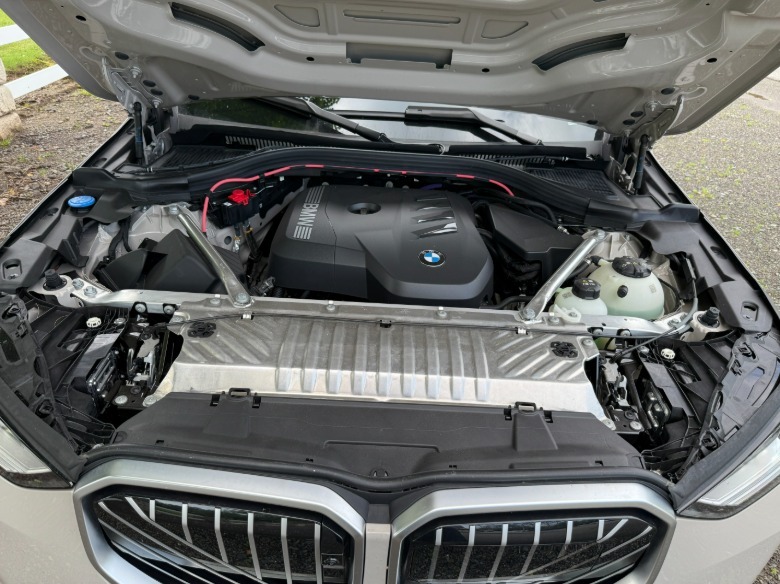
Even when the X3 gets something right, it still manages to get it a bit wrong. The xDrive30 I tested was fitted with BMW's tried-and-true B48 mild-hybrid turbocharged 2.0-liter inline-four cylinder engine that, in this application, puts out a rather healthy 255 horsepower and 295 pound-feet of torque. It's mated up to an eight-speed automatic transmission and BMW's xDrive all-wheel-drive system, giving it enough oomph to get the 4,200-ish pound crossover from 0-60 in 6.2 seconds, according to Car and Driver. That won't exactly light the world on fire, but it's similar to close competition like the Audi Q5.
 Andy Kalmowitz / Jalopnik
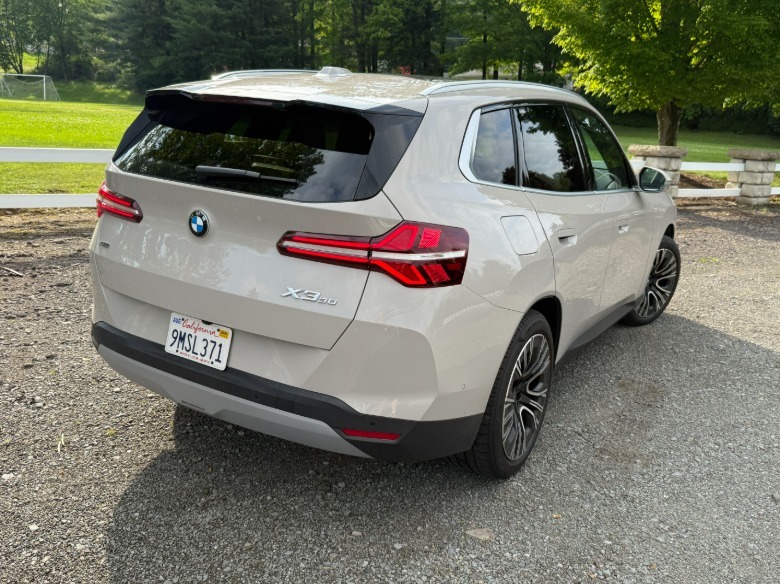
It's a good drivetrain. A fine drivetrain. But let's be honest: it's getting a little bit old. The B48 has been in production since 2014, and not that much has changed since it was introduced. And when a car costs this much money ($57,725, including destination as tested), I want something a bit more cutting-edge. Of course, there's a 48-volt mild-hybrid system, but it's not like gas mileage is stellar either: The X3 30 xDrive is rated at 27 mpg city, 33 mpg highway and 29 mpg combined, according to the EPA. It's not really surprising, because many automakers have spent the last few years pouring resources into electric powertrains, leaving their gas counterparts alone for the most part.
 Andy Kalmowitz / Jalopnik
When it comes to actually driving the X3 xDrive30, I'll say this: it's a very relaxing, quiet place to spend time. BMW certainly emphasized luxury and refinement over even a hint of sportiness when it came to tuning the X3's suspension, especially compared to the prior two generations. This car floats and rolls from corner to corner, all the while insisting that I really should slow down. I will admit it's incredibly comfy, even with 20-inch Pirelli P-Zero staggered summer tires front and rear. Nearly no road or engine noise enters the cabin, but there is some fake engine noise in Sport mode, and there are the odd creak and rattle from the diminished build quality. All of this is to say that the X3 isn't exactly The Ultimate Driving Machine, but if that's what you're buying a four-cylinder compact crossover for, then God help you.
There's more out there
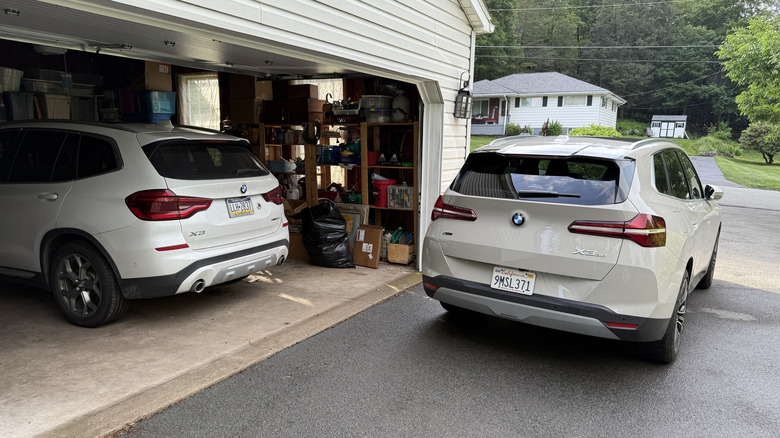
To start, the 2025 X3 xDrive30 will set the buyer back $50,675, including destination, but you and I know very well that no BMW ever comes in at a base level. We need options! And, when adding in the Dune Grey paint, Driver Assistance Package, Premium Package (which gives the car heated seats, an interior camera, the bigger screens, the panoramic roof and remote engine start, among other things), front ventilated seats, the 20-inch wheels and a few other odds and ends that my test car had, the MSRP jumps to $57,725.
These prices are right in line with the X3's main competition, the Audi Q5, Mercedes-Benz GLC and Genesis GV70. That's really not where my issues lie. The problem is more the fact that it costs the same as — if not a bit more — than the previous generation X3, but you're getting noticeably less for your money.
 Andy Kalmowitz / Jalopnik
Adding in the fact that BMW clearly still knows how to make an SUV in this segment competitive, by evidence of the all-electric iX3 and prior X3s, this fourth-generation X3 becomes an even more frustrating proposition. I can somewhat say that sales have been disappointing for BMW, too. So far this year, BMW has sold 50,009 X3s in the U.S., which is just 0.2% more than it sold through the first three quarters of 2024, with an old model. Usually, when an automaker introduces a new vehicle, sales pick up a damn sight more than that, but that's not the case here.
Hopefully, BMW takes what it has learned from the iX3 and implants it in the gas-powered X3 with a mid-cycle refresh, because as the car sits, I cannot recommend it over the strong competition it faces. Sure, it's a fine car, but it's fighting in one of the most competitive segments in the whole market, and fine really just ain't gonna cut it.