

What A Corvette's Torque Tube Actually Does, And Why It Matters
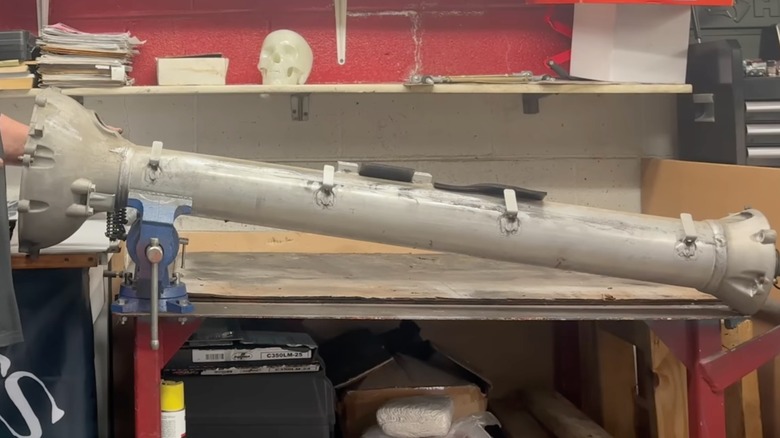
In a vehicle with an internal combustion engine, mechanical processes must work together to take the power the engine produces and transfer that energy to the wheels so the vehicle moves. In many vehicles with a front-mounted engine and rear-wheel drive, a driveshaft sits in the middle of the process, sending power from the engine to the rear of the car. In a Chevy Corvette, General Motors engineers forgo the driveshaft for something called a torque tube. Besides being a tube of torque, what does the torque tube actually do? Why is it preferred in sports car applications like the Corvette?
Simply put, the torque tube more efficiently transfers the energy from the drivetrain to the wheels, and it improves structural rigidity. Both of which combine to improve the Corvette's overall performance and handling. At least until the introduction of the eighth generation. The mid-engined C8 version of the car doesn't have them.
What a torque tube does
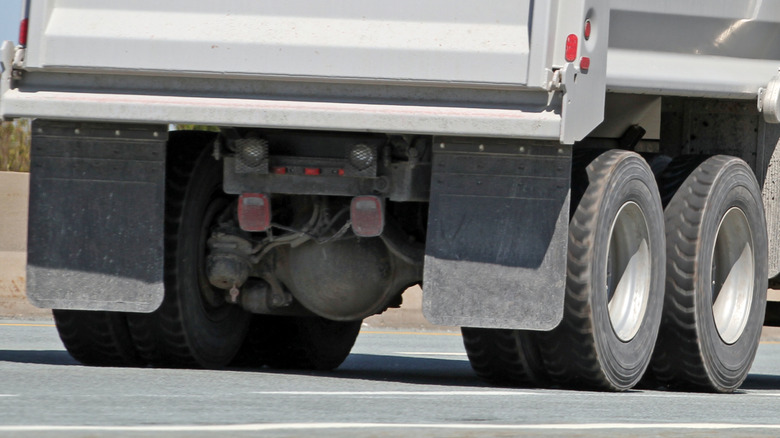
To better understand how it works, it first helps to understand how a driveshaft works. Imagine a basic vehicle, with a front-mounted engine and rear-wheel drive. Also imagine that this vehicle has a solid rear axle, meaning that the entire axle moves when going over bumps. A dump truck would be a good example of a vehicle with this type of setup. The driveshaft connects to the rotating part of the engine and to the differential mounted on the rear axle. It then spins when the engine is running, transferring the mechanical energy to the wheels that need to move. This animation below shows how it works.
At each end of the driveshaft, a universal joint — also called a u-joint — is attached that lets the driveshaft move around. It's not a rigid connection from the front to the rear; it accommodates the movement of the rear axle.
On a vehicle with an independent rear suspension, like the Corvette, there is far less movement in the differential. That's because small devices called half-shafts take the power from the differential and transfer it to each wheel. They move independently of each other, with the differential remaining mostly fixed in place. Since the movement doesn't need to be accounted for anymore, a better system can be used.
That better system is the torque tube. A torque tube works like a driveshaft, with a fixed shaft inside the long tube replacing it. Since it doesn't need to shift up and down, energy transfer is improved. And with the tube encompassing the shaft, vehicle structural integrity is also increased.
Totally tubular
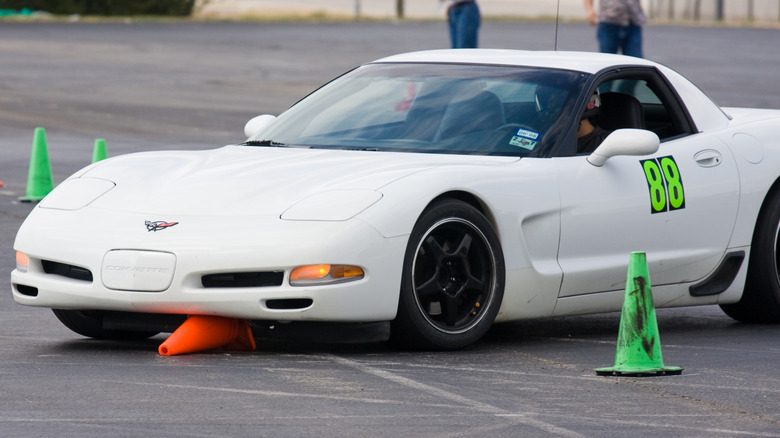
With less drivetrain energy loss, using a torque tube means the engine's horsepower is more effectively delivered to the rear wheels, improving acceleration. The extra rigidity helps prevent the car from flexing under load. When the chassis doesn't flex, the car can more effectively keep its wheels on the ground. Most of these benefits are noticeable on a race track, and it's worth pointing out that Chevy races the Corvette, and is popular with amateur racers.
Torque tubes aren't exclusive to the Corvette. Porsche uses them, including in the front-engine 944. Aston Martin even used the technology on its One-77 hyper car. But despite it being used in past Corvettes, the torque tube isn't used in the mid-engine C8 version. Why? Simply because there is no need to send power from the front of the car to the rear axle, since the mid-engine sits behind the driver over the axle. This further improves performance since the car's weight is now sitting on top of the rear wheels.
If you're thinking you might be interested in checking out a used Corvette, the newer mid-engine variants are still a bit pricey. The slightly older torque-tube-equipped variants can be pretty affordable and deliver on V8 fun.